audiobriefs
Newest

All briefs

747 briefs · 6840 min · 673–747 on page 8 of 8
9:20

ARP 2600

ARP

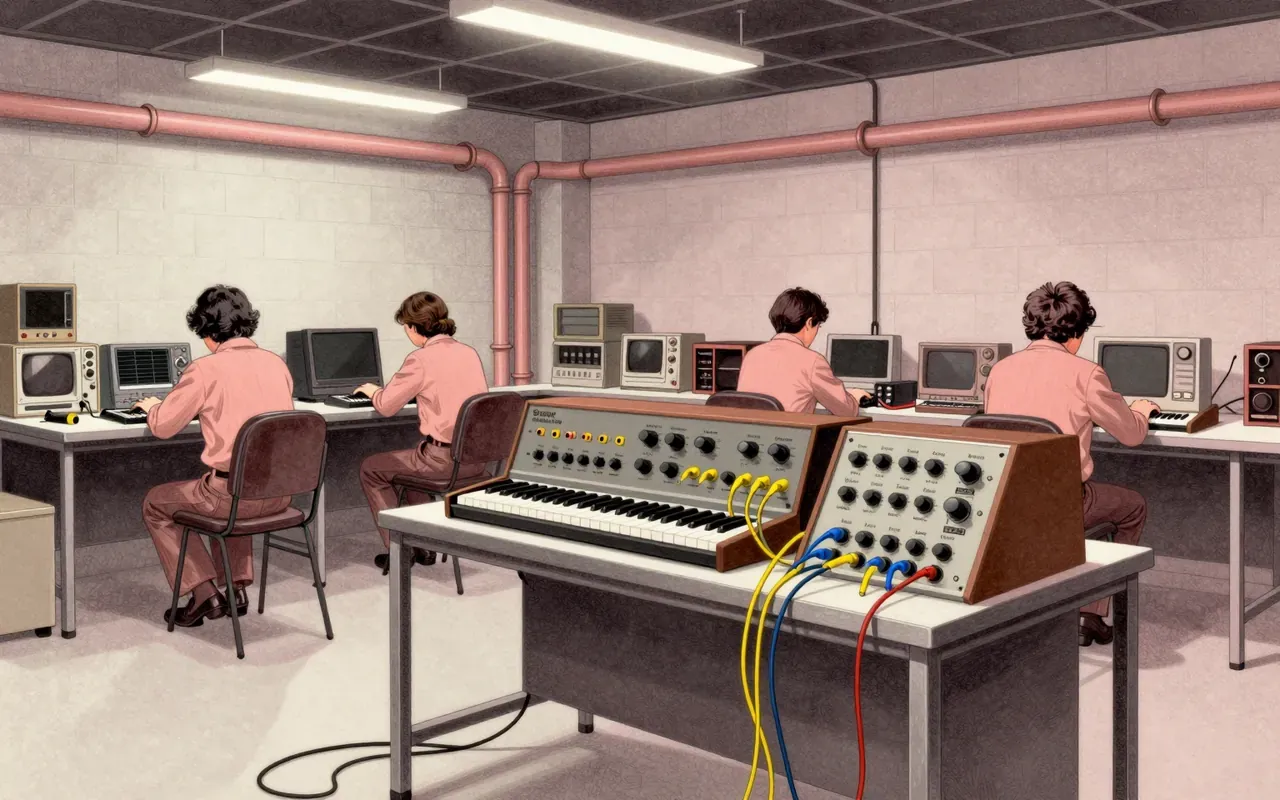
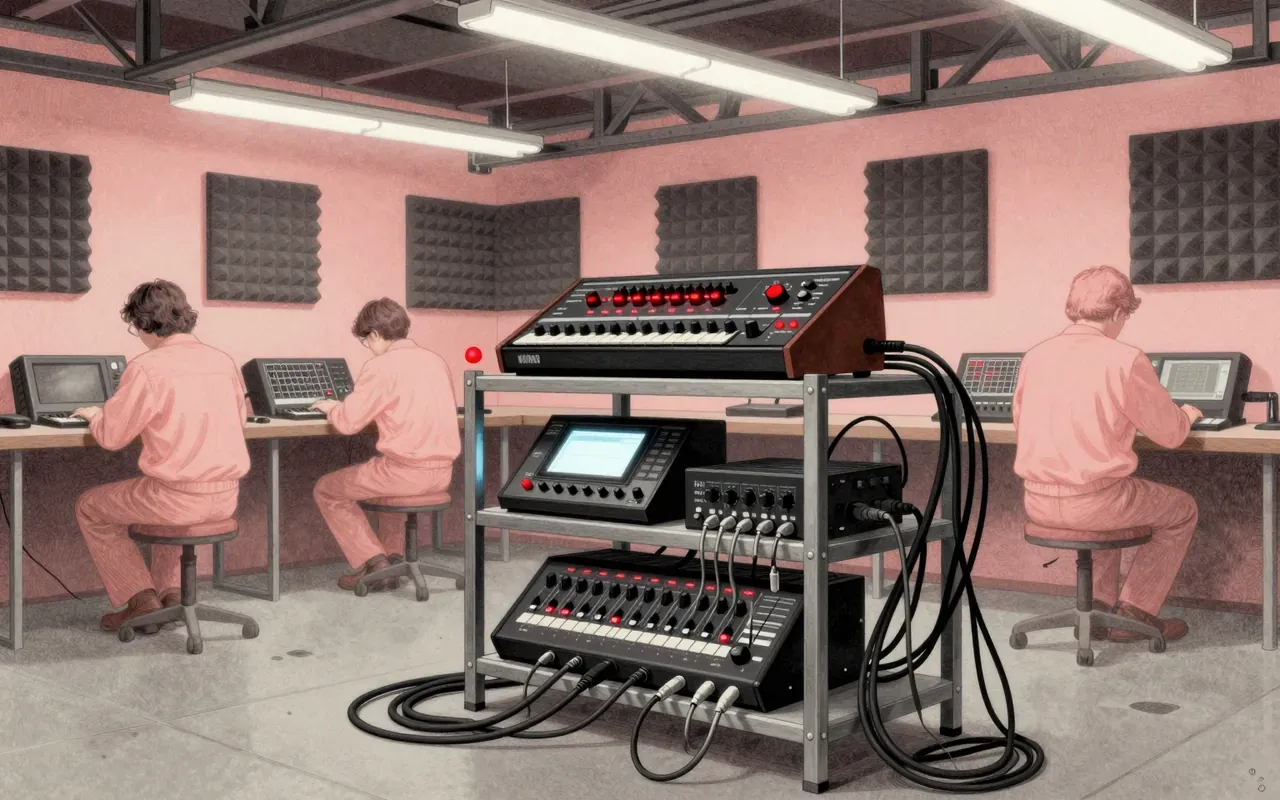
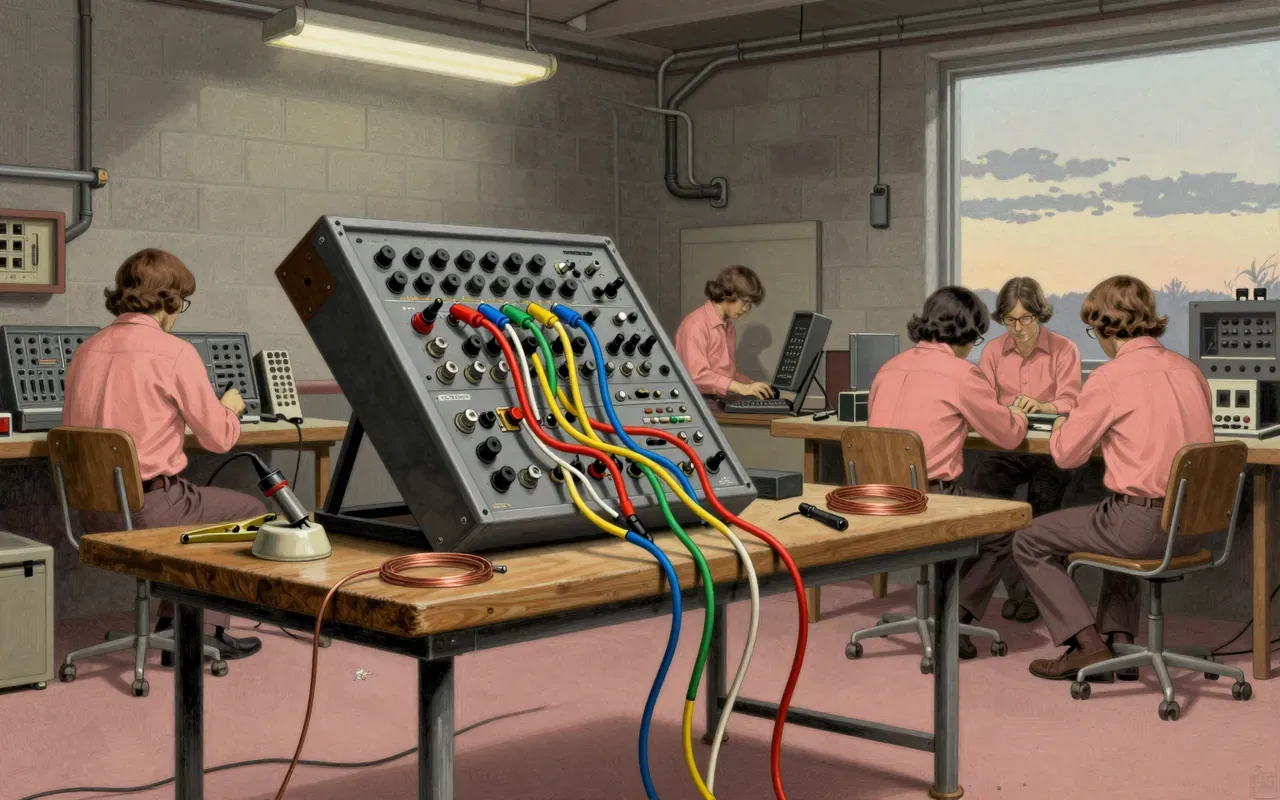
The ARP 2600 is a foundational analog synthesizer designed for education. Its semimodular architecture, front-panel signal graphics, and duophonic voice count reflect its classroom purpose—not stage use. Its original filter was replaced after a patent dispute. It teaches synthesis more directly than any contemporaneous instrument, but offers no polyphony, no presets, and unstable tuning.
9:15

Big Muff

Electro-Harmonix · 1969

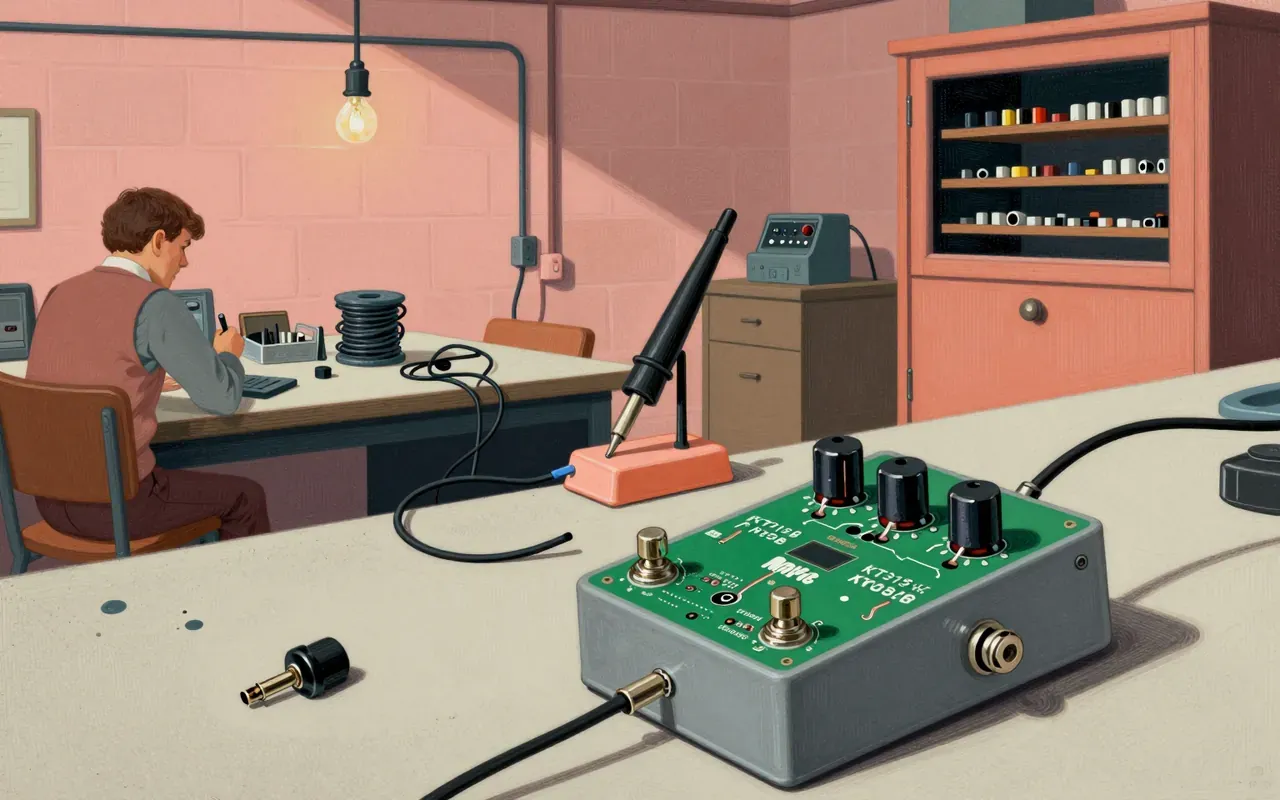
The Big Muff Pi is a 1969 fuzz effects pedal with four transistors, two soft-clipping stages, and a tone stack that scoops mids when centred. It delivers smooth, saturated, bass-heavy sustain at any volume—making small amps sound bigger. It was intended to mimic Hendrix but became heavier and more distinctive. It does not offer gain staging, midrange recovery, or dynamic clean-up.

8:52

Watkins Copicat

Watkins

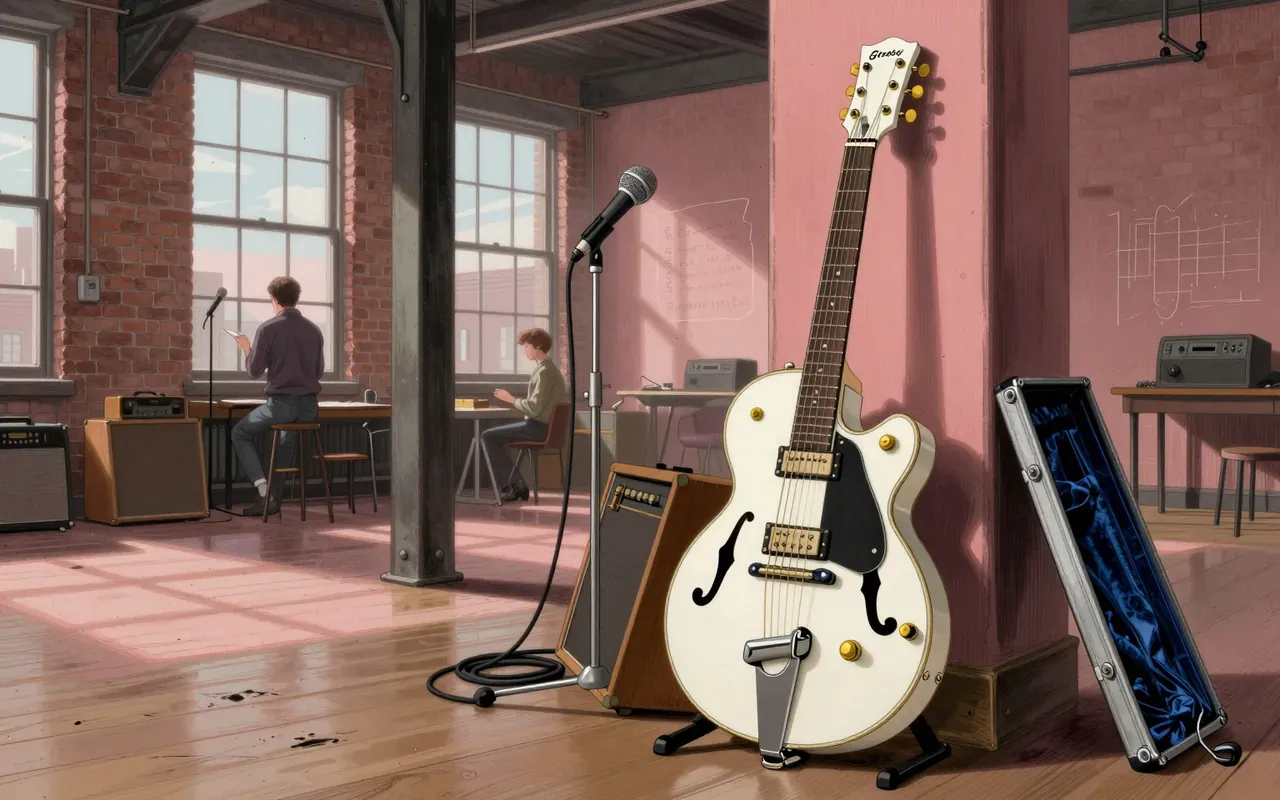
The Watkins Copicat is a valve-based tape echo unit introduced in 1958. It features three replay heads, a selector switch, and a feedback loop for variable echo-repeat. It was designed to be simple, affordable, and portable. It was one of the first commercially available tape delay units and preceded other major European echo units. The first production run of 100 units sold out on the first day.

9:22

Fender Coronado

Fender

The Fender Coronado is a true hollow-body electric guitar with no central block, designed in 1965 by Roger Rossmeisl to capitalise on the rising popularity of semi-acoustic guitars. It delivers natural resonance and a bright-and-deep tone, but feeds back at high volumes and failed to win over jazz guitarists due to its bolt-on neck. It found belated favour for what it does sonically—not what it was meant to be.

9:11

Epiphone Coronet

Epiphone

The Epiphone Coronet is an Epiphone-exclusive, entry-level solidbody electric guitar with a single P-90 pickup, one volume and one tone control. First introduced as an amplified archtop in 1939, it was reclassified as a solidbody by 1961. It has been manufactured across multiple eras — 1959 US production, 1960s Dwight-branded variants, discontinuation in the 1970s after Epiphone moved overseas, a late-1990s Korean reissue, and a 2020 reissue. It offers no pickup switching, no neck pickup, and minimal control options. Its design prioritises simplicity and direct tone over versatility or refinement.

8:47

Roland CR-78

Roland

The CR-78 is historically singular: the first microprocessor-based drum machine and the first to allow user-programmable pattern creation. Its analog synthesis yields 14 fixed drum sounds. Its four-note polyphony defines its rhythmic ceiling. It does not offer sound editing, velocity layers, or sample playback. It belongs in rooms where constraint is compositional strategy—not a flaw to be patched.
8:36

Yamaha CS-80

Yamaha · 1976

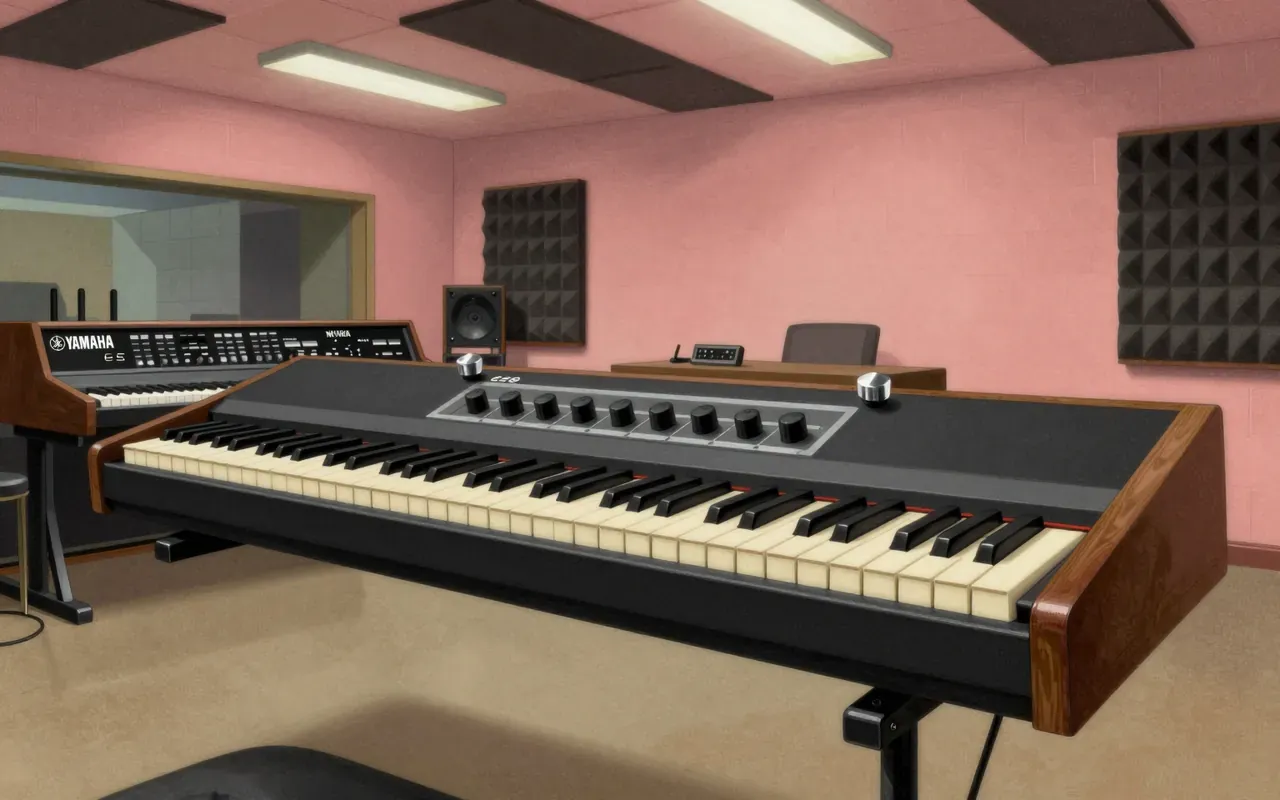
The Yamaha CS-80 is an analog synthesizer introduced in 1977. It supports true 8-voice polyphony, with two independent synthesizer layers per voice each with its own set of front panel controls. It has a layered keyboard that is both velocity-sensitive and pressure-sensitive, with polyphonic aftertouch and a ribbon controller for polyphonic pitch-bends and glissandos. Production of the instrument ceased in 1980.

9:20

Casio CZ synthesizers

Casio

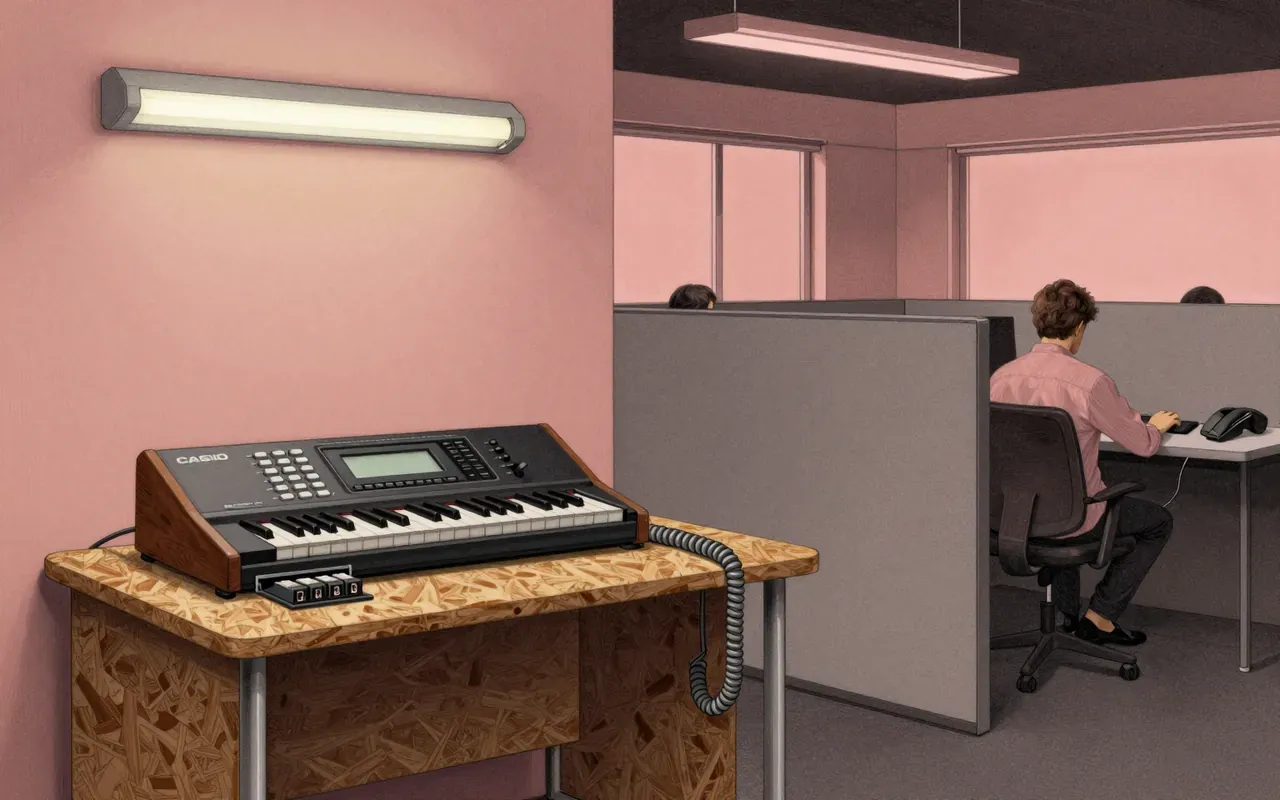
The Casio CZ series is a line of low-cost, digitally implemented phase distortion synthesizers introduced by Casio in 1984. They simulate analog filter behaviour without physical filters, using digital phase distortion instead. Each oscillator plays waveforms in series—not parallel—enabling sub-harmonics but restricting waveform pairing. Polyphony drops from eight to four voices when using two oscillators per voice. They were built for amateur musicians, prioritising affordability and portability over expressive control or sonic flexibility.
11:15

Roland D-50

Roland · 1987

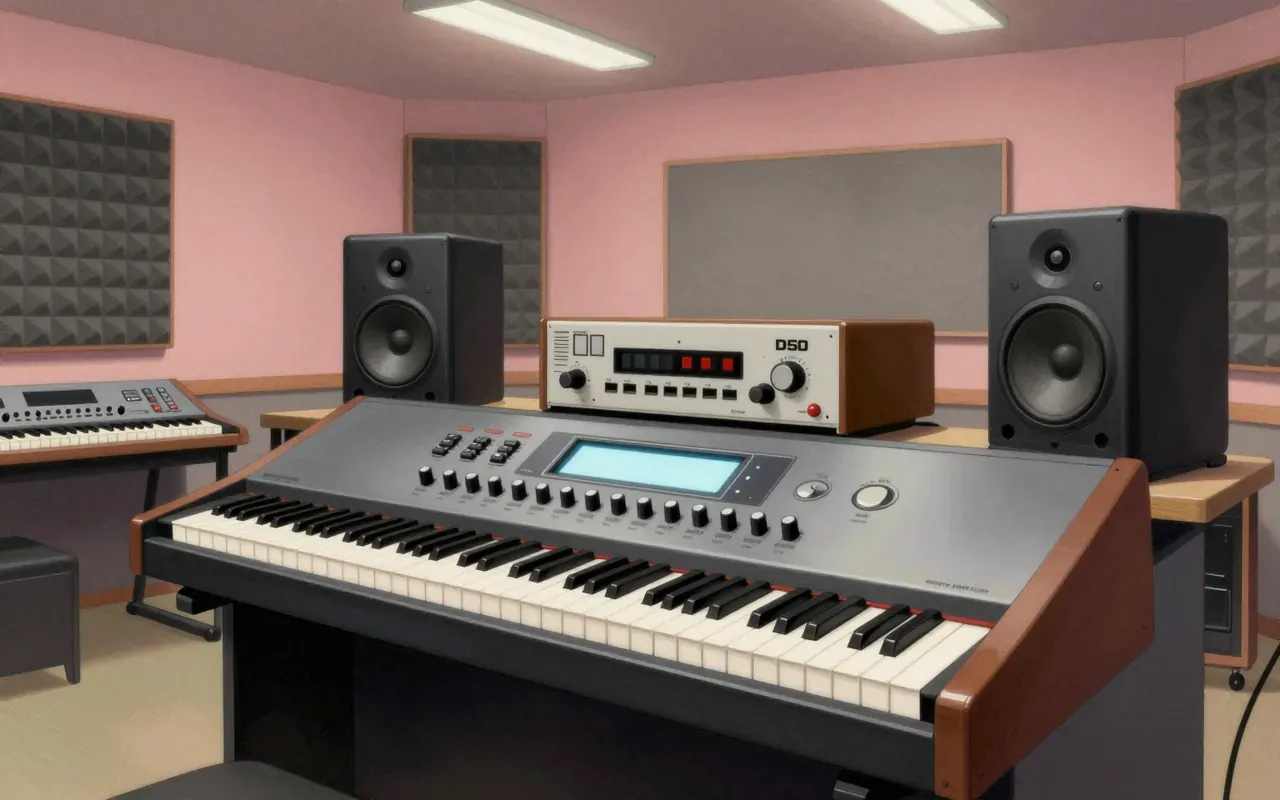
The Roland D-50 is a 1987 hybrid synthesiser that pairs 47 ROM-based PCM attack samples with subtractive synthesis to create realistic, bright, and instantly usable tones. Its architecture — two tones, each with two partials — delivers clarity and presence but imposes strict limits on timbral complexity and real-time control. It was built for affordability and immediacy, not flexibility or depth.

9:08

Oberheim DMX

Oberheim

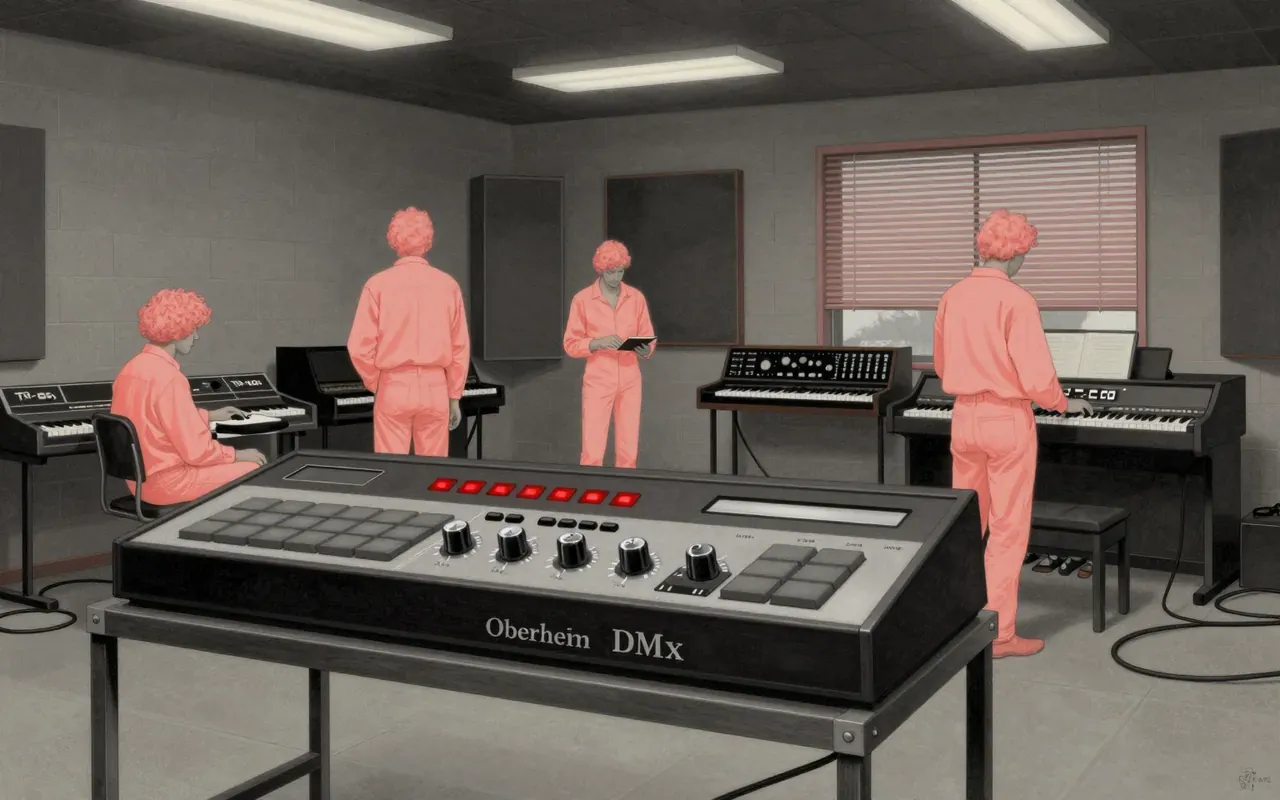
The Oberheim DMX is a programmable digital drum machine introduced in 1980. It was the second commercially sold digital drum machine after the Linn LM-1. It used sampled sounds of real drums stored in EPROM chips on removable voice cards. It offered 24 drum sounds derived from 11 original samples and supported up to 8-voice polyphony. It included humanizing features like rolls, flams, and timing variations. It was designed to interface with the OB-Xa synthesizer via the Oberheim Serial Buss and marketed as part of 'The System' alongside the DSX sequencer and OB-Xa or OB-8. It was widely used in 1980s new wave, synth-pop, and hip hop recordings.

8:18

Fender Duo-Sonic

Fender

The Duo-Sonic is a compact, fixed-bridge student guitar built for physical accessibility — not sonic flexibility.

9:38

Yamaha DX7

Yamaha

The Yamaha DX7 is a landmark instrument — not for its playability or depth, but for delivering a new kind of digital clarity at scale. It trades expressiveness for precision, intuition for architecture, and warmth for brilliance. Its legacy is sonic, not ergonomic.

10:30

Fender Electric XII

Fender

The Fender Electric XII is a 12-string electric guitar designed by Leo Fender and introduced in late 1965. It features a Jaguar/Jazzmaster-style body, a 'hockey-stick' headstock to accommodate twelve tuners, a string-through-body design for increased sustain, a unique split pickup configuration, and a 4-way rotary selector offering neck, neck-and-bridge (parallel), in/out-of-phase, and bridge-only options. Its bridge has individual saddles for each string, enabling precise intonation. Unlike competitors’ models—which were adapted 6-string guitars—the Electric XII was purpose-built for folk rockers.

9:46

Pultec EQP-1

Pultec

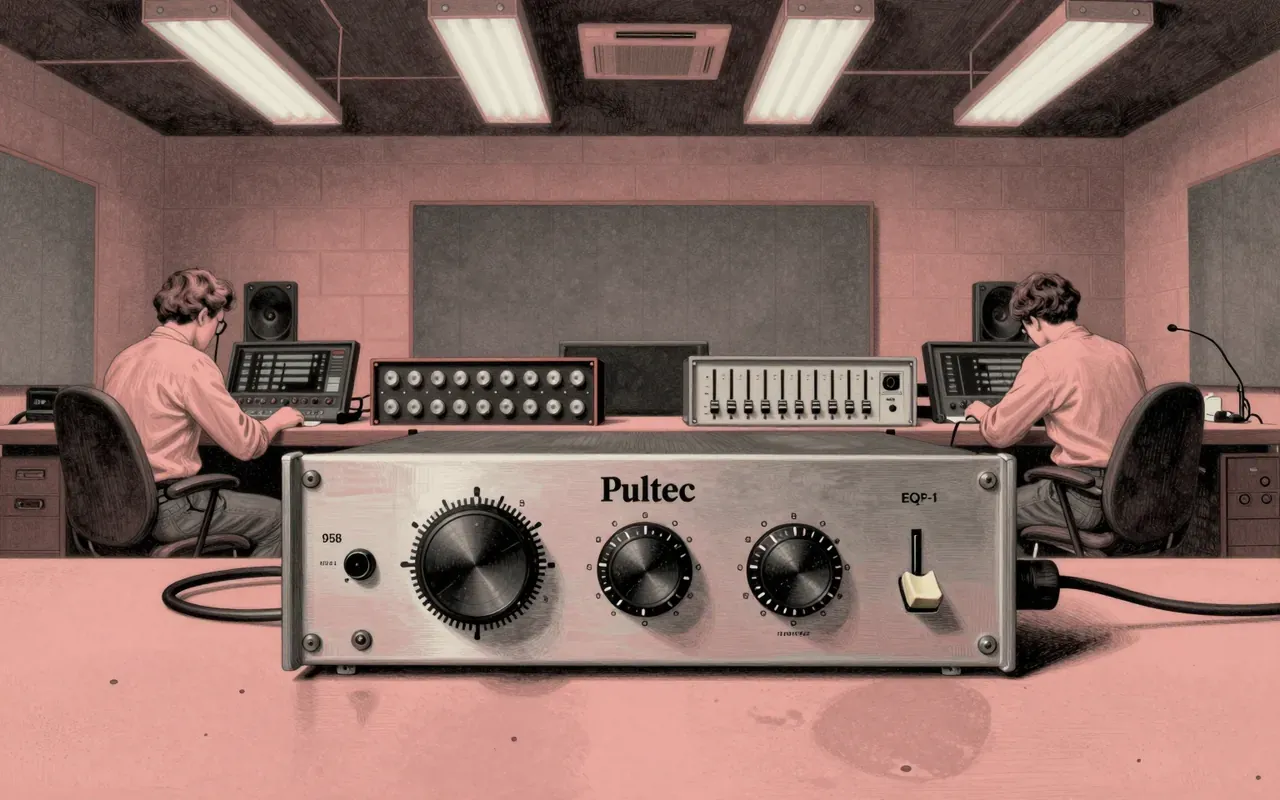
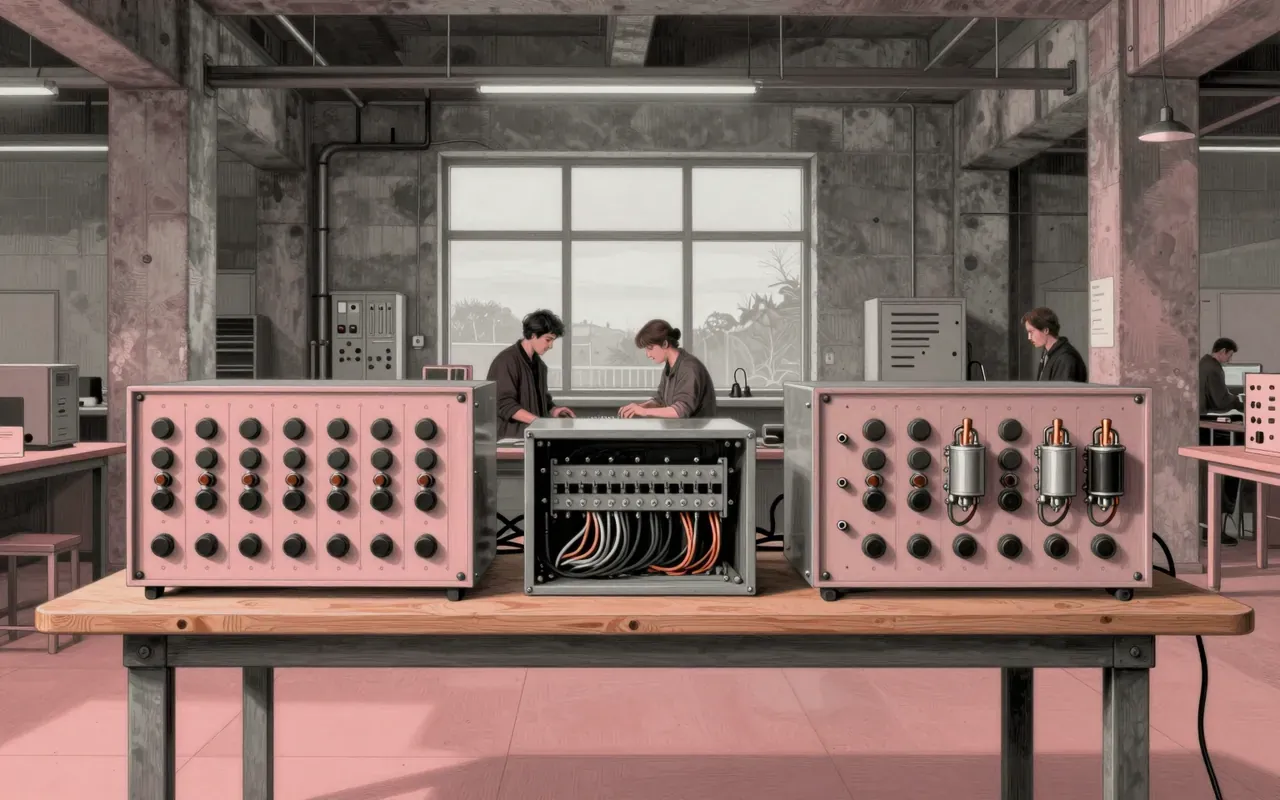
The Pultec EQP-1 is a passive, tube-amplified equalizer introduced in 1956 in a 3U 19-inch rack chassis, designed specifically for professional recording studios to overcome noise issues in existing film-industry equalizers. It features a low-frequency shelving filter with three bands (30, 60, 100 Hz) and a parametric high-frequency section with boost frequencies at 3, 5, 8, 10, and 12 kHz plus adjustable bandwidth. Its design enabled simultaneous boost and attenuation of adjacent low frequencies — a technique later adopted despite being discouraged in the original manual.

11:16

Gibson ES-345

Gibson · 1959

The Gibson ES-345 is a semi-hollow electric guitar introduced in 1959. It was designed as a hybrid between a solid-body electric guitar and a jazz guitar. It was developed in 1958 as an upscale version of the ES-335. Gibson announced the ES-345 as the ES-345T in May 1959. The ES-345T had a price of $345 in the standard sunburst finish. From the guitar's 1959 introduction through 1979, 10,560 ES-345s were shipped. Gibson designed the guitar to create a guitar which could be used to play jazz, as would be typical of an Electric Spanish guitar, but with a maple block running through the guitar to allow the versatility of a solid body electric guitar. The bodies were made of laminated maple with spruce bracing, and a solid maple center block - designed to prevent unwanted feedback from the pickups - extending from the base of the body (where the strap button is mounted) all the way to the mahogany neck, along with a rosewood fingerboard.

9:12

Gibson ES-355

Gibson · 1958

The ES-355 is Gibson’s most complex semi-hollow — a stereo, varitone-equipped evolution of the ES-335. It launched in mono in 1958, added stereo in 1959, and was discontinued in 1984 after failing to meet commercial expectations. Many players disabled the varitone. Gibson revived it in 2018.

9:23

Fender Esquire

Fender

The Fender Esquire is the first commercially marketed solid-body electric guitar. It was designed as an electronic instrument with no acoustic tone manipulation. It introduced the square-edged dreadnought shape with cutaway. It featured a combined bridge-pickup assembly derived from the Champion lap steel. The first 1950 production run had a one-piece maple neck without fretboard or truss rod. The single-pickup version debuted in the RTEC Spring 1950 catalogue.

10:47

Fairlight CMI

Fairlight · 1979

The Fairlight CMI defined sampling by doing it first — not perfectly, but decisively. It traded fidelity for immediacy, memory for recognisability, and speed for novelty. Its legacy is linguistic and architectural: it gave sampling a name, and built the first workstation where sound, sequence, and synth shared one chassis.

9:18

Fuzz Face

Arbiter · 1966

The Fuzz Face is a minimal, high-character fuzz pedal built for affordability—not precision. Its two-knob interface and six-component design deliver immediate, touch-sensitive distortion, especially with NKT275 germanium transistors. But its crude biasing makes germanium units thermally unstable. Silicon versions trade warmth for harshness and reliability. It excels at organic, swelling fuzz tones shaped by the player—not the pedal.

8:18

Maestro FZ-1 Fuzz-Tone

Maestro · 1962

The Maestro FZ-1 Fuzz-Tone is the first widely marketed fuzz effect. Introduced in 1962. Achieved mainstream impact in 1965 via Keith Richards on 'Satisfaction'. Uses three germanium transistors. Powered by two 1.5V batteries (later one). Responds directly to input amplitude. Temperature sensitive. Delivers brass-like tones. Integrated into Gibson EB-0F basses circa 1964. Revised as FZ-1a in late 1965.

9:32

Eventide, Inc

Eventide · 1971

There is no instrument called 'Eventide, Inc.' from 1971. Eventide, Inc. is a company. Its earliest instruments were the 1745 Digital Delay Line (1971), the PS 101 Instant Phaser (1971), the Omnipressor (1974), and the H910 Harmonizer (1975). Only the PS 101 is confirmed as rack-mount. No instrument described has polyphony, synthesis architecture, or format beyond rack-mount. Claims about sound, feel, or musical use are absent from the source material.

10:14

Höfner 500/1

Höfner

A lightweight, hollow-body electric bass built for resonance and left-handed play—not for gain staging or precision.

9:45

Roland JD-800

Roland

The Roland JD-800 is a hands-on, sample-based digital synthesizer manufactured between 1991 and 1996. It features many knobs and sliders for patch editing and performance control. Roland's intention was to return to the roots of synthesis. It employs sample-based oscillators and a fully digital signal path. It has 108 built-in sampled waveforms, expandable via PCM cards. A patch consists of up to four tones. In Multi mode it is possible to play five different patches over MIDI, plus a 'special' patch — which assigns different waveforms to the 61 keys for drums and percussion.

10:44

Roland JP-8000

Roland

The Roland JP-8000 is an analog modeling synthesizer released in early 1997. It sought to digitally reproduce the analog tonalities and power of its analog predecessors. Although it lacked somewhat in analog warmth due to its early digital architecture, it added many new features, such as RPS (Realtime Phrase Sequencing), which allowed short sequenced phrases to be assigned to keys, and such as motion control. It also featured the unique Supersaw oscillators and analog-style controllers such as an arpeggiator and an assignable touch response ribbon control. The Supersaw in particular was the reason why the JP-8000 was particularly successful as a main keyboard (along with the Virus) in the dance music market, especially for trance music.

8:40

Roland Juno-106

Roland

The Juno-106 is a six-voice analog synthesizer released by Roland in February 1984. It features digitally controlled oscillators, 128 patch memories (up from the Juno-60’s 56), a performance lever for pitch and modulation, and early MIDI implementation enabling parameter change sequencing.
9:26

Roland Juno-60

Roland

The Roland Juno-60 is an analog synthesizer introduced in 1982 as a lower-cost, more stable alternative to contemporaries like the Prophet-5 and Jupiter-8. It features digitally controlled oscillators for tuning stability, a single oscillator architecture compensated by a signature chorus effect, patch memory for 54 sounds, an arpeggiator, and performance controls.
8:59

Roland Jupiter-6

Roland

The Jupiter-6 delivers focused, hands-on bitimbral control and waveform stacking unavailable on the Jupiter-8 — but locks you into rigid voice splits and omits expressive dimensions like aftertouch.

8:29

Roland Jupiter-8

Roland

The Jupiter-8 is an eight-voice polyphonic analog subtractive synthesizer introduced by Roland in early 1981. Each voice features two discrete VCOs with cross-modulation and sync, pulse-width modulation, a non-resonant high-pass filter, a resonant low-pass filter with 2-pole and 4-pole settings, an LFO with variable waveforms and routings, and two envelope generators (one invertible). It includes adjustable polyphonic portamento, a hold function for infinite sustain, an assignable bender for pitch or filter frequency, balanced XLR and unbalanced 1/4" outputs for Upper and Lower presets in Split mode, and a unique polyphonic unison mode where all 16 oscillators stack onto one note and divide down when more keys are pressed. Its arpeggiator syncs externally via DCB or CV. Tuning stability improved from serial #171700 onward.

9:55

Roland JX-8P

Roland

The Roland JX-8P is a 1985 hybrid analog synthesizer with six-note polyphony, designed to bridge analog warmth and FM-style timbres using new modulation and a DX7-inspired interface. It features two DCOs per voice, software ADSR envelopes, dual filters, chorus, sync modes, multiple play modes, and a polished MIDI implementation — programmable via edit slider or optional PG-800, with limitations on real-time control.

9:55

Gibson Les Paul Custom

Gibson · 1954

The Gibson Les Paul Custom is a luxury electric guitar introduced in 1953 at Les Paul’s request for a black, tuxedo-like instrument. It featured the ABR-1 bridge from 1954, adopted the PAF pickup in mid-1957, and switched to Grover Rotomatics by 1958. It remained a double-cutaway model until 1963, when it was renamed the SG Custom after Les Paul’s endorsement ended.

8:24

Gibson Les Paul Junior

Gibson

The Gibson Les Paul Junior is a stripped-down, single-pickup electric guitar introduced in 1954 as Gibson’s affordable entry into the solid-body market. It features one P-90 'dog-ear' pickup at the bridge, one volume and one tone control, no binding, and no carved top. A double-cutaway version launched in 1958 nearly doubled sales. The original run ended in 1963. Its raw, overdrivable tone made it a favourite among rock and blues players in the 1960s and 1970s.

8:50

Linn LM-1

Linn Electronics

The Linn LM-1 is the first programmable drum machine to use digital samples of acoustic drums. Released in 1980, it replaced preset patterns with human-performed, non-degrading sounds. Its quantization enforced perfect sixteenth-note timing. It offered twelve fixed samples—mostly played by Art Wood—with handclaps by Tom Petty and the Heartbreakers. It had no synthesis, no editing, no velocity response, and no visual feedback beyond LEDs. It helped establish drum machines as credible tools in popular music.

10:14

Korg M1

Korg

The Korg M1 is a 1988 sampling-based music workstation with 16-note polyphony, 16-bit PCM sample playback, built-in effects including reverb, delay, chorus, tremolo, EQ, distortion and Leslie simulation, and an eight-track MIDI sequencer. It uses sampled attack transients, loops, sustained waveforms and percussive samples. It was the bestselling synthesizer ever at that time, selling over 250,000 units. None of its features was unique, but their integration was unprecedented.

10:10

Memorymoog

Moog · 1982

The Memorymoog is a 6-voice polyphonic analog synthesizer manufactured by Moog Music from 1982 to 1985. It was the first polyphonic Moog to feature dedicated oscillators and filters for each voice. Each voice has three voltage-controlled oscillators with pulse (variable width), saw, and triangle waveforms. Each voice also has its own 24 dB/Octave Low Pass voltage-controlled filter. Moog Music included a discrete implementation of its famed, patented transistor ladder filter. In Mono mode, the Memorymoog functions as a traditional monophonic synthesizer with 1–18 oscillators selectable in unison. A Chord Memory function and an Arpeggiator are included. Audio frequency modulation using Oscillator 3 can produce FM-like timbres.

8:06

Minimoog

Moog · 1970

The Minimoog is an analog keyboard synthesizer introduced by Moog in 1970. It was built as a portable, affordable alternative to modular systems — the first synth sold in retail stores. Its three unsynchronised analog oscillators, unique voltage-controlled filter, and pioneering pitch wheel give it immediate, expressive, monophonic voice — but no chords, no presets, no stability. It made blistering funky bass blurps and spacey whistle leads — not because it was precise, but because it wasn’t.

9:00

Minimoog Voyager

Moog · 2002

The Minimoog Voyager is a monophonic analog synthesizer released in 2002. It was modelled after the 1970s Minimoog and intended as its successor. It promised modern features while preserving the original sound quality. Over 14,000 units shipped between 2002 and 2015.

9:44

Gibson Moderne

Gibson

The Gibson Moderne is a non-instrument: a shape conceived in 1957, patented in 1958, rejected at NAMM the same year, and absent from musical use for 25 years. It has no verified sound, no operational history, no confirmed prototype, and no functional distinction from later reissues. Its only property is ambiguity.

9:14

Akai MPC

Akai · 1988

The MPC60 redefined beat-making by collapsing sampling, sequencing, and performance into one hardware instrument. Its strength is immediacy. Its weakness is inflexibility.

9:26

Fender Musicmaster

Fender

The Musicmaster is a no-frills, scaled-down electric guitar built for access—not expression. Its design sacrifices tonal depth and dynamic response for ease of use and production efficiency. It belongs in a practice room, not a stage rig.

9:16

Fender Mustang

Fender

The Fender Mustang is a solid body electric guitar introduced in 1964 as the basis of a major redesign of Fender's student models. It was produced until 1982 and reissued in 1990. It features two single-coil pickups, an unusual pickup switching configuration, and a unique vibrato system. It was originally available in two short scale lengths: 24 inches and 22.5 inches. It has two angled single-coil pickups, each with an adjacent on-off-on switch, and a master tone and volume control. It introduced the Fender Dynamic Vibrato tailpiece, which together with a floating bridge forms the Mustang vibrato system.

8:45

Nord Lead

Clavia

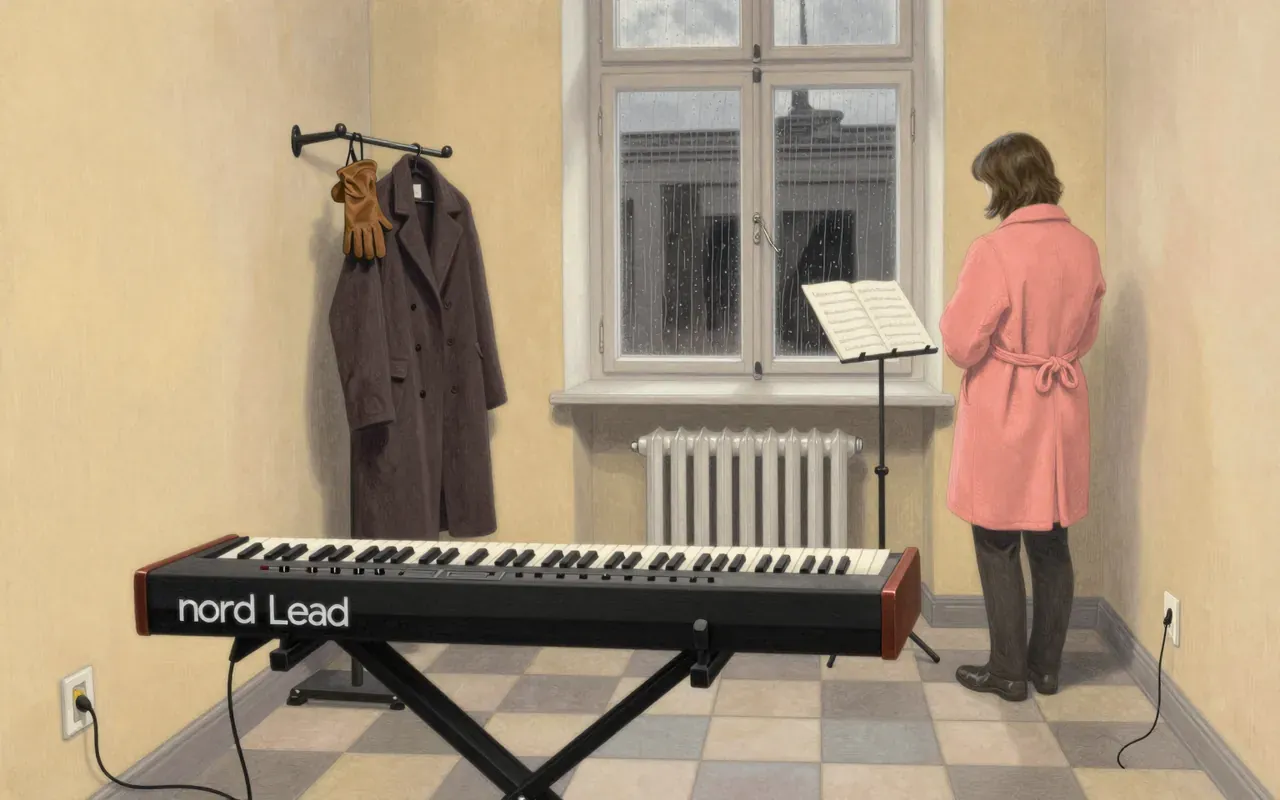
The Nord Lead redefined hands-on synthesis by replacing menus with knobs and analog circuitry with DSPs — all to deliver immediate, expressive control over virtual analog tones.

8:08

Oberheim OB-X

Oberheim

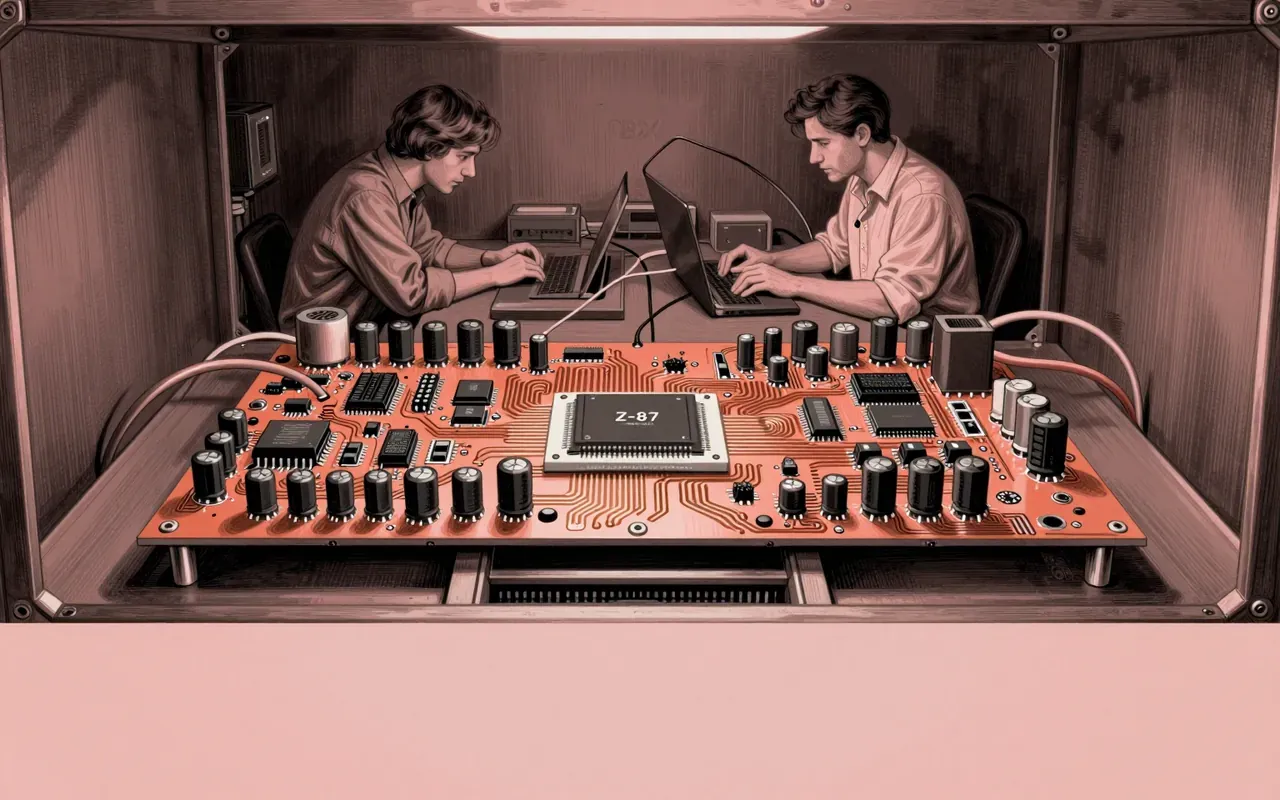
The OB-X was Oberheim’s first OB-series polyphonic analog subtractive synthesizer. Introduced in June 1979 to compete with the Prophet-5, it replaced modular SEM-based systems with a unified design built around interchangeable voice cards. It offered 4-, 6-, or 8-voice configurations, 32 user-programmable presets, and automated tuning via a Z-80 microprocessor. Its architecture prioritised stability and integration over flexibility or expressivity.

11:30

Oberheim OB-Xa

Oberheim

The OB-Xa is a pragmatic evolution: layering and splitting built in, filter envelope replacing cross modulation, Curtis ICs for stability, and Serial Buss for closed-system integration. It delivers thick, reliable polyphony — but sacrifices the OB-X’s discrete-circuit idiosyncrasy and FM flexibility.

8:26

ARP Odyssey

ARP

The ARP Odyssey is a duophonic analog synthesizer introduced in 1972. It was designed as a portable, performance-oriented alternative to the Moog Minimoog.

11:12

Korg Poly-800

Korg

The Korg Poly-800 is an 8-voice analog synthesizer released by Korg in 1983. It was the first fully programmable polyphonic synthesizer that sold for less than $1,000. It was designed for portability, featuring battery power and a lightweight design that allowed the user to play with it strapped around their neck. It utilised digitally controlled oscillators (DCOs), and was a paraphonic synth with a single filter shared between its eight voices. Each DCO offers sawtooth and square waveforms, which are mixed together with a white noise generator before being sent to a voltage-controlled filter (VCF). The Poly-800 features 2 polyphony modes: Whole mode offers 8-voice polyphony with one DCO per voice, while Double mode places the DCOs in pairs for a richer sound, albeit at the expense of reducing polyphony to four voices. The VCF is shared across all voices, which means the Poly-800 is technically a paraphonic synth, instead of a polyphonic synth. The filter can be set to either single or multiple trigger modes; in single mode, the envelope is triggered by the first key press and won't re-trigger until all keys are released. Multi mode allows each key press to trigger the filter envelope independently.

8:49

Polymoog

Moog · 1975

The Polymoog is a 1975 Moog keyboard that gives unlimited polyphony through divide-down oscillator architecture — but sacrifices per-voice synthesis, programmability, and filter control entirely.

9:59

Korg Polysix

Korg

The Korg Polysix is a 1981 six-voice polyphonic analog synthesizer designed for affordability through single-oscillator-per-voice architecture, compensated by built-in bucket-brigade-based chorus/phaser/ensemble effects — features that were relatively uncommon at launch and contributed to its accessibility and sonic richness.

9:44

Fender Princeton Reverb

Fender

The Fender Princeton Reverb is a 12-watt tube combo that integrates reverb and vibrato into a single, responsive, non-master-volume design. Introduced in 1964, revised through 1977, discontinued in 1981, and reissued in 2008, it delivers a specific kind of saturated, modulated tone at low-to-moderate volumes—and nothing else.

8:46

Prophet-5

Sequential Circuits

The Prophet-5 is an analog synthesizer manufactured by Sequential Circuits. It was designed by Dave Smith and John Bowen in 1977. It was the first polyphonic synthesizer with fully programmable memory. Before the Prophet-5, synthesizers required users to adjust controls to change sounds, with no guarantee of exactly recreating a sound. Sequential used microprocessors to allow users to recall sounds instantly rather than having to recreate them manually. The Prophet-5 facilitated a move from synthesizers creating unpredictable sounds to producing "a standard package of familiar sounds". Initially, Smith and Bowen developed the Prophet-10, a synthesizer with ten voices of polyphony, meaning it could play up to ten notes simultaneously. Smith and Bowen removed half the electronics, reducing the voices to five and creating the Prophet-5. In 1978, Sequential released the Prophet-5, the first programmable polyphonic synthesizer, which was widely used in the music industry. Whereas previous synthesizers required users to adjust cables and knobs to change sounds, with no guarantee of exactly recreating a sound, the Prophet-5 used microprocessors to store sounds in patch memory.

9:00

Prophet VS

Sequential Circuits

The Prophet VS is an 8-voice hybrid synthesizer released in 1986 by Sequential Circuits. It introduced vector synthesis using a diamond-pattern joystick to mix four 12-bit digital single-cycle waveforms per voice, which are then processed through analog CEM3379/3389 chips. Waves 0–31 are user-editable via MIDI sample dump or onboard harmonic mixing; waves 32–126 are fixed in firmware. It does vector morphing better than anything else of its era—but offers no velocity sensitivity, no aftertouch, no effects, and no reliable patch backup.

8:41

Pro Co RAT

Pro Co

The Pro Co RAT is a distortion pedal for electric guitar, first prototyped in 1977 or 1978 and entering full production in 1979. Its distinctive aggressive distortion stems from an accidental 47 ohm resistor substitution that increased op-amp gain, combined with diode-based hard-clipping. It uses an op-amp to amplify and diodes to limit the signal.

9:14

Akai S1000

Akai · 1988

The Akai S1000 was a 16-bit stereo digital sampler released in 1988. It offered CD-quality sampling, 24-bit internal processing, digital filters, effects routing, and early timestretching. It read CD-ROMs and wrote to SCSI hard disks. Its timestretching was crude but sonically distinctive—used on 'Higher State of Consciousness' and 'RipGroove'. It displaced the S900 as the studio standard.

9:06

Oberheim Polyphonic Synthesizer

Oberheim

The Oberheim Polyphonic Synthesizer is a series of analog music synthesizers produced from 1975 to 1979. It was the first production synthesizer capable of playing chords. It works by combining multiple SEM modules — each generating one voice — under shared keyboard control and a two-channel sequencer. Its sonic thickness and depth arise partly from random variance between SEM modules. It has no patch memory, suffers tuning drift, and demands high maintenance. Musicians used it for unstable, breathing chordal textures. It suits players who prioritise tactile, variable analog polyphony over stability or recall.

9:04

Roland SH-101

Roland

The Roland SH-101 is a monophonic analog synthesizer made by Roland Corporation between 1982 and 1986. It features a single oscillator, sub-oscillator, low-pass filter, mixer, noise generator, arpeggiator and sequencer. An ADSR envelope controls the filter and VCA. The LFO modulates filter, VCA, pitch and pulse width. It can be played as a keytar using an optional handgrip and shoulder strap, and it can be powered via battery.

8:12

Epiphone Sheraton

Epiphone

The Epiphone Sheraton is a thinline semi-hollow body electric guitar introduced in 1958 under Gibson’s ownership but exclusively manufactured by Epiphone. It was reworked from Epiphone’s Century archtop and shares its body design with Gibson’s ES-series. Key spec changes include the 1958 twin-pickup configuration, 1961 switch to mini-humbuckers, and 1970 shift to full-sized humbuckers and Japanese production.

8:23

Fender Starcaster

Fender

The Fender Starcaster is a semi-hollowbody electric guitar introduced in 1975. It features a bolt-on neck with a three-bolt joint, an offset body, maple fretboard, and a master volume control — distinguishing it from typical semi-hollow designs.

9:56

Fender Super Reverb

Fender

The Fender Super Reverb is a loud, physical, all-tube guitar amplifier with built-in spring reverb and tremolo — made from 1963 to 1982. Its blackface and silverface variants differ in circuit design, not just looks. It demands space and volume. It rewards touch. It does not apologise.

8:29

Ampeg SVT

Ampeg

The Ampeg SVT is a 1969 bass amplifier head designed by Bill Hughes and Roger Cox. It uses 14 vacuum tubes to deliver 300 watts of RMS power. Early units used unstable 6146B output tubes, later replaced with 6550s. It is a stand-alone head, not a combo. The Rolling Stones used five prototypes on tour in 1969, playing all guitars and basses through them.

9:27

Yamaha SY99

Yamaha

The Yamaha SY99 is a 1991 hybrid digital synthesizer combining FM, sample-based, and subtractive synthesis. It enables PCM samples to function as FM modulators, controllable via velocity, aftertouch, wheels, pedal, and breath controller. It improves on the SY77 with a 76-key keyboard, expanded ROM, user-loadable PCM samples usable in FM synthesis, and an SPX900-derived real-time controllable effects processor.

9:41

Synclavier

New England Digital

The Synclavier was not a keyboard for players. It was a digital sound laboratory — built for engineers, not performers. Its additive core was brittle. Its sampling was revolutionary. Its 100 kHz rate had no peer. Its role in film sound began at Glen Glenn Sound. Its legacy is infrastructural: the first hard-disk recorder, the first layered digital timbre system, the first computer-based sound editor. It belongs in history — not on a stage.

8:24

Roland System 100

Roland

The Roland System 100 is an analog semi-modular synthesizer introduced in 1975. It consists of discrete rack- and keyboard-mounted units (101, 102, 103, 104, 109), each independently powered, supporting patch-cable reconfiguration of an otherwise fixed signal path. It forms an expandable two-oscillator monosynth with sequencing and effects, uses 1V/oct control, and avoids fixed oscillator footages for enhanced sound design flexibility.

7:37

Roland TB-303

Roland

The Roland TB-303 is a 1981 subtractive bass synthesizer with a 24 dB/octave low-pass filter controlled by an envelope generator and an internal sequencer for note programming. Designed to simulate bass guitars, it was commercially unsuccessful and discontinued in 1984 due to its unrealistic sound.

9:03

EMI TG12345

EMI

The TG12345 was Abbey Road’s first solid-state console, installed in late 1968 to enable 8-track recording. It had 24 mic inputs, 8 tape outputs, and per-channel compression and EQ — a leap from the tube-based REDD .51 and the four-track Studer J37. It did one thing decisively: expand track count while integrating dynamics and tone shaping into every channel. It offered no automation, no recall, and no adaptability beyond that fixed architecture. It belongs in a working historical studio, not a modern hybrid setup.

9:38

Tone Bender

Sola Sound

The Tone Bender is a lineage of germanium-transistor fuzz pedals designed to out-sustain the Maestro Fuzz-Tone. Its revisions trade transistor count, topology, and features—not stability or convenience. It rewards touch. It punishes precision.

9:49

Roland TR-808

Roland

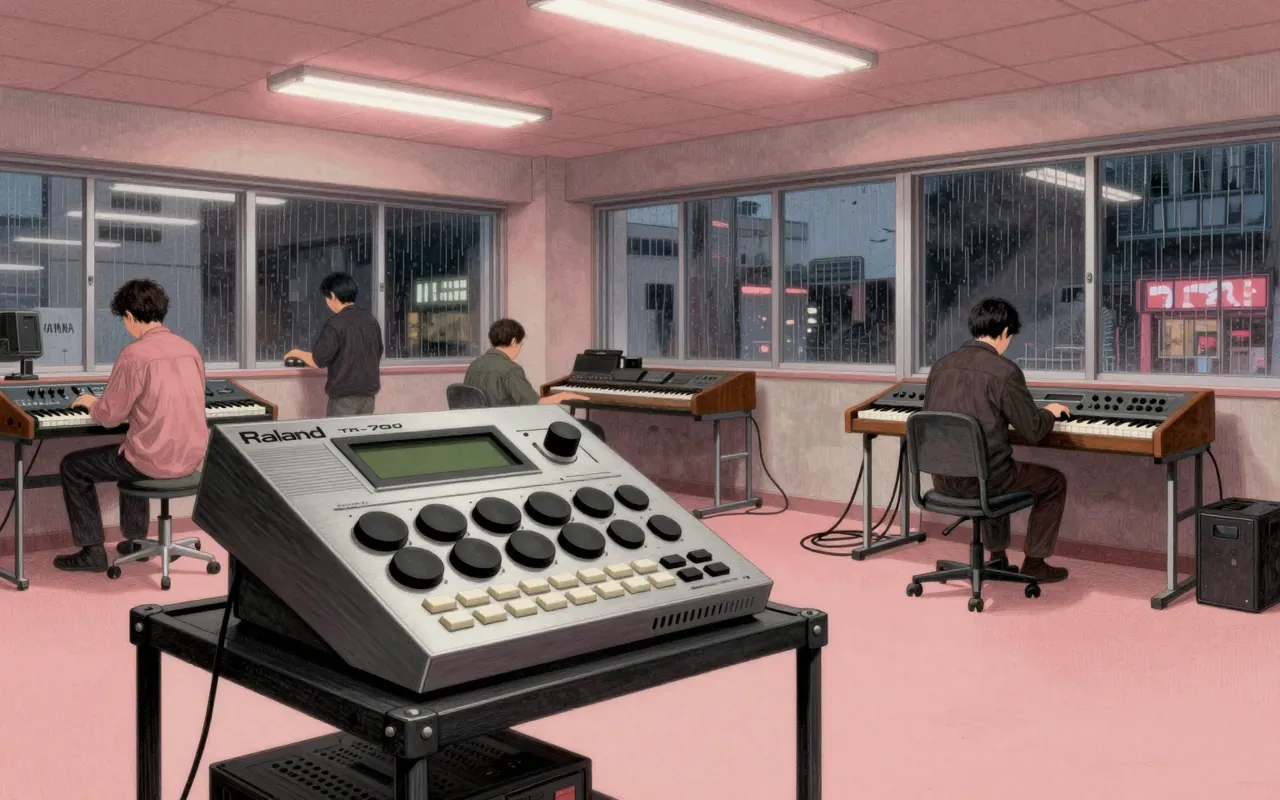
The TR-808 is a programmable analog drum machine introduced in 1980. It generated all sounds via analog synthesis—not sampling—and allowed full percussion track programming including breaks and rolls. It supported up to 32 patterns, chaining up to 768 measures, and beat accents. Roland discontinued it in 1983 after approximately 12,000 units due to semiconductor shortages. It was a commercial failure because the market preferred realistic drum sounds.

9:00

Roland TR-909

Roland

The TR-909 is a rigid, unyielding rhythmic engine. Its strength is timing, not texture. Its legacy is built on what it withheld—not what it offered.

11:00

Dallas Rangemaster Treble Booster

Dallas Rangemaster

The Dallas Rangemaster Treble Booster is a 1965 desktop effects unit made for guitarists in the 1960s. Its function was two-fold: to increase the signal strength of the guitar going into the amplifier, and to increase tones at the high end of the spectrum (a treble booster). The need for a treble booster arose in the mid-1960s, as British tube amplifiers such as the Vox AC30 or Marshall JTM45 tended to produce a slightly dark, muddy sound when overdriven, particularly when used with humbucking pickups. A pre-amplifier that also boosted treble proved a solution. Additionally, the vintage components in the Rangemaster circuitry could add characteristic distortion and overtones to color the guitar sound, much in the way of the more modern overdrive pedals. The Rangemaster Treble Booster was first made in the 1965 by London company Dallas Musical Ltd., incorporated in 1959. The unit is simple and consists of a grey folded metal casing with an on/off switch, a potentiometer controlling the boost setting, and in- and output jacks. It was designed to sit on top of an amplifier rather than on the floor, where most effects units live.

8:32

Trident A Range

Trident

The Trident A Range is a rare, studio-built analog mixing console — not an instrument — with only 13 units ever made. It was built by and for Trident Studios, adopted by Cherokee Studios after outperforming Neve, Helios, and Cadac in a drum-miking test, and prized for its distinct, 'musical' EQ and saturated tonal character. It offers no automation, no digital features, no portability, and no relevance outside high-end analog studio contexts.

10:30

Neumann U 47

Neumann · 2015

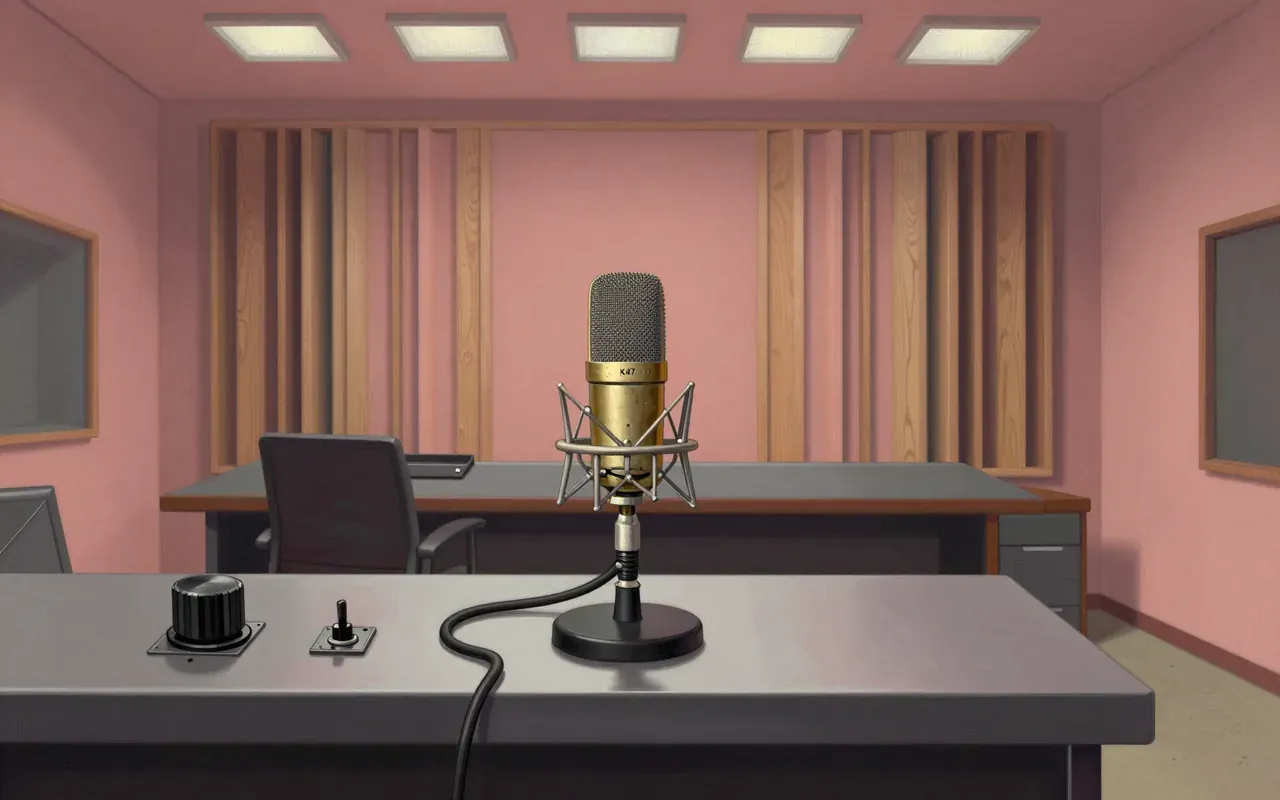
The U 47 is a historically significant but operationally constrained microphone. Its innovation lies solely in being the first switchable-pattern condenser — a functional milestone, not a sonic benchmark. It demands specialist maintenance, offers no modern conveniences, and has no documented sonic signature beyond its era-specific implementation. It belongs in a museum or a dedicated vintage studio — not a general-purpose rig.

10:14

Ensoniq VFX

Ensoniq

The Ensoniq VFX is a performance-type synthesizer released in 1989. It employs Transwave Wavetable Synthesis, Sample playback and Subtractive Synthesis. It has 21-voice polyphony. It features Poly-Key Pressure (Polyphonic Aftertouch). It allows combining up to three voices into a preset for live performance. It includes the Ensoniq Signal Processing (ESP) chip for 24-bit effects. A single sound can contain up to six oscillators. It integrates synthesis, effects and sequencing into a single-unit digital studio. It delivers terrific acoustic sounds and innovative performance and sequencing features.

9:02

Access Virus

Access

The Access Virus is a series of DSP-based virtual analog synthesizers introduced in 1997 and updated through the TI series. It offers subtractive, phase distortion, and FM synthesis—with wavetable added from the TI generation onward. Formats include rack modules (Virus B, C, TI Snow), keyboard versions (Virus KB, TI Keyboard, TI Polar), and fixed control layouts. It prioritises polyphonic stability, real-time editing, and aggressive tonal character over tactile expressivity or modern integration.

9:26

DigiTech Whammy

DigiTech · 1989

The DigiTech Whammy is a treadle-controlled digital pitch shifter pedal introduced in 1989. It uses a licensed IVL Technologies algorithm to shift pitch up to two octaves. Early models were monophonic and produced artificial, wobbly artifacts on chords. Later models improved chord tracking accuracy. It was developed by DOD Electronics (branded as DigiTech), a company founded in 1974.

10:20

Gretsch White Falcon

Gretsch

The Gretsch White Falcon is an electric hollow-body guitar introduced in 1954 as a non-commercial showpiece for the NAMM Convention. It was conceived by Jimmie Webster as an improvement over the Gibson Super 400. Strong demand led to rushed production beginning in 1955 under model number 6136. Gretsch marketed it as 'the finest guitar we know how to make – and what a beauty!' and priced it at $600 — second only to Gibson's Super 400CESN. Its finish design drew from Gretsch drum finishes and American car aesthetics of the era.