audiobriefs
Longest first

All briefs

747 briefs · 6840 min · 481–576 on page 6 of 8
8:47

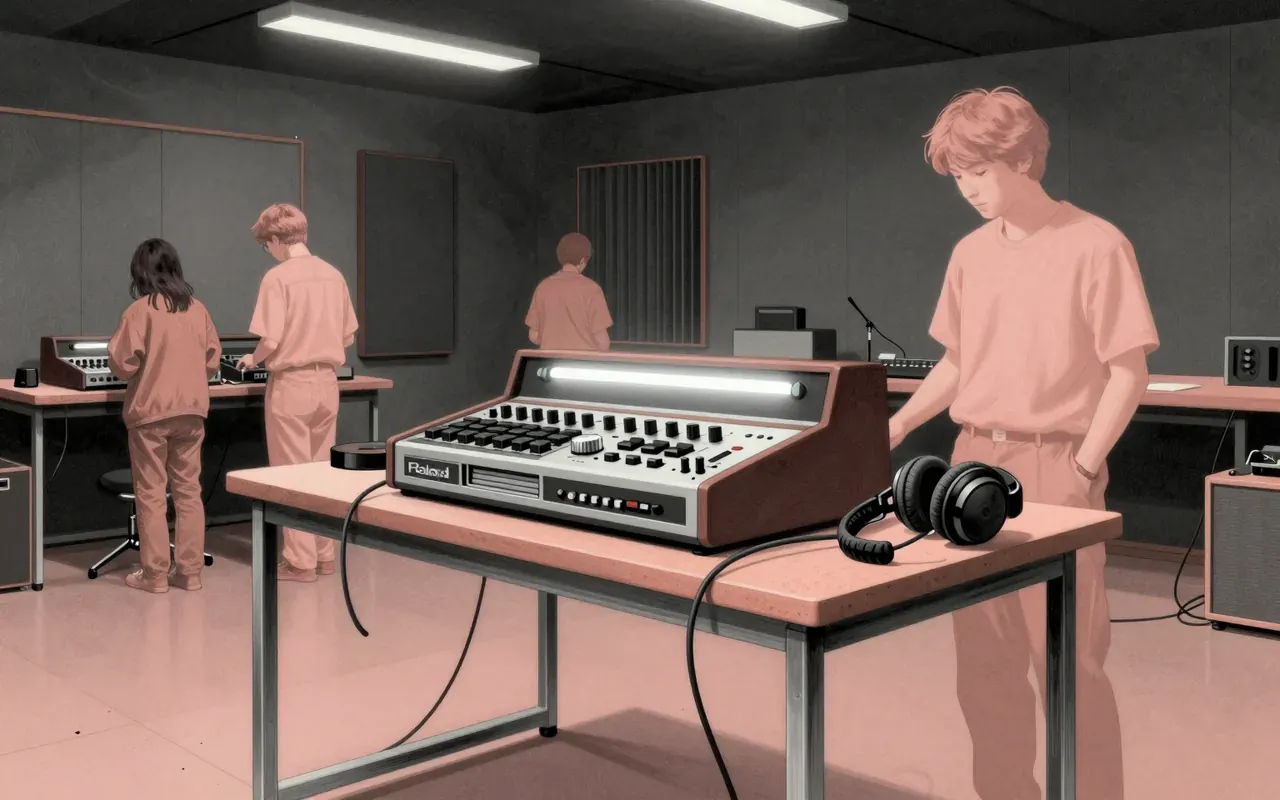
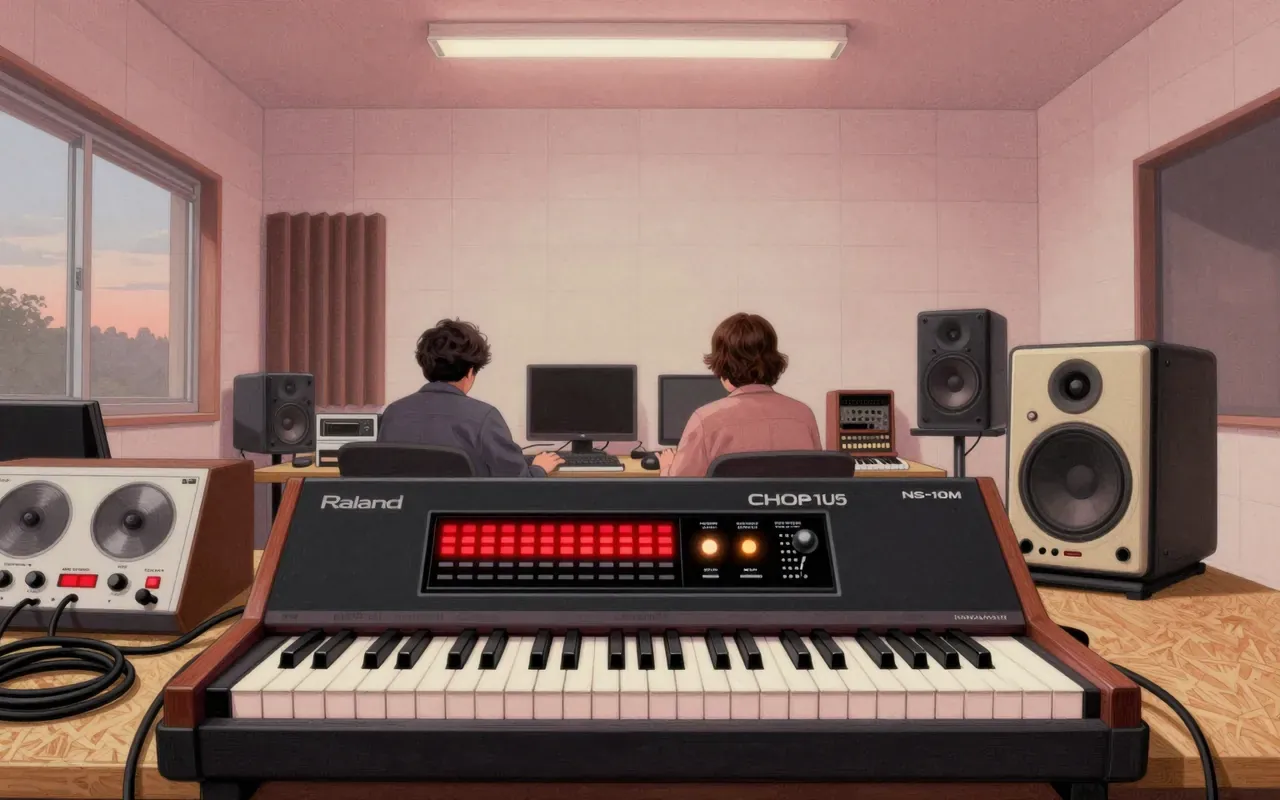
Roland CR-78

Roland

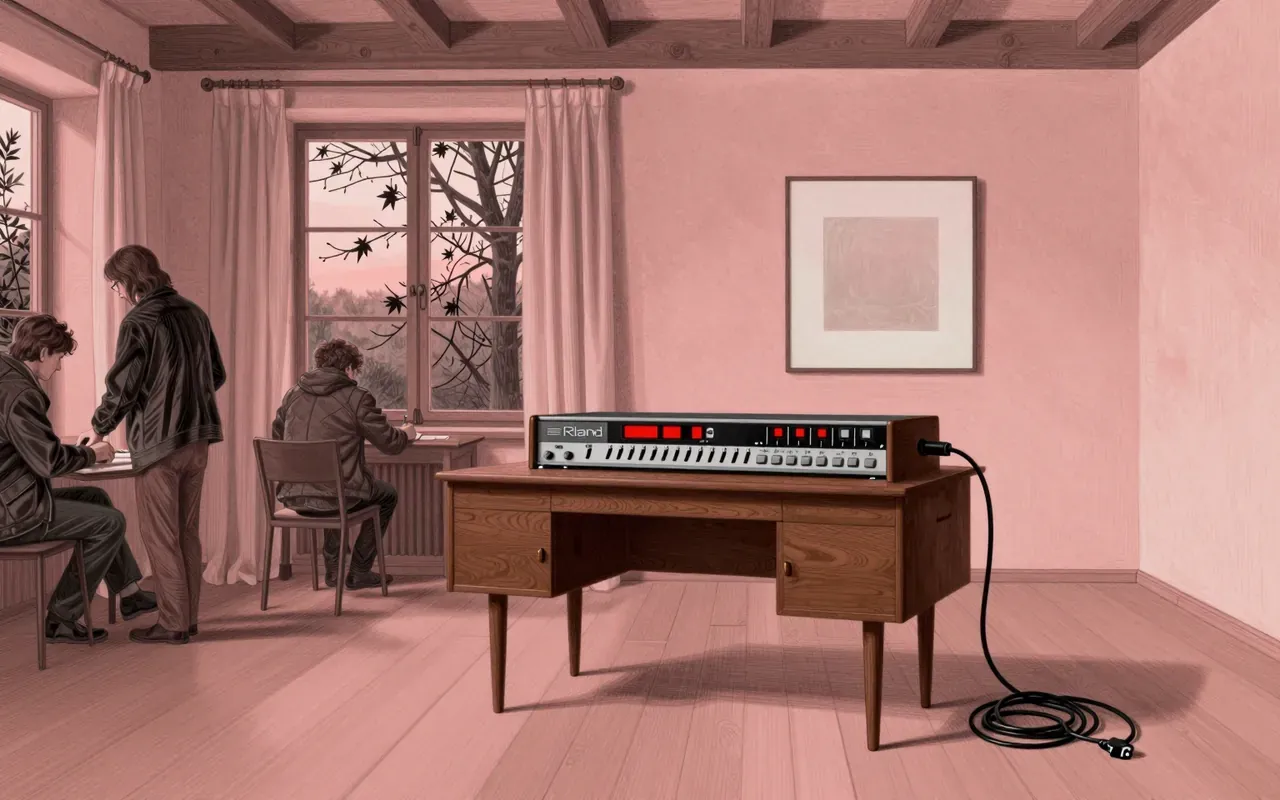
The CR-78 is historically singular: the first microprocessor-based drum machine and the first to allow user-programmable pattern creation. Its analog synthesis yields 14 fixed drum sounds. Its four-note polyphony defines its rhythmic ceiling. It does not offer sound editing, velocity layers, or sample playback. It belongs in rooms where constraint is compositional strategy—not a flaw to be patched.

8:46

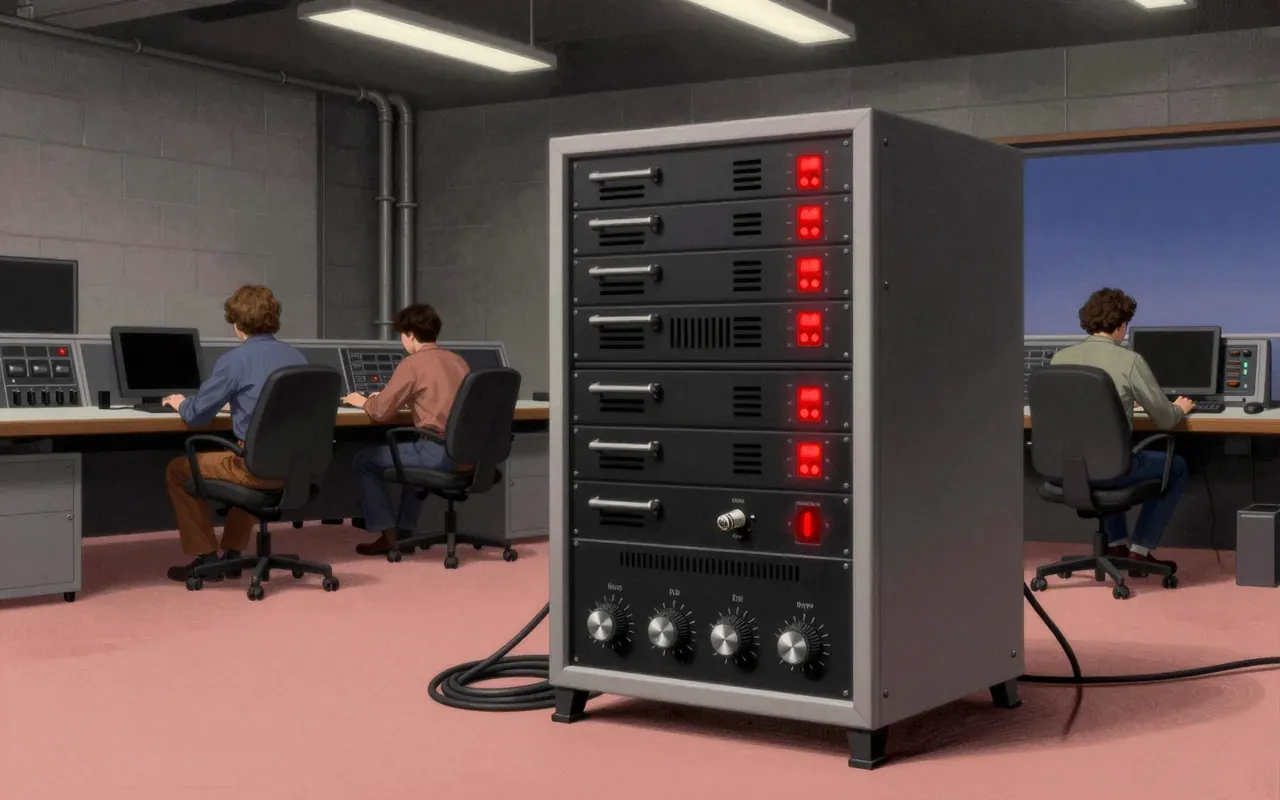
dbx 160X

dbx

The dbx 160X is a fixed-response analog limiter/compressor built for immediacy, not nuance. It excels when slammed on snare, kick, bass, or guitar — but fails at subtlety, especially on vocals. Its simplicity is functional, not forgiving.

8:46

Shure Beta 52

Shure

The Shure Beta 52 is a dynamic microphone built for kick drum and bass. It has a supercardioid pattern, 20Hz–10kHz response with 4kHz presence boost, strong proximity effect, and handles 174dB SPL. It was replaced by the Beta 52A.

8:46

Rupert Neve Designs Portico 5043

Rupert Neve Designs

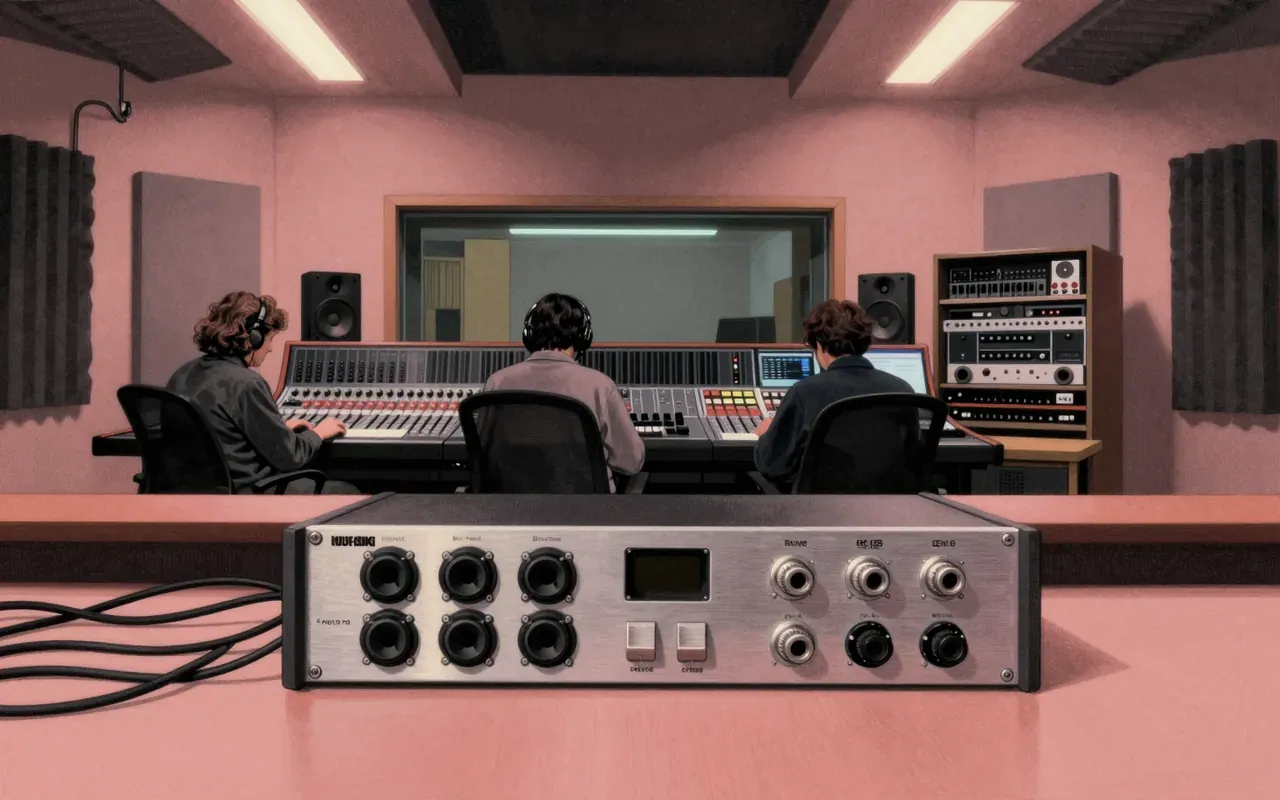
The Portico 5043 is a studio compressor in Rupert Neve Designs’ Portico series. It delivers consistent, source-agnostic compression with optional harmonic colouration. Its physical format undermines its rack-ready promise. It does not replace a dedicated clean limiter or a compact multi-channel solution — but it rarely needs replacing on a track once engaged.
8:46

MicroKORG

Korg

The MicroKORG is a compact, DSP-based synthesizer/vocoder released in 2002. It uses analog modelling to deliver immediate, expressive sounds — especially through its built-in vocoder and key transpose function. Its four-voice polyphony limits chordal playing and layering, but its hands-on interface and portability made it a staple for live vocalists and electronic performers. Still in production as of 2022, it prioritises utility over expandability.

8:46

Shure SM58

Shure · 1966

The Shure SM58 is a professional cardioid dynamic microphone introduced in 1966. It is commonly used in live vocal applications. It has been produced since 1966 and is still the industry standard for live vocal performance microphones. It is the most popular live vocal microphone in the world. Like all directional microphones, it is subject to proximity effect, a low-frequency boost when used close to the source. Its cardioid response reduces pickup from the side and rear, helping to avoid feedback onstage. The SM58 uses an internal shock mount to reduce handling noise. A distinctive feature of the SM58 is its pneumatic suspension system for the microphone capsule. The SM58 was introduced in 1966 as part of the SM series. The SM58 was originally developed for the TV studio market with a non-reflective finish and no on-off switch. The SM58 has been one of the two bestselling microphones in the world since the late 1960s. The SM58 shares nearly identical features with the SM57, differing mainly in grille design.
8:46

Prophet-5

Sequential Circuits

The Prophet-5 is an analog synthesizer manufactured by Sequential Circuits. It was designed by Dave Smith and John Bowen in 1977. It was the first polyphonic synthesizer with fully programmable memory. Before the Prophet-5, synthesizers required users to adjust controls to change sounds, with no guarantee of exactly recreating a sound. Sequential used microprocessors to allow users to recall sounds instantly rather than having to recreate them manually. The Prophet-5 facilitated a move from synthesizers creating unpredictable sounds to producing "a standard package of familiar sounds". Initially, Smith and Bowen developed the Prophet-10, a synthesizer with ten voices of polyphony, meaning it could play up to ten notes simultaneously. Smith and Bowen removed half the electronics, reducing the voices to five and creating the Prophet-5. In 1978, Sequential released the Prophet-5, the first programmable polyphonic synthesizer, which was widely used in the music industry. Whereas previous synthesizers required users to adjust cables and knobs to change sounds, with no guarantee of exactly recreating a sound, the Prophet-5 used microprocessors to store sounds in patch memory.

8:45

Boss BF-1 Flanger

Boss

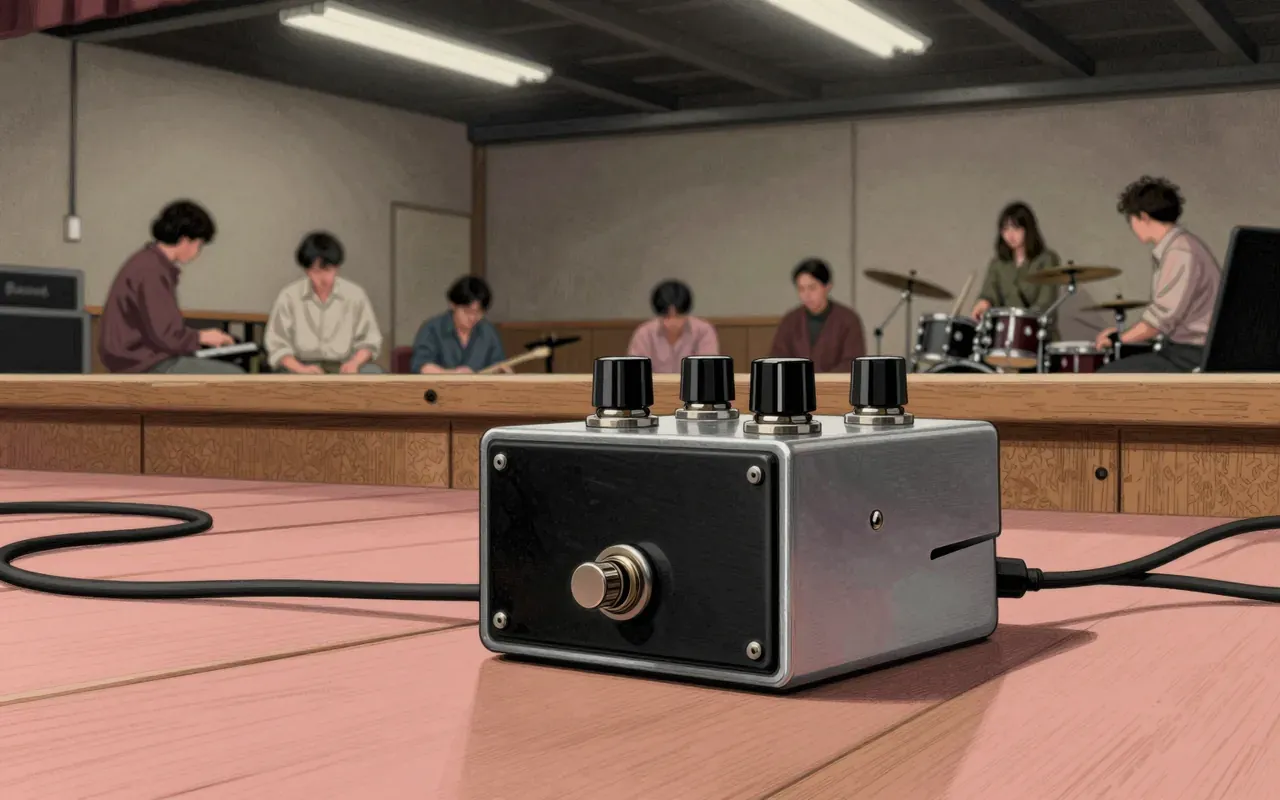
The Boss BF-1 Flanger is a 1979 analog foot pedal designed for electric guitar. It uses four knobs — manual, depth, rate, resonance — to control a simple, unstable flange sweep. It has no bypass, no presets, no expression input, and no stereo output. It was discontinued and replaced by the BF-3.

8:45

Neve 8108

Neve

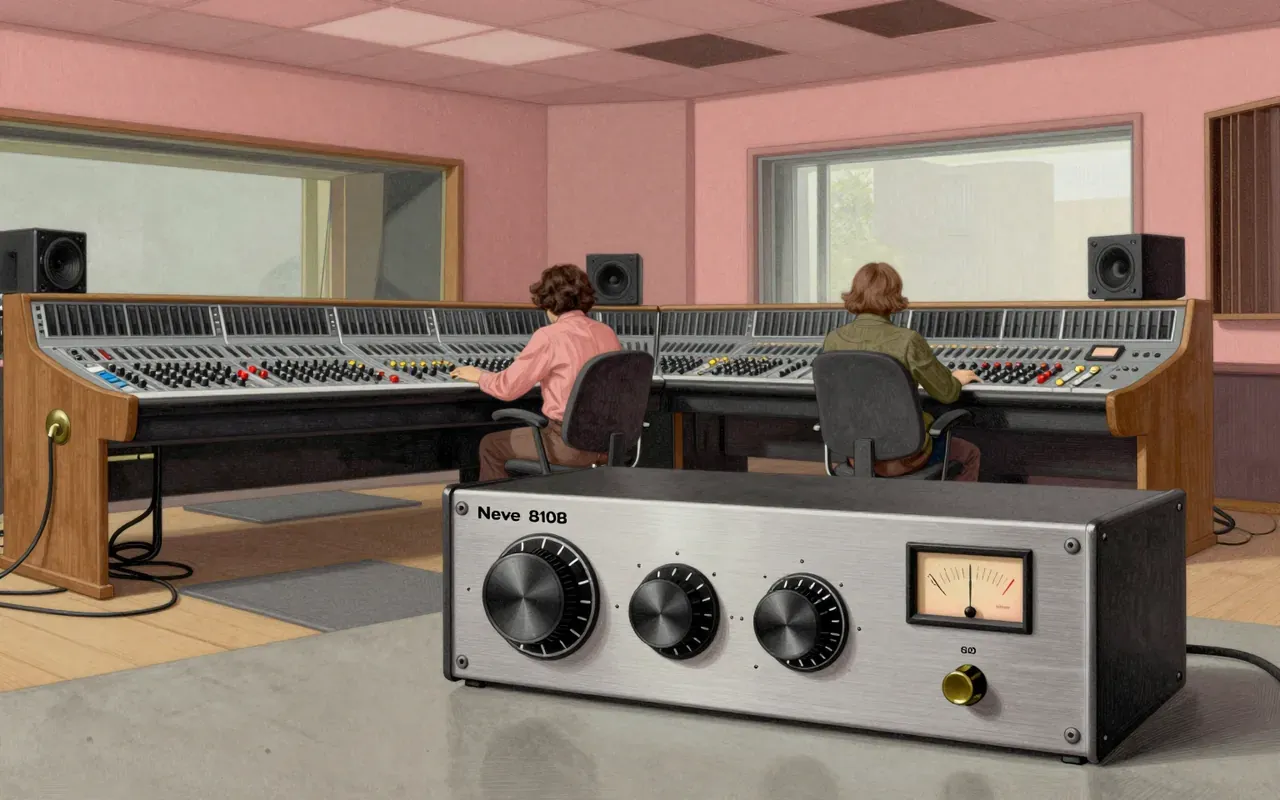
The Neve 8108 is a 32-channel analog mixing console built in 1979. It delivers warm, full preamps and top-notch parametric EQ on every channel. Its channel strips are laid out for convenient access. Its digital routing system is quirky.

8:45

Nord Lead

Clavia

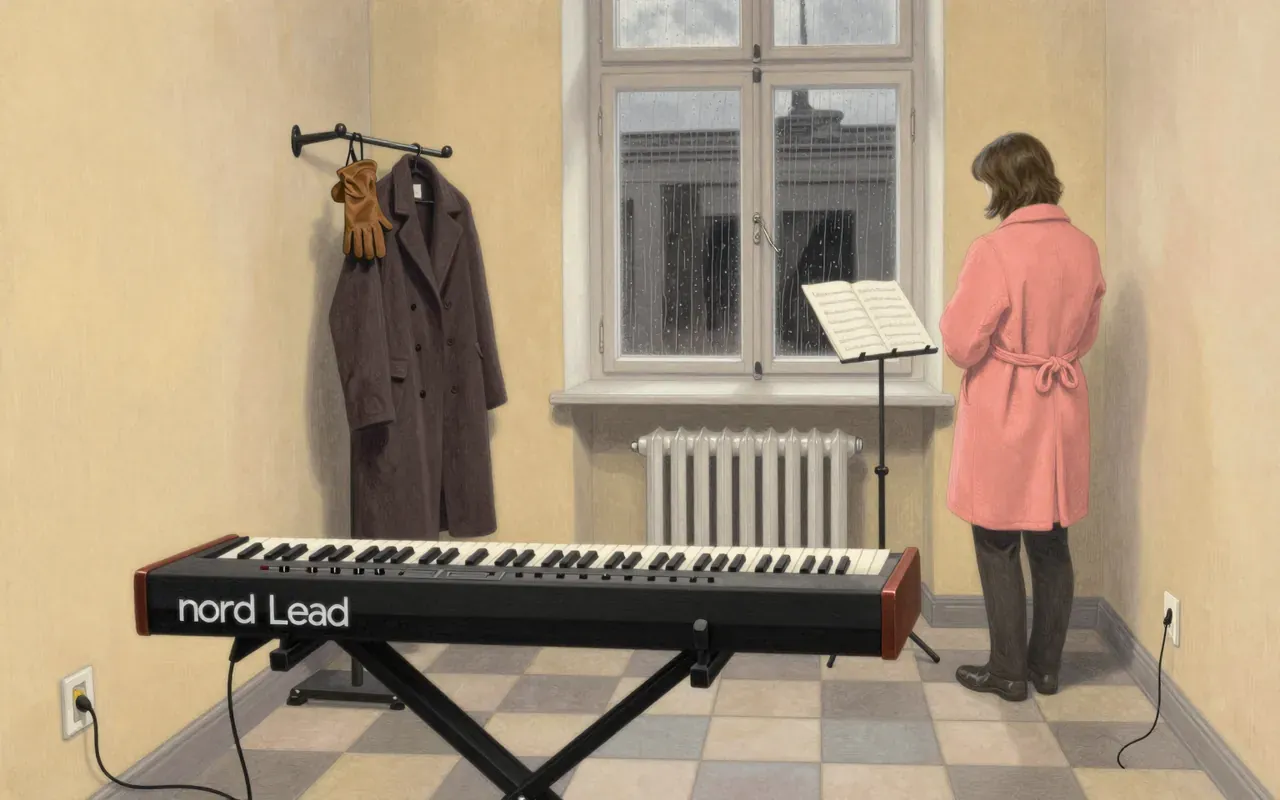
The Nord Lead redefined hands-on synthesis by replacing menus with knobs and analog circuitry with DSPs — all to deliver immediate, expressive control over virtual analog tones.

8:44

AKG C460

AKG

The AKG C460B + CK63ULS is a small diaphragm condenser microphone. It delivers accuracy, not attitude. It has no switches, no colour, no compromise — just a fixed cardioid pattern, fixed frequency response, and fixed reliance on external preamp and placement. It excels where definition matters most. It fails where character is required.

8:44

AKG D112

AKG

The AKG D112 MkII is a dynamic microphone built for one purpose: capturing kick drum impact. It is heavier than many mics (778 g), requires no power, and belongs to the same lineage as the original D112 — updated, not reinvented. It excels where low-end punch and SPL tolerance matter most. It fails where clarity, air, or transient fidelity are required. It is not a vocal mic. Not a room mic. Not a hi-hat mic. It is a kick drum mic — and nothing more.

8:44

Ensoniq DP/4

Ensoniq

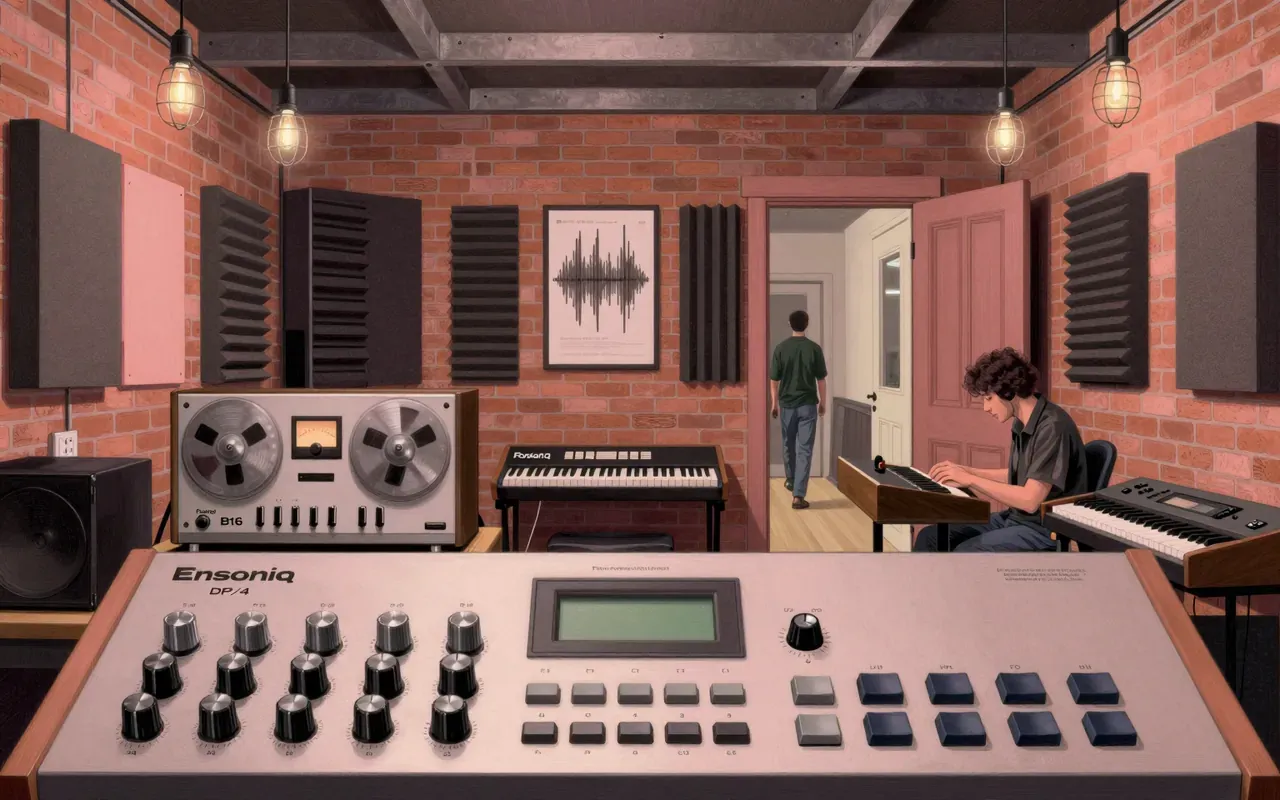
The Ensoniq DP/4 is a rack-mounted digital multi-effects processor. It uses four 24-bit DSPs to process four signals in parallel. Input gain is adjustable for saturation. Effects are intentionally non-realistic. Transformer noise occurs when idle. Front-panel editing is cumbersome. MIDI control via MIDIQuest is unreliable. The manual is unusable. An internal battery is user-replaceable.

8:44

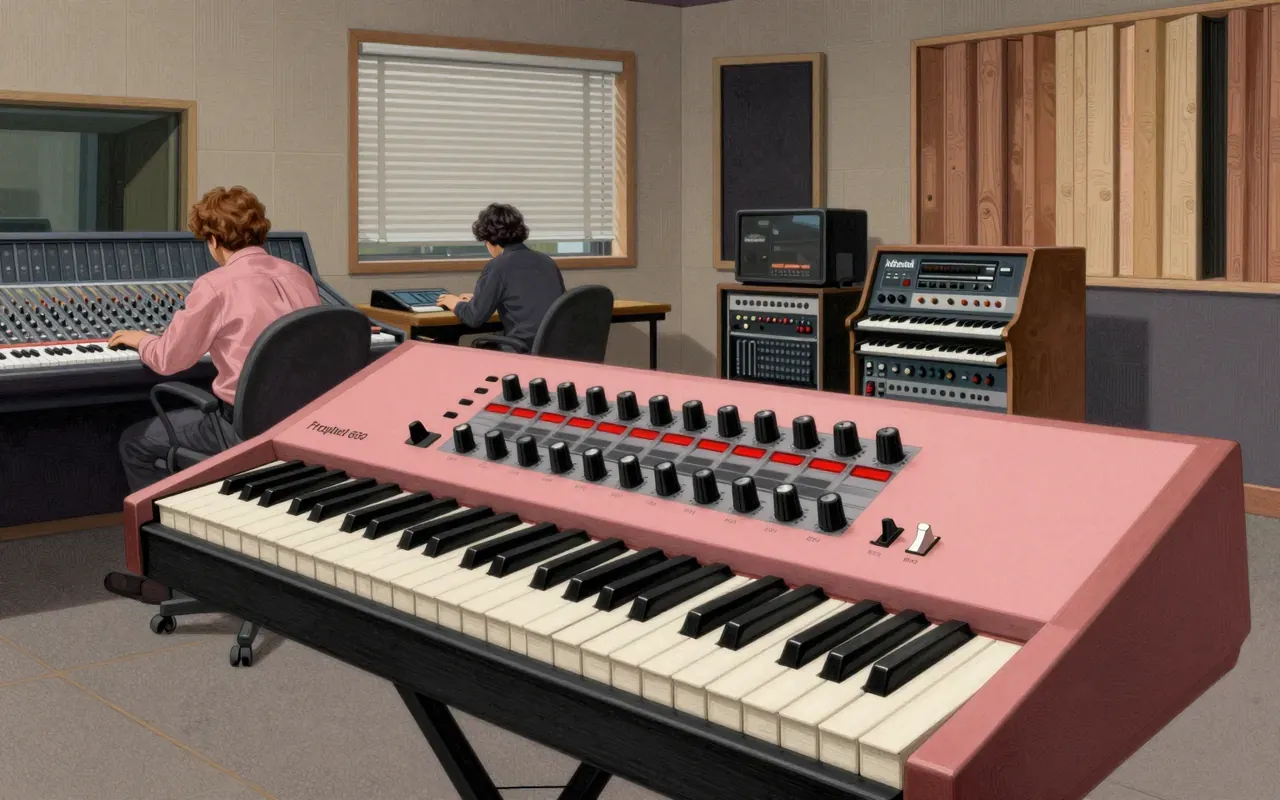
Sequential Circuits Prophet-600

Sequential Circuits

The Prophet-600 is a 1982 6-voice analogue synth. It introduced MIDI to commercial instruments. It gives players two oscillators per voice with sync, variable pulse, and triangle/saw waveforms. Its VCF, VCA, and Poly-Mod come from the Prophet-5. It includes an arpeggiator and 2-track sequencer. It glides. It modulates flexibly. It does not track reliably over time. It has no velocity or aftertouch. It is not expandable. It belongs in rooms where history and immediacy matter more than precision.

8:44

Line 6 DL4

Line 6

The Line 6 DL4 is a 1999 digital delay pedal. It models 16 vintage delays. It has a 14-second looper. It is one of the first digital modeling effects units.

8:44

Roland SP-808

Roland

The SP-808 is a self-contained sampling workstation built for immediacy—not convenience. Its limits are absolute: four stereo voices, Zip-only storage, no modern connectivity. Its strength is integration: sampler, synth, and sequencer in one tactile unit, holding over 1,000 samples internally while demanding physical media discipline.

8:43

Roland Alpha Juno-1

Roland

The Roland Alpha Juno-1 is a 1986 6-voice analog synth built for techno and rave. It delivers sharp bass and noise, improved MIDI, and chord memory — but sacrifices warmth and hands-on editability.

8:43

Korg Electribe ER-1

Korg

The Korg Electribe ER-1 is an affordable analogue beat unit. It gives bangs, buzzes, blips and spacey weird noises via four synth keys and four sampled percussion sounds. It saves up to 256 patterns, each up to 4 measures. Real-time changes — like jungle delayed drums or scratching sounds — save instantly. Its PCM sounds (Hclap, HiHat, Crash) are uninteresting. It connects via MIDI in/out/thru. Its housing is plastic.

8:43

Vestax PDX-2000

Vestax

The Vestax PDX-2000 is a DJ turntable built for scratching and mixing. It delivers high torque and stable tracking. Its straight tone arm, pop-up light, and adjustable brake serve functional roles in performance. Pitch control is imprecise. The start button and pitch fader are fragile. Road cases are hard to find due to its length.

8:43

Tascam Portastudio 244

Tascam

The Tascam Portastudio 244 is a 1984 four-track cassette recorder. It gives immediate, portable multitrack recording with EQ, gain, and switchable input impedance per track. DBX noise reduction works. Analog saturation stays musical. But signal degrades horribly at each bounce. Cassette transport is fragile. Preamps sound thin and harsh. No phantom power. Unbalanced inputs only. It was bought in Paris in 1984 for nearly 5,000 francs.

8:43

Focusrite VoiceMaster Pro

Focusrite

The Focusrite VoiceMaster Pro is a vocal-optimised channel strip with a discrete Class A preamp, optical compressor, de-esser, and tube simulation. Its preamp is soft in the highs. Its compressor is transparent. Its EQ is functional but unmusical. All controls are front-panel only. It delivers what vocal tracking needs—not what mixing demands.

8:42

Studer A810

Studer

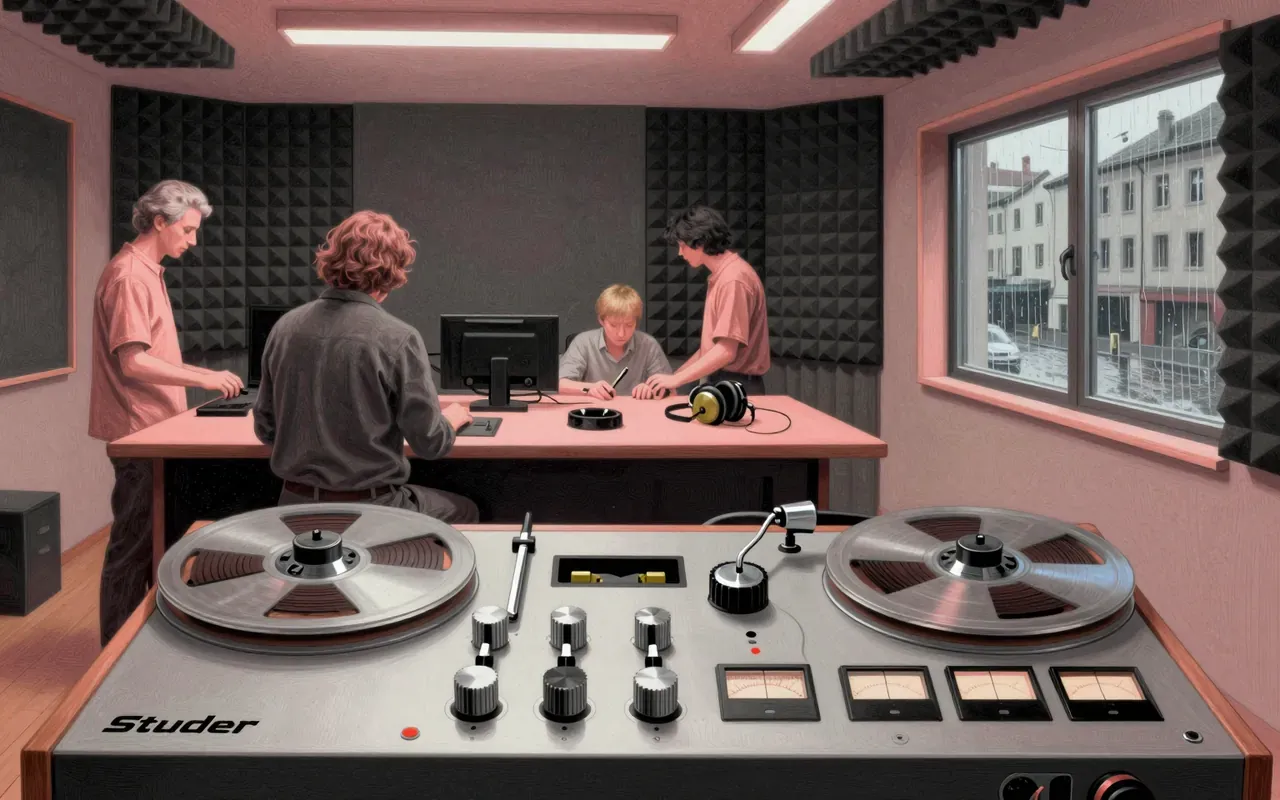
The Studer A810 is an analog multitrack recorder that functions reliably in steady-state operation. But it fails sharply and obscurely after power interruptions. Troubleshooting those failures is very hard. One user explicitly prefers the A807 over the A810. Nothing is stated about its format, track count, year introduced, or what recordings were made on it.

8:42

Korg Electribe SX ESX-1

Korg

The Korg Electribe SX (ESX-1) is a 2003 sample-based groovebox built for dance music production and live performance. It uses sample-based sound creation to generate 16 assignable parts—including nine one-shot drum parts, two keyboard parts for melodic playback, two stretch parts for tempo-adjusted loops, one slice part for rhythmic phrase division, one audio-in part, and one drum accent part. It ships with 196 preloaded samples, 128 factory patterns, and 3 demo songs. A major upgrade over earlier ElecTribe models, it offers 285 seconds of sample memory at 44.1kHz for up to 384 user samples, slicing at rhythmic peaks, Motion Sequencing for real-time parameter automation, and three stereo effects processors with chaining.

8:42

Roland SH-5

Roland

The Roland SH-5 is a monophonic analog synthesizer introduced in 1976. It has two VCOs, two LFOs, two multi-mode filters, two VCAs, a 5-source mixer, stereo panning, portamento and ring modulation. It is no longer manufactured. No technical specifications are available.

8:42

Gibson Marauder

Gibson

The Gibson Marauder is a 1975–1979 bolt-on electric guitar designed to compete with Fender’s single-coil models. It features a custom Bill Lawrence humbucker in the neck and an angled blade-style single coil at the bridge — both sealed in clear epoxy. Its construction includes a Les Paul–shaped contoured single-cutaway body and bolt-on maple neck. Only 7,111 units were made before discontinuation in 1979 (though some were made until 1982). Endorsed by Ace Frehley and Paul Stanley, it failed to gain traction against Fender due to its compromised playability and lack of tonal flexibility.

8:42

Elka Synthex

Elka

The Elka Synthex is an 8-voice analog keyboard synthesizer produced by Italian music instrument manufacturer Elka from 1981 to 1985.

8:41

Chamberlin M1

Chamberlin · 1970

The Chamberlin M1 appeared in 1970 as a table-top, much more durable Chamberlin design. It dropped the rhythm tapes, rewound its tapes with a return-roller system and used higher-quality playback heads. About 130 were built before production ended in 1981.

8:41

AKG C452

AKG

The AKG C452 C is a small diaphragm condenser microphone. It has no stated controls, no pattern options, no filters, no pad. Its function is narrow and fixed. Its value lies in consistency, not versatility.

8:41

Roland SRV-2000

Roland

The Roland SRV-2000 is a 1984 digital reverb unit with pseudo-stereo I/O, 16-bit resolution, and 10 kHz bandwidth. It offers 32 programs — including hall and room — with editable reverb time, pre-delay up to 160 ms, high-frequency attenuation, and a 3-band parametric EQ (+12 dB to −24 dB). It delivers coherent, homogeneous stereo imaging and eliminates breath, snap, and flutter even at high signal levels. It is rated sonically between the Yamaha REV 7 and Lexicon PCM 60 — less refined than the latter, more universal.

8:41

Pro Co RAT

Pro Co

The Pro Co RAT is a distortion pedal for electric guitar, first prototyped in 1977 or 1978 and entering full production in 1979. Its distinctive aggressive distortion stems from an accidental 47 ohm resistor substitution that increased op-amp gain, combined with diode-based hard-clipping. It uses an op-amp to amplify and diodes to limit the signal.

8:40

Ibanez CS9 Stereo Chorus

Ibanez

The Ibanez CS9 Stereo Chorus is an early-1980s analog chorus pedal using Bucket Brigade Delay chips. It has two knobs (speed and width), one switch, one analog input, and two outputs (L(mono) and R stereo). It operates on 9V battery or AC/DC adapter. Its metal case ensures durability and repairability. The effect is subtle: cranking both knobs yields only gentle thickening—not pronounced modulation. It warms the clean tone rather than applying overt chorus. It does not deliver strong, fast, or wide modulation. It belongs in the rig of players who prioritise warmth, stereo spread, and reliability over dramatic movement.

8:40

E-mu Systems E6400

E-mu Systems

The E-mu Systems E6400 is a hardware sampler built for radical sample transformation — not faithful reproduction. Its strength is in routing: the modulation matrix and modular-style processing blocks (quantize, flipflop, diode, lag) let users rewire signal flow in ways few samplers allowed. Its SCSI support exceeds its 9GB spec — users ran 18GB drives. Its DACs are transparent; its ADCs are not. It includes Z-plane, formant, phaser, flanger, Doppler, bitreducer and Convolver tools — and its reverb uses impulse response sampling. It ships with EOS 3.00b and 1MB CPU RAM. It is for sound designers who treat samples as raw material to be corrupted, rerouted and convolved — not archived.

8:40

Korg PS-3100

Korg

The Korg PS-3100 is a rare (600 units), 30kg, 48-voice analog synthesizer from 1977. It uses 12 divide-down VCOs to drive 48 independent voice circuits — one VCO, VCF, VCA and EG per key. Its warm LPF and 3-band resonator enable rich formant and phase effects. LFO1 reaches audio rate and delivers AM up to ring modulation. One EG is polyphonic; the other is universal and paraphonic. Twelve intonation scaling controls allow non-equal-tempered tuning. It has no patch memory.

8:40

Beyerdynamic DT 770 Pro

Beyerdynamic

The DT 770 PRO is a closed-back, handcrafted-in-Germany studio headphone. It delivers neutral, precise full-range sound with punchy lows and analytical highs. It isolates exceptionally well. It weighs 375 g including cable. All components are replaceable. It is used globally by music producers, sound engineers, and broadcasters.

8:40

Mutable Instruments Clouds

Mutable Instruments

Clouds is a granular audio processor for Eurorack that transforms live input into dense, overlapping grains. It records continuously into a short, variable buffer (up to 8 seconds), allows freezing that buffer to isolate a sonic space, and provides hands-on control over grain position, size, pitch, density, timing distribution, and envelope shape. A diffuser blurs transients using all-pass filters. It supports 40–60 concurrent grains and operates in stereo with extensive CV control, dry/wet blending, feedback, and reverb-like effects during freeze mode. It does not store or recall samples, nor does it support offline processing or waveform editing.

8:40

Prophet 2000

Sequential Circuits

The Prophet 2000 is Sequential Circuits’ first sampler — released in 1985. It uses 12-bit sampling at up to 41.667 kHz, with 256 kilowords of memory. It offers 8-voice polyphony and early multitimbral operation via MIDI channels. Its analog VCFs and VCAs give it warmth absent in later samplers. It was relatively affordable at £2,000.

8:40

Roland Juno-106

Roland

The Juno-106 is a six-voice analog synthesizer released by Roland in February 1984. It features digitally controlled oscillators, 128 patch memories (up from the Juno-60’s 56), a performance lever for pitch and modulation, and early MIDI implementation enabling parameter change sequencing.

8:39

Gibson Thunderbird

Gibson

The Gibson Thunderbird is a 34-inch scale electric bass introduced in 1963. Designed by auto stylist Raymond H. Dietrich, it features neck-through construction and a reverse body shape. It was Gibson’s first bass at that scale and originally came in two models: the single-pickup Thunderbird II and dual-pickup Thunderbird IV. Its soapbar humbuckers deliver focused midrange. In 1966, Gibson altered the design to a non-reverse body and set-neck construction following a lawsuit from Fender.

8:39

Voyetra-8

Octave-Plateau

The Voyetra-8 is an eight-voice, rack-mountable, analog synthesizer introduced in 1982 by Octave-Plateau Electronics. It features 8 programmable analog voice cards, a sophisticated modulation matrix with four banks per voice, and supports Whole-8, Split, and Layer modes. Its memory stores 100 Programs and 100 Steps, and it dumps presets via MIDI using controller changes rather than SysEx. Each voice includes two VCOs, a 24 dB/octave lowpass VCF, two LFOs, two ADSRs, noise, and VCO sync. Key assignment modes and extended envelope parameters allow deep real-time control over voice behavior and articulation.

8:38

dbx 120XP Subharmonic Synthesizer

dbx

The dbx 120XP is an undocumented studio effect that generates subharmonics. Its operation is opaque. Its design yields no known advantages over alternatives. Its utility depends entirely on tolerance for uncertainty.

8:38

Wurlitzer 200A

Wurlitzer

The Wurlitzer 200A is a 73-key electro-mechanical electric piano with built-in speakers, output jacks, a sustain pedal, carrying handles, and two knobs — one for volume, one for tremolo speed. Its keyboard action is tactile and easy to play. Its tone is uniquely recognizable. It is a newer model than earlier Wurlitzer electric pianos. It offers more tonal range than those earlier models only via dedicated tremolo and volume controls.

8:38

Uni-Vibe

Shin-ei · 1968

The Uni-Vibe is a 1968 Shin-ei footpedal phaser designed by Fumio Mieda. It creates chorus and vibrato simulations using an optical circuit: an incandescent bulb shining on LDRs inside a reflective shield drives staggered phasing filters—without op-amps. Its effect is a throbbing, hypnotic pulse rooted in atmospheric radio modulation, not Leslie emulation. It was modified to improve fuse access and add a speed foot pedal. Players value its lo-fi sweep but contend with bulb burnout, speed instability, and lack of precision.

8:38

Korg Z1

Korg

The Korg Z1 is a 1997 digital synthesizer using physical modelling synthesis with 12-voice polyphony. It extends Korg's MOSS system—first introduced in the 1995 Prophecy—into a polyphonic, multitimbral format, incorporating OASYS-based physical modelling engines, two physically modelled oscillators per voice plus sub-oscillator and noise generator, and performance features including a 61-note keyboard with aftertouch and an XY touchpad.

8:37

BSS DPR-402

BSS

The Waves BSS DPR-402 is a plugin rendition of a hardware dynamics processor. It is categorised as an 'other effects bundle or multi-effect'. No technical details are given. No usage examples are cited. It exists as software, not circuitry.

8:37

Telefunken ELA M 250

Telefunken

The Telefunken ELA M 250 is a large diaphragm condenser tube microphone made by Telefunken Elektroakustik. That is all the source confirms. No specifications, no use cases, no sonic characterisation, no historical context — just category, type, and maker.

8:37

Crane Song HEDD 192

Crane Song

The Crane Song HEDD 192 is a two-channel DAC for mixing and mastering. It converts digital audio at up to 192 kHz/24-bit. Its defining feature is three fixed analog circuit emulations — triode, pentode, and tape — each altering harmonic texture and dynamics in distinct ways. It offers no transparency, no bypass, no fine-tuning. It exists to commit.

8:37

Orange Rockerverb 50

Orange

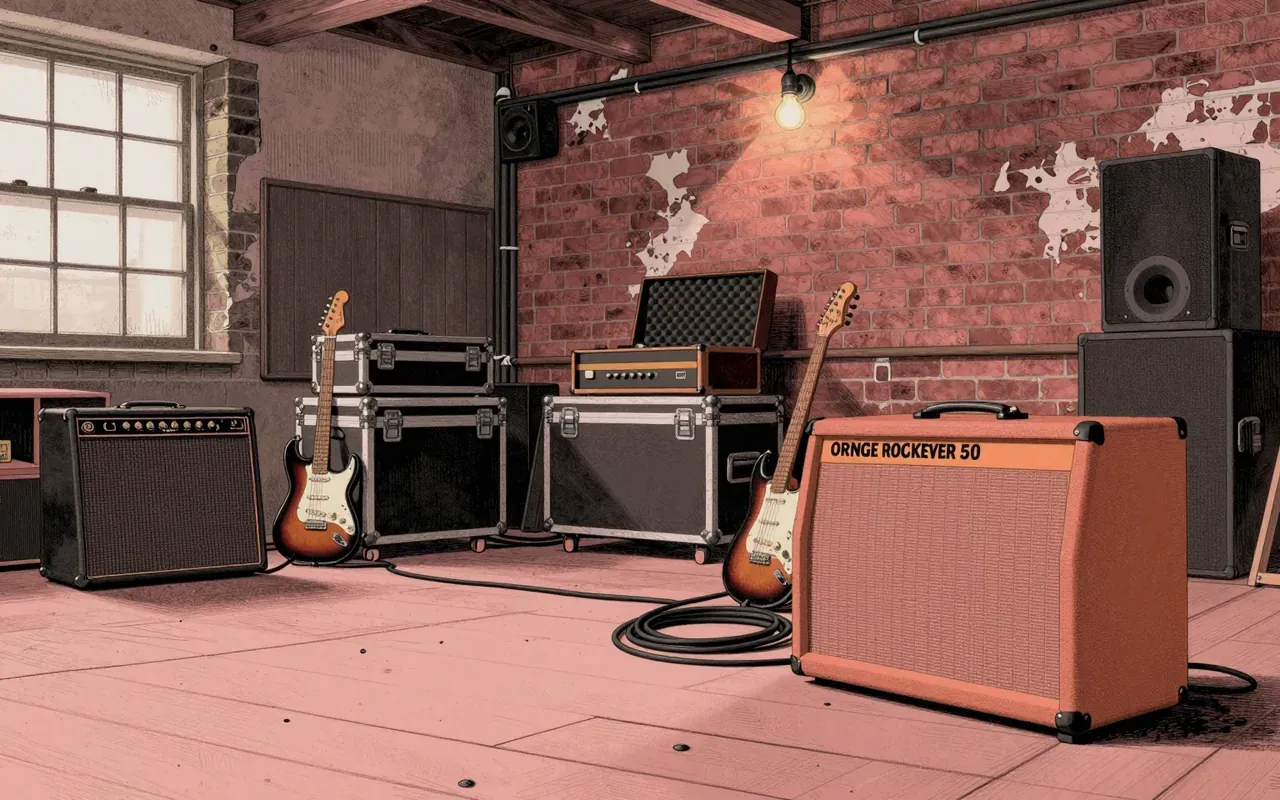
The Orange Rockerverb 50 is a discontinued dual-channel tube head built around four 6V6 power tubes. It delivers 50 watts of British rock tone — immediate, mid-forward, compressed — with minimal controls and shared EQ. It was succeeded by the MKIII. It does not offer channel-specific EQ, master volume, or tight high-gain definition.

8:37

Roland SH-2

Roland

The Roland SH-2 is a monophonic analog synthesizer introduced in 1978. It has two detunable VCOs, a resonant self-oscillating 24dB lowpass filter, one envelope, one LFO, and a 3-octave keyboard. Its one-button-one-function interface is simple and effective. It produces fat, aggressive, authentic vintage analog tones—especially when the oscillators are detuned. It shares sonic traits with the SH-101 but adds detunability and thickness. It is flexible enough for punchy basses, leads and squelchy sounds. Every sound—including drums—has been made on it in at least one documented case. It is simple, programmable, and sonically aligned with Roland’s high-end SH series.

8:37

Gibson EB-0

Gibson

The Gibson EB-0 is a bass guitar introduced in 1959 to replace the underperforming EB-1. It used the EB-1’s mahogany neck, body, and 30.5-inch scale but adopted a double-cutaway body inspired by the Les Paul Junior. Production ended in 1979 after 20,844 units. Early models were cherry red only. In 1961, the body was redesigned to match the SG. In 1962, the pickup’s black plastic cover became metal. Around 1964/5, nickel hardware gave way to chrome.

8:36

Avalon Design Avalon AD2022

Avalon Design

The Avalon AD2022 is a two-channel, analog, solid-state, pure class A microphone preamplifier. It delivers transparent, low-noise amplification. It has variable input impedance. It accepts microphones and DI sources. It includes phantom power, a 20dB pad per channel, polarity reversal, and a switchable variable high-pass filter. It uses XLR connections. It has front-panel XLR and jack connectors for instruments. It is rackmounted and occupies two standard rack spaces.

8:36

Korg Kaoss Pad KP3

Korg

The Korg Kaoss Pad 3 is a live-performance effects unit. It uses an X/Y touchpad for real-time control of 128 built-in programs—including reverb, delay, flanger, analog filter, drive circuit, and a vocoder. It samples onboard. Some effects sync to tempo. It functions as a MIDI controller. Connections are RCA only.

8:36

Pioneer CDJ-1000MK2

Pioneer

The Pioneer CDJ-1000 MK2 is a discontinued tabletop DJ player built to play CDs with exacting mechanical and operational control. It sets the reference for precision, robustness, and reliability among CD-based DJ players of its era. Loops fire instantly. Hot Cues never lag—even while seeking. Reverse isn’t just functional—it’s musical. It’s a discontinued CD-only player, replaced by the CDJ-2000 Nexus.

8:36

Yamaha CS-80

Yamaha · 1976

The Yamaha CS-80 is an analog synthesizer introduced in 1977. It supports true 8-voice polyphony, with two independent synthesizer layers per voice each with its own set of front panel controls. It has a layered keyboard that is both velocity-sensitive and pressure-sensitive, with polyphonic aftertouch and a ribbon controller for polyphonic pitch-bends and glissandos. Production of the instrument ceased in 1980.

8:35

J37

Studer · 1964

The J37 is Studer’s first multitrack machine, released in 1964. It recorded four tracks on one-inch tape. At EMI Studios London, later renamed Abbey Road Studios, The Beatles used a pair of J37s to record Sgt. Pepper’s Lonely Hearts Club Band in 1967. Studer went on to build 8-, 16- and 24-track machines with tape up to two inches wide.

8:35

JBL 4311

JBL

The JBL 4311 is an active monitor built for accuracy, not appeal. Its adjustable treble and midrange controls let users tailor response without EQ. It delivers neutral, powerful, precise, and dynamic sound — but only when driven with sufficient gain. Its frequency curve avoids bass saturation and flattery, making it reliable for critical listening across playback systems. Users acquired it in Germany in 1979 and in studio trades by 1983. It belongs in rooms where truth matters more than comfort.

8:35

JBL 4350

JBL

The JBL 4350 is a passive studio monitor requiring bi-amplification, offering no passive filter adjustments, and demanding extensive room integration and speaker placement. It is physically imposing and highly detailed in sound reproduction. It is not turnkey-ready.

8:35

Yamaha RX21

Yamaha

The Yamaha RX21 is a fixed-function drum machine. It plays 100 preset patterns and 5 song sequences. It has stereo and headset outputs, plus a footswitch input. Its operation is intuitive and manual-free. Its sound is basic, loop-based, and dynamically flat—characteristic of early 1980s beatboxes.

8:35

TC Electronic Stereo Chorus+

TC Electronic

The Rockman Stereo Chorus is a fixed-function stereo chorus pedal for guitar. It has no tempo sync, no expression input, no adjustable delay or feedback. It spreads the signal across two amps or channels. It is not made by TC Electronic. Its only controls are rate and depth. It is usable, but inflexible.

8:34

Sennheiser MD 21

Sennheiser

The Sennheiser MD 21 is a dynamic omnidirectional proximity microphone built for TV and film sound. It excels where other mics fail: under physical stress, in loud environments, and with aggressive vocal delivery. It gives warmth and intelligibility without colouring consonants. It offers no directionality, no pad, no filter — just durability and clarity. It belongs on stage, on set, and in the hands of performers who move while they speak.

8:34

Manley SLAM!

Manley

The Manley SLAM! is a stereo microphone preamp and limiter. It uses lamp-based preamplification and two analog limiting circuits — optical (ELOP) and FET — in a fixed signal path. It mounts in 2U of rack space. It does not offer variable routing, metering, or sidechain control.

8:34

Korg DW-6000

Korg

The Korg DW-6000 is a 1985 six-voice hybrid digital-analog synthesizer using sampled waveforms in ROM, analog VCA/VCF, dual oscillators per voice with detune, and a programmable stereo chorus — while noting design limitations like lack of touch sensitivity and single parameter control.

8:33

Boss TR-2 Tremolo

Boss

The Boss TR-2 Tremolo is an analog foot pedal for guitarists. It has three knobs: Rate, Depth, and Wave. Rate goes faster than the PN-2. Wave shifts the LFO from triangle to square. It is not rackable.

8:33

Roland Alpha Juno-2

Roland

The Roland Alpha Juno-2 is a 1986 6-voice subtractive synth with velocity and aftertouch, 64 presets, 64 user patches, chord memory, portamento, transpose, and a 24dB analog low-pass filter. It uses membrane buttons and the Alpha Dial for editing. It was built for stage and studio bass and rhythmic work — not for deep, fast sound design.

8:33

Avalon Design Avalon VT-747sp

Avalon Design

The Kazrog Avalon VT-747SP is a software plugin classified as an 'Other effects bundle or multi-effect'. No technical specifications are available. Its model name references the Avalon VT-747SP hardware unit. Nothing is stated about its sound, controls, workflow, or real-world use.

8:33

Yamaha CS-50

Yamaha

The Yamaha CS-50 is a 4-voice, 49-key, pressure-sensitive synthesizer released in 1977. It visually resembles a scaled-down CS-80, weighs about 100 pounds, and shares the CS-series sound — but with thin chords (one oscillator per voice, 12 dB/oct filters), no user memory, and unstable tuning.

8:33

RME Fireface 800

RME

The RME Fireface 800 is a FireWire audio interface built for professional studio routing, synchronization, and digital I/O—not tracking or mixing alone, but glueing hardware together.

8:33

Royer R-121

Royer

The Royer R-121 is a studio-only ribbon microphone. It delivers fast, flat, high-SPL capture — but offers zero user controls, zero ruggedness, and zero tolerance for phantom power. It belongs where the environment is controlled and the source is loud.

8:32

Roland CompuRhythm CR-68

Roland

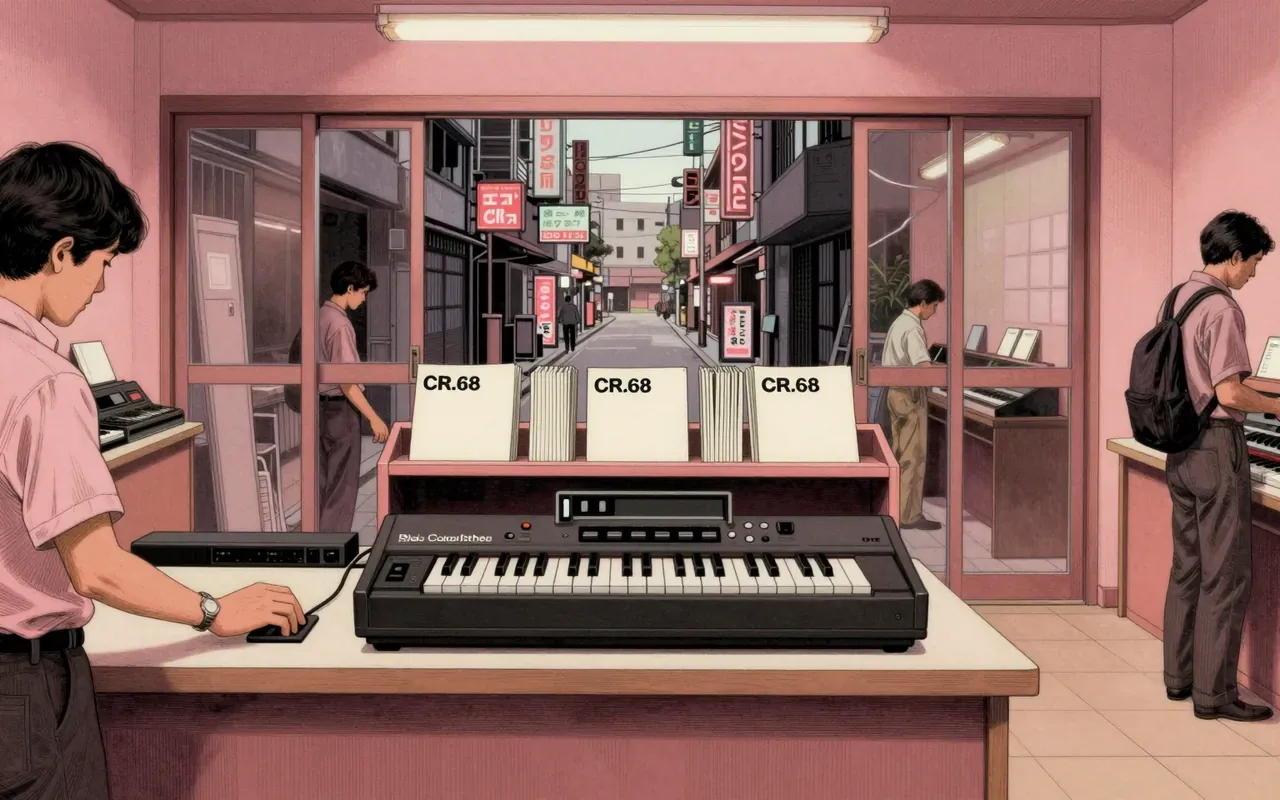
The Roland CR-68 is a non-programmable mono analog rhythm machine from the late 1970s. It shares the CR-78’s sound set and 54 preset rhythms but removes all user programming. Its controls — tempo, level, accent, balance — shape playback in real time. Fills trigger automatically or manually. It has no MIDI, no keyboard, no memory. Its sounds are now more often sampled than played live. Add N To (X) used it.

8:32

Roland MKS-70 Super JX

Roland

The Roland MKS-70 is a 1986 2U rack-mount analog synthesizer module. It combines two JX-8P engines for 12-voice polyphony and dual-tone layering. It stores 100 patches, each built from two of 64 tones. Chorus has only off/slow/fast settings. Chase-play enables delayed voice repeats. Front-panel editing is cumbersome and tedious. Full SysEx control and PC editing require firmware v1.08. It has three stereo outputs: one per tone and one mix. It lacks arpeggiator, sequencer and keyboard.

8:32

Yamaha CS-30

Yamaha

The Yamaha CS-30 is a monophonic analog subtractive synthesizer introduced in 1977. It has two VCOs, two resonant VCFs, two VCAs, three envelopes, a ring modulator, external audio triggering and an 8-step sequencer. It has a 44-key keyboard. It lacks onboard effects, memory and MIDI. It is used by 808 State.

8:32

Roland MC-09 PhraseLab

Roland

The Roland MC-09 PhraseLab is a compact sampling sequencer built as a simplified, budget counterpart to the MC-909. It integrates monophonic synthesis, a TB-303–style 2×16-step sequencer, and a 4-track looper/sampler. Its sampler sounds like an 8bit unit and introduces audible crackle when tempo changes. It supports only four independent audio loops. Its monophonic synth produces FAT acid bass and lead tones. It is suited for live phrase capture but limited by low screen clarity, slow sample loading, and constrained user memory.

8:32

Roland MC-202

Roland

The Roland MC-202 is a monophonic analog synthesizer and music sequencer released by Roland in 1983. It was the first groovebox. Its synth is similar to the TB-303 bass synth and the SH-101 synthesizer, featuring one voltage-controlled oscillator with simultaneous saw and square/pulse-width waveforms. The internal synthesizer features one voltage-controlled oscillator with simultaneous saw, square/pulse-width and sub-octave square waveforms. Additionally there is a 24dB Low Pass filter, an LFO and a single ADSR envelope generator. In terms of circuitry, it is nearly identical to the earlier SH-101 synthesizers but lacks the noise generator, choice of LFO shapes and modulation/pitch bend controls. However, unlike the SH-101, it does include a delay on the LFO. The MC-202 includes a sequencer that can play back two separate sequences simultaneously.

8:32

E-mu SP-1200

E-mu Systems

The E-mu SP-1200 is a sampling drum machine introduced in August 1987 by E-mu Systems. It uses 12-bit linear sampling at 26.04 kHz, drop-sample pitch-shifting, analog SSM2044 lowpass filters on channels 1 and 2, volatile RAM loaded from 3.5" disk, and offers 10 seconds of total sampling time—with a 2.5-second limit per sound. It succeeded the SP-12 and offered integrated sequencing and sample looping in a single unit.

8:32

Trident A Range

Trident

The Trident A Range is a rare, studio-built analog mixing console — not an instrument — with only 13 units ever made. It was built by and for Trident Studios, adopted by Cherokee Studios after outperforming Neve, Helios, and Cadac in a drum-miking test, and prized for its distinct, 'musical' EQ and saturated tonal character. It offers no automation, no digital features, no portability, and no relevance outside high-end analog studio contexts.

8:31

Great River MP-2NV

Great River

The MP-2NV gives two channels of the ME-1NV’s analog preamp circuit — no more, no less. It does not add features. It does not subtract fidelity. It occupies one rack space. It accepts mic and line-level sources directly. It meters input and output. It sounds warm, clear, and accurate — as verified by users.

8:31

Akai ASQ-10

Akai

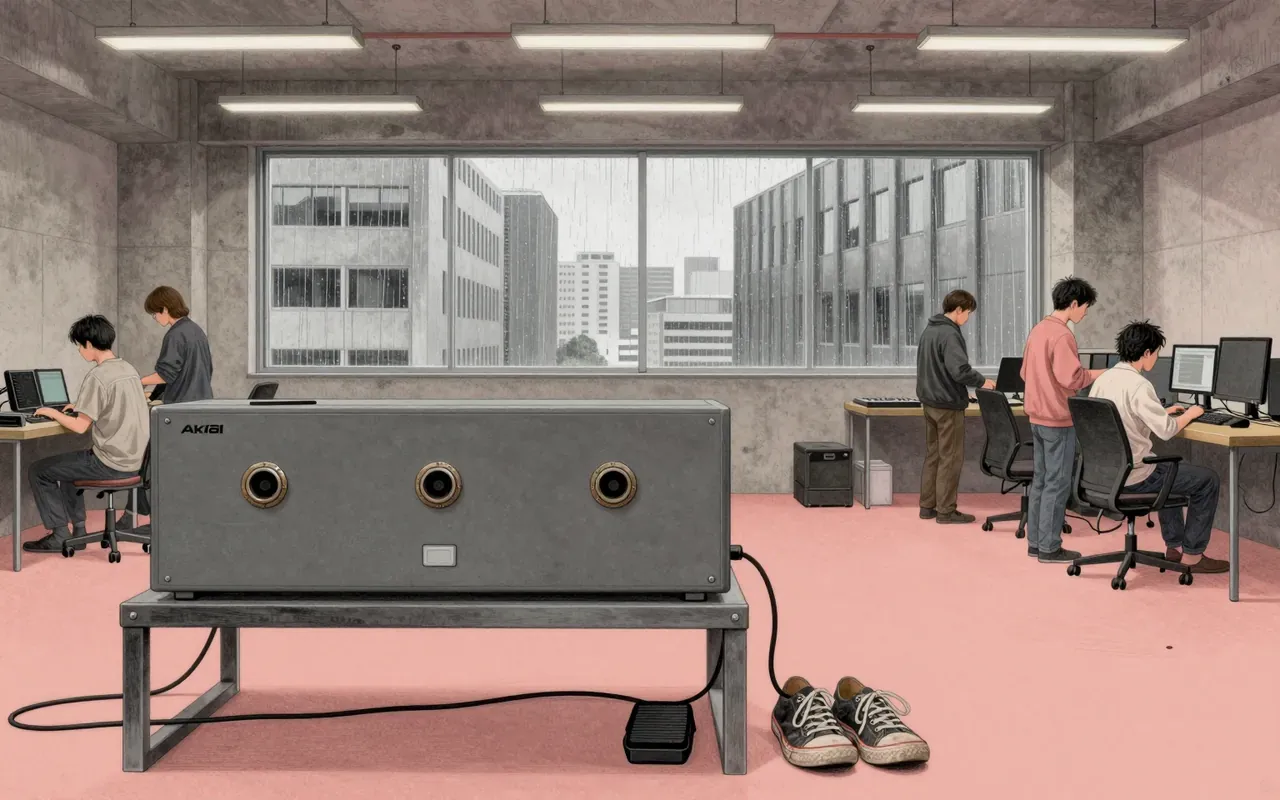
The ASQ-10 is a sequencer-only instrument. It has no sound generation. It does not sample. It exists solely to trigger, time, and lock external gear. Its design enables rhythmic complexity unplayable by hand — then corrects timing drift across the chain. It is the first MPC-shaped workflow, before the MPC existed.

8:31

M-Audio Delta 1010

M-Audio

The M-Audio Delta 1010 is a discontinued PCI/ISA + rack-mount soundcard. It delivers 8 analogue I/Os plus SPDIF. It achieves 5ms latency. It runs stably with Cubase and Sonar on legacy desktops. It crashes beyond 24 tracks — due to host computer limits, not the card. It inserts real-time effects during mixdown without issue. It requires a Pentium 4–era PC with a free PCI slot. It has no USB or FireWire support. It is no longer manufactured.

8:31

Ibanez RG550

Ibanez

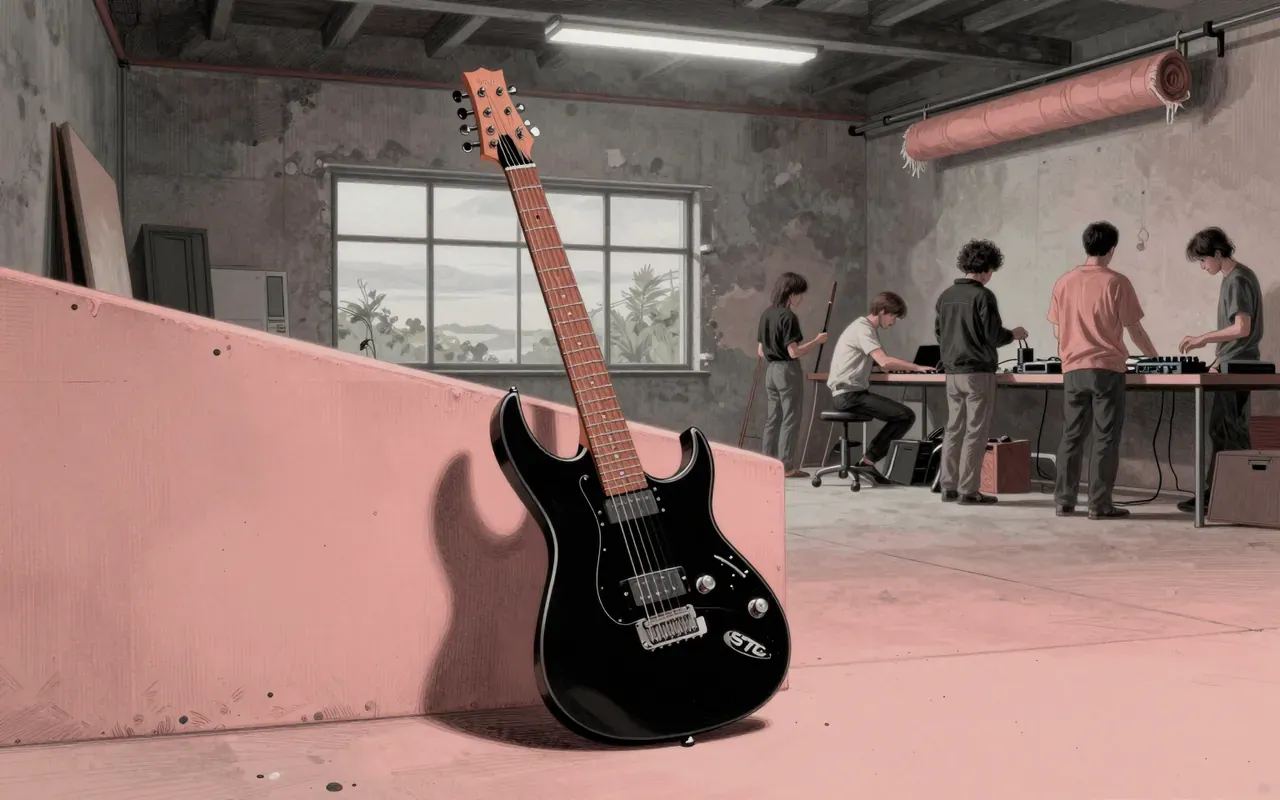
The Ibanez RG550 is an STC-shaped electric guitar from the RG Standard series, manufactured from 1987 to 1994. It features a Floyd Rose locking tremolo, H-S-H pickups, a 5-way switch, and a thin maple neck. It is discontinued. Users praise its playability and tuning stability but note its weight and fragile finish.

8:31

Way Huge Swollen Pickle

Way Huge

A fuzz pedal named Swollen Pickle, sold under multiple variants. The source confirms only its category and naming variations — nothing about sound, circuit, usability, or musical role.

8:31

Akai XR10

Akai

The Akai XR10 is a budget drum machine released in the early nineties. It plays fixed PCM drum sounds from ROM. It has four modes, no backlight, no MIDI Thru, no internal amp or speakers. It is simple, stable, and silent until patched out.

8:31

API 550

API

The API 550b is a four-band analog EQ re-issuing the 1967 API 550 with an added band. It offers seven switchable frequency centres per band, ±12 dB boost/cut, shelf/peak switching on bands 1 and 4, Proportional Q, reciprocal and repeatable filtering, and a +30 dBu clipping level. It uses API’s 2520 op amp and is built to original blueprints.

8:30

Studer A80

Studer

The Studer A80 is a tape recorder that shapes sound by softening transients and adding organic saturation. It works only when configured precisely: 19/38 or 38/76 cm/s, 1/2-inch tape, GP9-aligned heads. It excels in rock. It fails in dance, house and electro. It is not flexible. It is not neutral. It is a deliberate, physical constraint.

8:30

Waldorf Microwave XT

Waldorf

The Waldorf Microwave XT is a 1998 rackmount synthesizer using digital wavetable and FM synthesis, featuring 44 real-time control knobs, 20-bit DSP functions, and 10-voice polyphony expandable to 30; it shares its engine with the Microwave II and Wave synths, excels at emulating PPG sounds and generating acid or Moog-style bass, and includes onboard arpeggiator, digital effects, and MIDI-transmitting knobs.

8:30

Vestax PMC-07 Pro

Vestax

The Vestax PMC-07 Pro is a 2-channel scratch mixer. It prioritises precision, durability, and clarity over features. Its crossfader is adjustable and preferred for scratching over competitors including the PMC-05, Numark, Ecler, Rane, and PMC-07 PSI. It sounds clear and unsaturated. It has no digital functions, no headphone cueing beyond basic monitoring, and no more than two channels.

8:30

Yamaha DX1

Yamaha

The Yamaha DX1 is the top-level member of Yamaha's prolific DX series of FM synthesizers.

8:30

Roland TR-505

Roland

The TR-505 delivers rigid, punchy sequencing with integrated Latin percussion — but its 8-voice limit forces trade-offs no modern sequencer accepts.

8:29

dbx 166

dbx

The dbx 166 is a no-compromise stereo FET compressor built for speed and instrument tracking—not vocals, not mixing, not analysis. It delivers efficient, transparent compression with subtle warmth. Its design gives immediacy and reliability. It withholds metering, sidechain, vocal suitability, and fine dynamic control.

8:29

MCI MCI JH-500

MCI

The MCI JH-500 is a channel strip module inside the MCI JH-528 B studio rack. It delivers clear, powerful, live-sounding results straight out of the box—especially on acoustic guitar—with no EQ required. Its notch EQ sweeps effectively across the spectrum. Four XLR I/O and two rear line inputs support flexible routing. It is built for immediacy, not fine-grained control.

8:29

Fulltone OCD

Fulltone

The Fulltone OCD V1.1 is an analog overdrive pedal. It has volume, drive, and tone controls. It has a high-pass/low-pass switch. It uses true bypass. It is white with black knobs and a red LED.

8:29

Technics SL-1200

Technics · 1972

The Technics SL-1200 is a tool for physical intervention — not passive playback. Its engineering serves one demand: keep spinning, exactly, while being handled.

8:29

Roland Jupiter-8

Roland

The Jupiter-8 is an eight-voice polyphonic analog subtractive synthesizer introduced by Roland in early 1981. Each voice features two discrete VCOs with cross-modulation and sync, pulse-width modulation, a non-resonant high-pass filter, a resonant low-pass filter with 2-pole and 4-pole settings, an LFO with variable waveforms and routings, and two envelope generators (one invertible). It includes adjustable polyphonic portamento, a hold function for infinite sustain, an assignable bender for pitch or filter frequency, balanced XLR and unbalanced 1/4" outputs for Upper and Lower presets in Split mode, and a unique polyphonic unison mode where all 16 oscillators stack onto one note and divide down when more keys are pressed. Its arpeggiator syncs externally via DCB or CV. Tuning stability improved from serial #171700 onward.

8:29

Ampeg SVT

Ampeg

The Ampeg SVT is a 1969 bass amplifier head designed by Bill Hughes and Roger Cox. It uses 14 vacuum tubes to deliver 300 watts of RMS power. Early units used unstable 6146B output tubes, later replaced with 6550s. It is a stand-alone head, not a combo. The Rolling Stones used five prototypes on tour in 1969, playing all guitars and basses through them.

8:28

JBL 4312

JBL

The JBL 4312 is a passive three-way studio monitor built for punch, precision, and stereo imaging — not neutrality or refinement.

8:28

GenoQs Nemo

GenoQs

The GenoQs Nemo is a hardware sequencer. That is all that is verified.

8:28

Gibson ES-295

Gibson

The ES-295 is a hollow body guitar introduced in May 1952. It shares dimensions with the ES-175. It was conceived as a full-sized hollowbody archtop intended to complement the solidbody Les Paul. Its original price was $295. Les Paul claimed involvement in its creation. The first ES-295s came outfitted with one pickup. By 1953 the guitar was shipping with two pickups. It was discontinued in 1959 and reissued multiple times. Scotty Moore used it.