audiobriefs
Longest first

All briefs

747 briefs · 6840 min · 97–192 on page 2 of 8
10:12

Ibanez JS1

Ibanez

The Ibanez JS1 is Joe Satriani’s first signature model — a basswood STC-shaped guitar with a custom neck profile, DiMarzio PAF Pro and FRED humbuckers, master volume and tone controls, and a 3-way pickup selector. Early versions used the original Edge tremolo. It delivers a focused, expressive lead voice — but offers no tonal expansion, limited tuning stability under stress, and zero ergonomic adaptation.

10:12

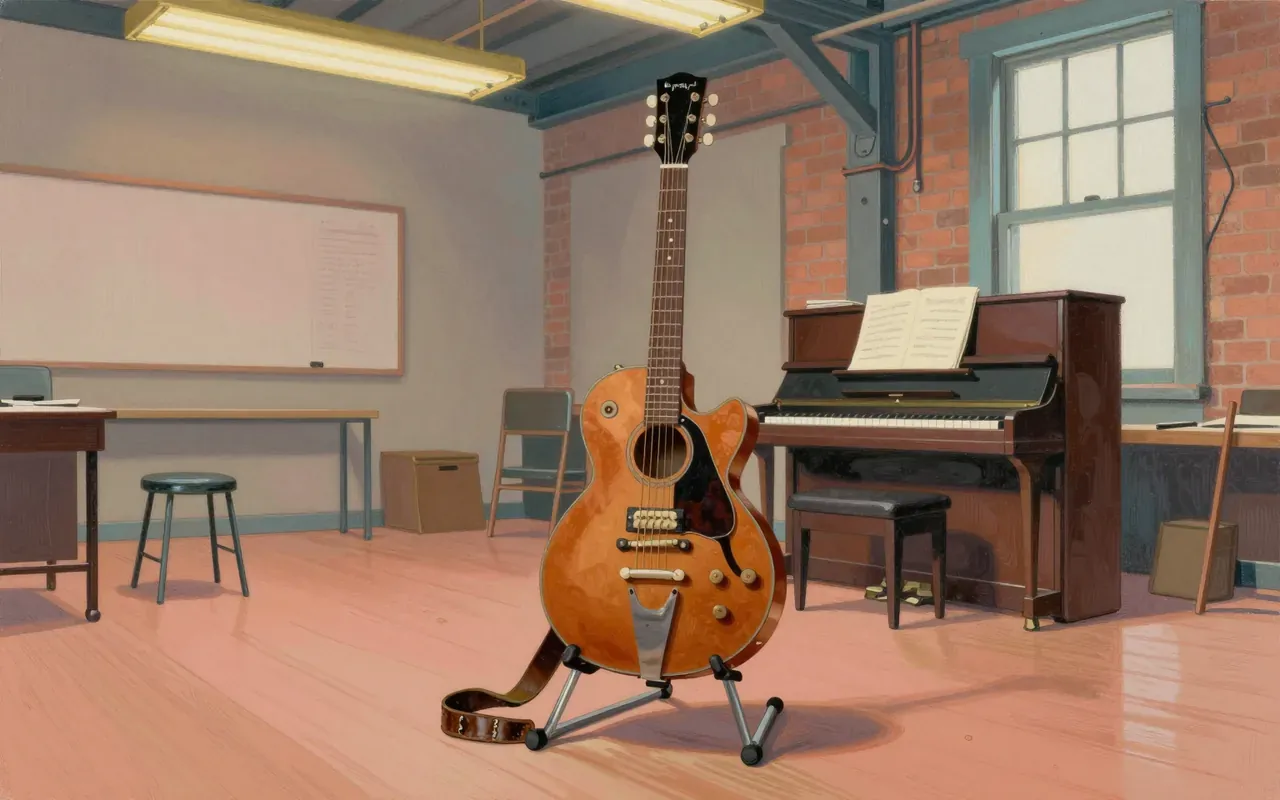
Gibson ES-175

Gibson · 1949

The ES-175 is a purpose-built hollowbody jazz guitar: functional, focused, and frozen in time.

10:12

Pro Tools

Digidesign · 1989

Pro Tools is a digital audio workstation used for music creation, sound for picture, and audio recording, editing, and mastering. It operates as standalone software and with external analog-to-digital converters and PCIe cards with on-board DSP, which provides additional processing power for real-time effects and lower latency. It performs multitrack tape recorder and mixing console functions plus digital-only features including non-linear and non-destructive editing, track compositing, time compression and expansion, pitch shifting, and faster-than-real-time mixdown. Audio, MIDI, and video tracks are graphically represented on a timeline. Audio effects, virtual instruments, and hardware emulators can be added, adjusted, and processed in real-time in a virtual mixer. It supports 16-bit, 24-bit, and 32-bit float audio bit depths at sample rates up to 192 kHz.

10:11

Shure Beta 58A

Shure

A live vocal mic defined by rejection, presence, and deliberate low-end roll-off.

10:10

Frankenstein (guitar)

Eddie Van Halen

Frankenstein is a custom guitar built by Eddie Van Halen to combine Gibson’s PAF humbucker tone with Fender Stratocaster playability and tremolo. It uses one potted PAF in the bridge, mounted offset for string spacing, wired through a single 500k pot labelled 'TONE' and an output jack. No tone controls. No working selector. Middle and neck positions hold non-functional parts. It delivers aggressive, feedback-resistant lead tone — nothing else.

10:10

Korg DW-8000

Korg

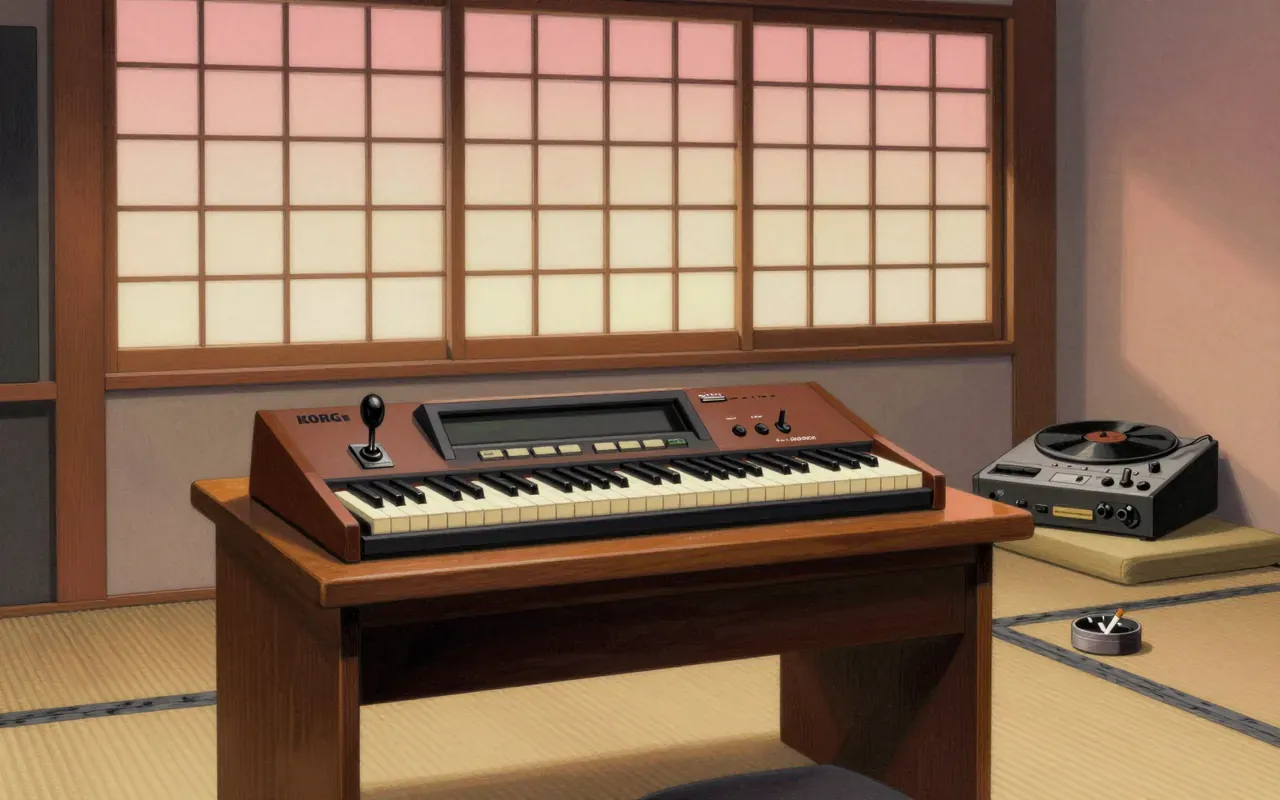
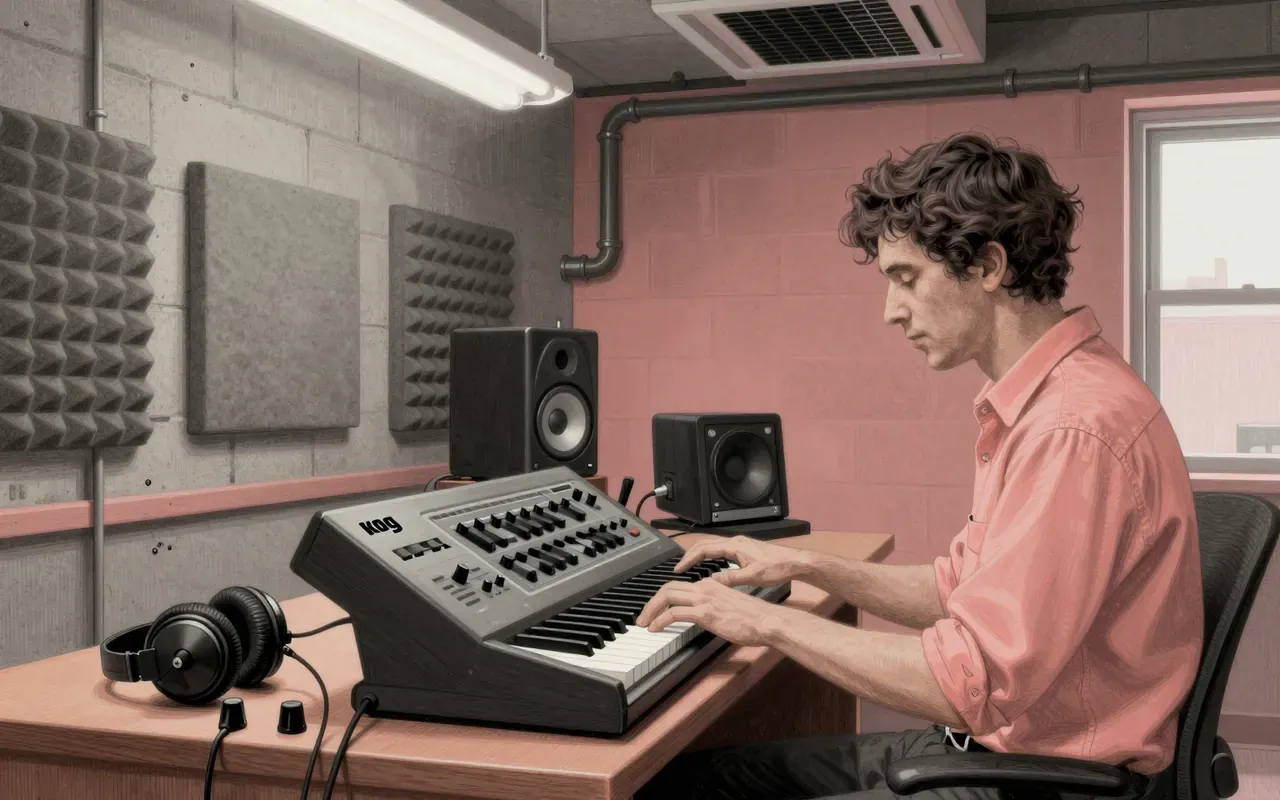
The Korg DW-8000 is a hybrid digital-analog synthesizer released in 1985. It features eight-note polyphony, a five-octave keyboard with velocity sensitivity and aftertouch, 16 digital waveforms (created via additive synthesis and stored on ROM chips), analog VCF and VCA, digital delay, arpeggiator, auto-bend, and DWGS architecture. Its rack-mounted counterpart is the EX-8000, which omits the arpeggiator.

10:10

Memorymoog

Moog · 1982

The Memorymoog is a 6-voice polyphonic analog synthesizer manufactured by Moog Music from 1982 to 1985. It was the first polyphonic Moog to feature dedicated oscillators and filters for each voice. Each voice has three voltage-controlled oscillators with pulse (variable width), saw, and triangle waveforms. Each voice also has its own 24 dB/Octave Low Pass voltage-controlled filter. Moog Music included a discrete implementation of its famed, patented transistor ladder filter. In Mono mode, the Memorymoog functions as a traditional monophonic synthesizer with 1–18 oscillators selectable in unison. A Chord Memory function and an Arpeggiator are included. Audio frequency modulation using Oscillator 3 can produce FM-like timbres.

10:09

Alesis Andromeda A6

Alesis

The Alesis Andromeda A6 is a 16-voice, 16-channel multitimbral analog synthesizer released in 2000. It combines a pure analog audio path with digital control. Its VCOs include pitch correction—a feature missing on older synths. Alesis developed a custom ASIC for it. Axel Hartmann designed it. It is high-end, innovative gear from Alesis, a company known for budget equipment. Alesis developed studio equipment during the 1990s.

10:08

Fulltone Fulldrive 2

Fulltone

The Fulltone Fulldrive 2 is a hand-wired analog overdrive/booster pedal introduced in 1996. It gives players four knobs, two footswitches, and two 3-way toggles to shape tone, drive, boost, voicing, and clipping. It excels at delivering three distinct tonal identities — clean boost, mid-boosted overdrive, and flat-mid transparency — from one circuit. It falls short where independence and expandability matter: Boost requires overdrive to be active, and it offers no rack option, no buffered bypass, and no external control. It belongs in the hands of guitarists who want tactile, analog tonal switching — not those building a programmable, integrated rig.

10:08

Yamaha CS-15

Yamaha

The Yamaha CS-15 is a monophonic analog synthesizer produced by Yamaha from 1979 to 1982. It features two voltage-controlled oscillators, two 12 dB/Oct multi-mode voltage-controlled filters (low-pass, high-pass or band-pass), two ADSR envelopes and a low-frequency oscillator. It also features white noise and an external-in for processing other sounds. The CS-15 offers great flexibility with various routing possibilities to the filters and envelopes. You can, for example, route VCO 1 to both VCFs and the VCFs to any of the envelopes positive or negative voltage. It's actually a duophonic / bitimbral synthesizer but you have to connect it to two separate CV/Gate controls (Hz/V like Korg synthesizers not V/Oct) to play the extra voice. In the CS series, the CS-5, CS-10, CS-30 and CS-30L were similar in sound, structure and design. The CS-5 and CS-10 had a single oscillator and one multimode filter, whereas the CS-15, CS-30 and CS-30L each had two oscillators that could be routed in various ways through two multimode filters.

10:08

MXR Distortion +

MXR

The MXR Distortion + is a 1974 distortion pedal using a single op-amp and germanium diodes. It has Output and Distortion controls only. Increasing Distortion raises both clipping and treble. It was one of MXR’s earliest original pedals, released shortly after the Phase 90. It later appeared in the Series 2000 line in 1982.

10:08

Korg Trident

Korg · 1980

The Korg Trident is a 1980 subtractive synthesizer with eight-note polyphony, integrating three independent sections — polyphonic, string, and brass — into one keyboard. It allows assignment to two keyboard zones, includes a flanger effect and joystick for pitch and modulation. The 1982 MkII revision added memory, improved stability via better heat-sinking and power supply, and separate ADSR envelopes for filter and VCA — unlike the MkI’s shared envelope. It does not use effects or sample+synthesis, despite KORG pioneering both elsewhere.

10:06

SSL 9000 J

SSL

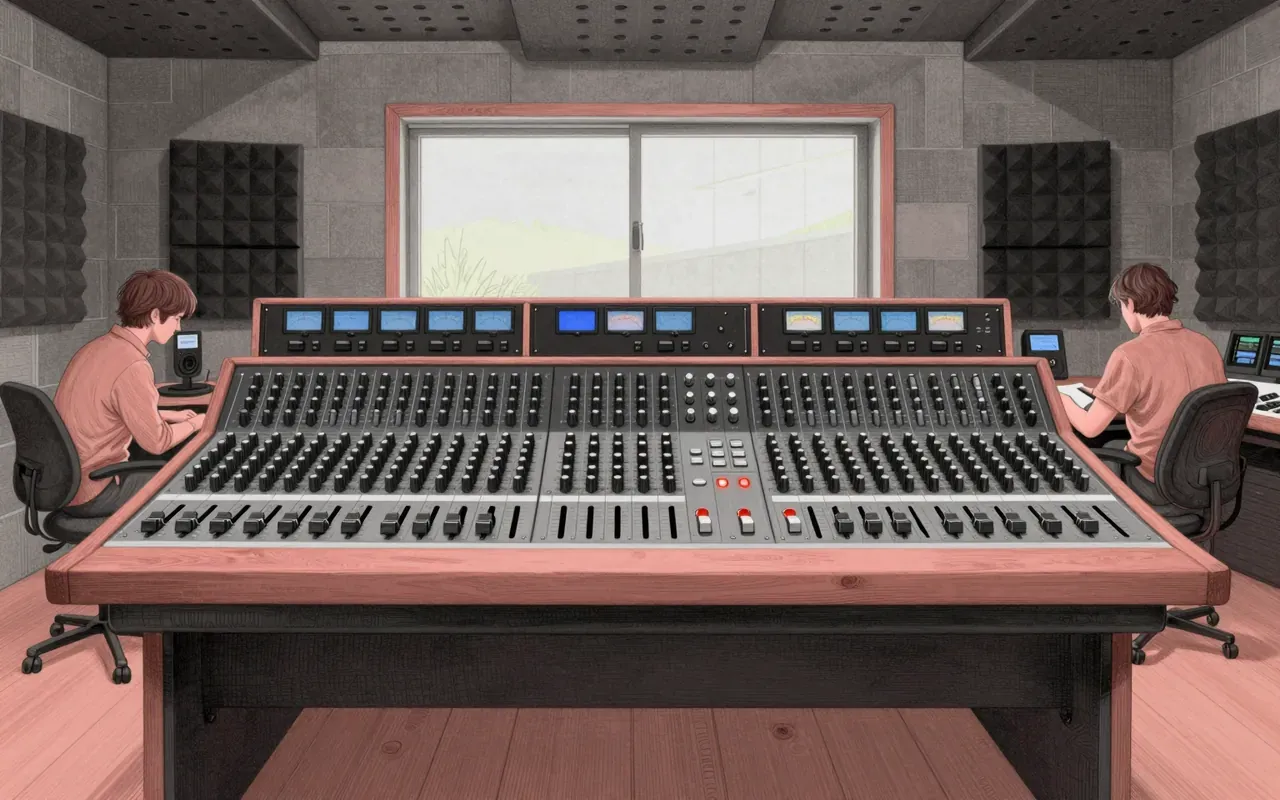
The SSL 9000 J is an analog mixer. That is all the source confirms. It belongs to the category of analog mixers. No specifications, features, or use cases beyond that are given. It is not described as rare, expensive, or influential. It is not tied to any record, person, place, or date. It is what it is: a large-format analog mixer for studio use.

10:06

Fender Dual Showman

Fender

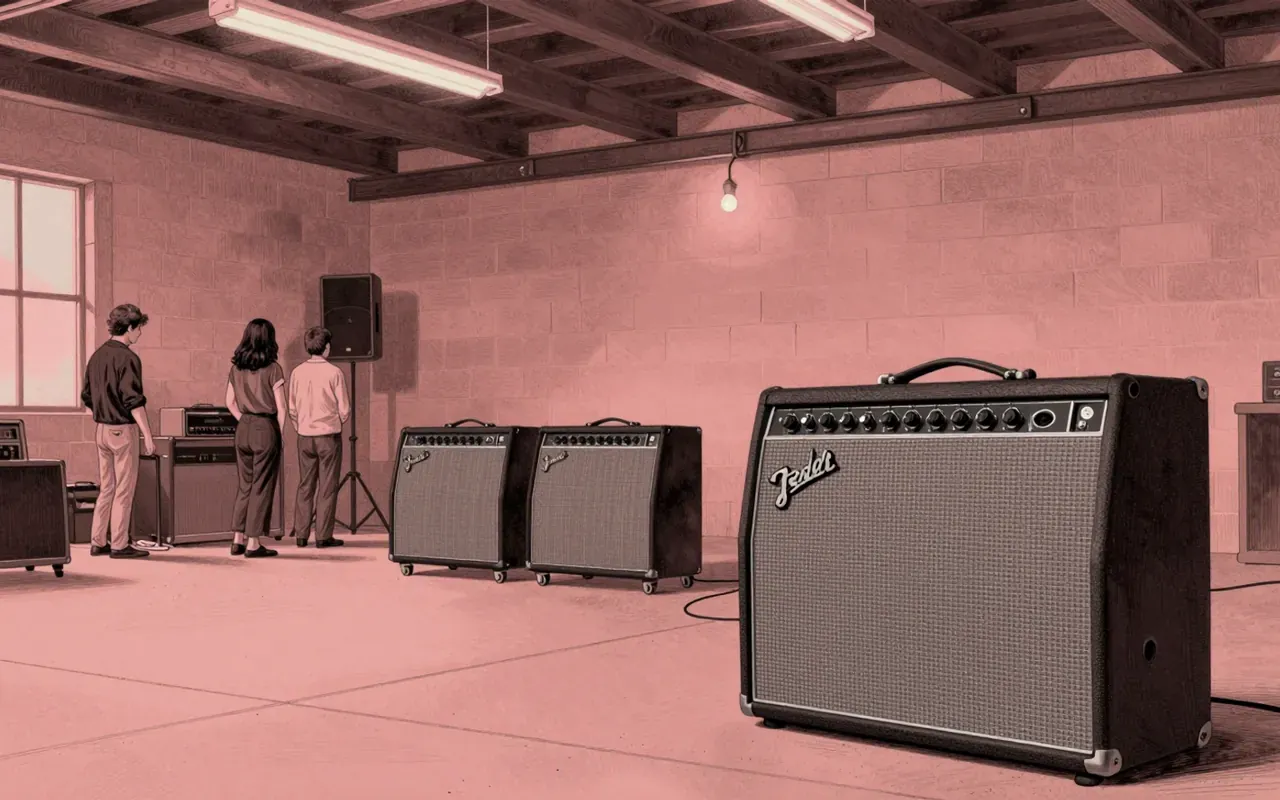
The Fender Dual Showman Reverb is a 100-watt all-tube head built for volume, clarity, and built-in modulation. Two channels—clean and reverb/vibrato—each have full EQ and a Bright switch. No master volume. No channel switching on the fly. Heavy. Loud. Uncompromising.

10:06

Neumann M 49

Neumann

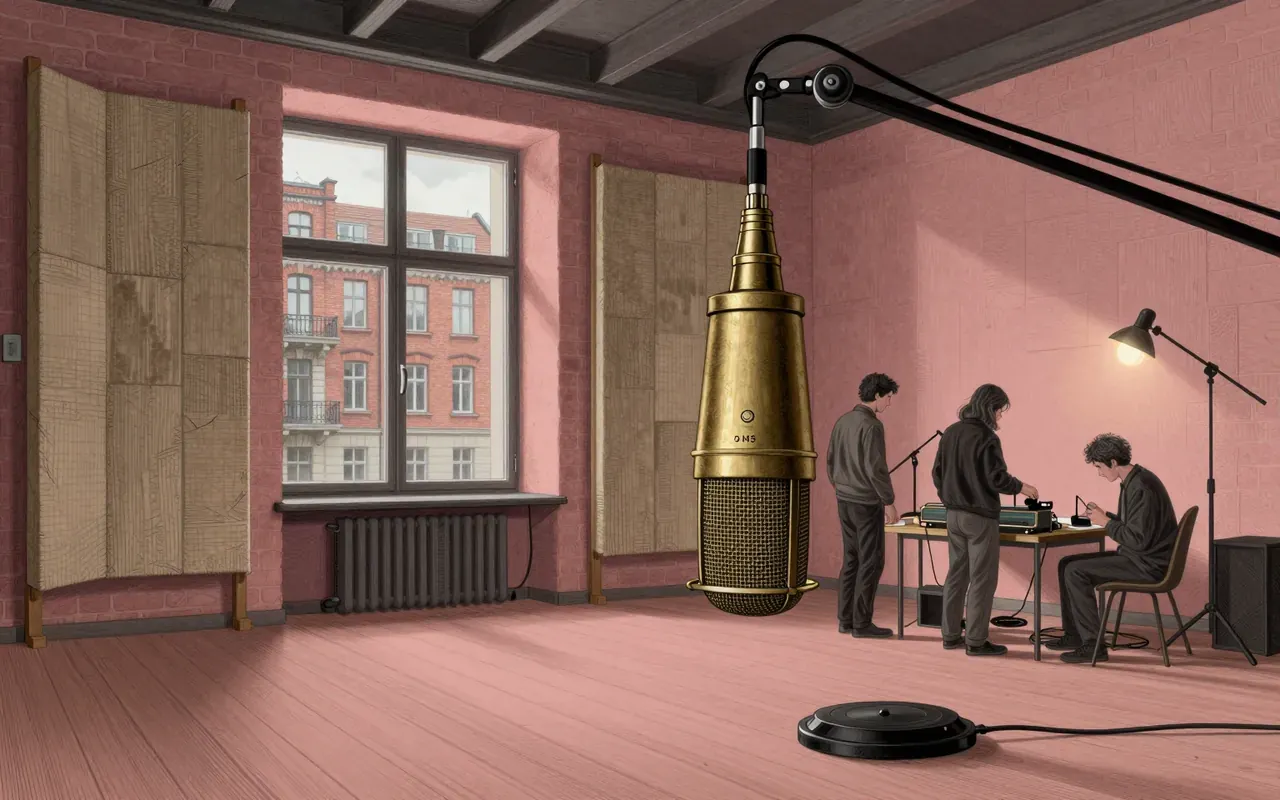
The Neumann M 49 is a large-diaphragm condenser microphone developed at the NWDR’s Central Laboratory in Hamburg. It entered German broadcasting studios in 1952. It was the world’s first microphone with a remotely switchable polar pattern. Its pressure-gradient capsule causes proximity effect even in omnidirectional mode.

10:06

Rickenbacker 325

Rickenbacker · 1958

The Rickenbacker 325 is a compact, bright, feedback-prone hollow-body guitar defined by its short scale, semi-hollow construction, and visual signature — the crescent moon cutaways and angled sound hole. It was designed for clarity and portability, not warmth or power.

10:05

Akai MPC4000

Akai

The Akai MPC4000 is a 2002 hardware sampler sequencer built to lead the hardware sampler category. It has 16 velocity- and pressure-sensitive pads. It performs 96 kHz 24-bit sampling. It has 16 MB of sampling memory, upgradeable to 512 MB. It includes IDE bays for installing an internal hard disk drive and CD-ROM drive. It supports optional plug-in boards including Effects, ADAT, S/P-DIF & wordclock, and 8 analogue outputs boards. It has 2 MIDI inputs and 4 MIDI outputs. It was released in 2002 with the intent to lead hardware samplers.

10:04

Avalon Design Avalon VT-737sp

Avalon Design

A vacuum tube-based, rack-only channel strip with two identical preamp channels, each offering gain, phantom power, pad, phase reverse, Lo-Z input, compressor, EQ, and flexible routing. It trades portability and recall for consistent warmth and headroom — especially with transformerless mics.

10:03

Yamaha SY77

Yamaha

The Yamaha SY77 is a 1989 16-voice multitimbral workstation combining AFM (expanded 6-operator FM), AWM2 PCM sampling, and their real-time hybrid RCM. It features a 61-key keyboard with velocity and aftertouch, two modulation wheels, pitch wheel, backlit LCD, floppy drive, expansion slots, on-board effects, and a 16,000-note sequencer. AWM2 waveforms can be used standalone, layered with FM Elements, or — uniquely in the SY/TG series — as modulators for FM operators. Its AFM is a superset of the DX7’s FM, adding waveforms, algorithms, feedback routing, and filter integration.

10:02

Moog Rogue

Moog · 1981

The Moog Rogue is a monophonic analog synthesizer introduced in the early 1980s. It has a 32-note keyboard and two VCOs. VCO 2 tunes from a half-step below to an octave above VCO 1. This allows atonal sounds. It includes Sample-and-Hold. Its hard-wired patch system enables varied sounds but offers no full patch programming flexibility. VCF and VCA controls are simple to operate.

10:01

Focusrite Liquid Channel

Focusrite

The Focusrite Liquid Channel is a rack-mounted channel strip that uses convolution to deliver 80 preamp and compressor presets — but only with mandatory software and a steep learning curve.

10:00

Mesa/Boogie Rectifier Recording Preamp

Mesa/Boogie

The Mesa Boogie Rectifier Recording Preamp is a 2U rack-mount tube preamp with two channels and six voicings. It prioritises high-output direct recording but includes I/O for live use. Its six 12AX7 tubes deliver raw gain capable of overdriving mixers. It lacks speaker emulation and falls short when compared to miked cabinet tone.

10:00

Gretsch 6128

Gretsch

The Gretsch 6128 Duo Jet is a chambered mahogany electric guitar introduced in 1953. It features two pickups, a body-mounted pickup selector, a cutaway-mounted master volume, and a headstock-accessible truss rod. Bo Diddley played it in the mid-1950s.

10:00

Roland SP-404

Roland

The SP-404 is a dedicated, tactile sampler built for speed and texture — not precision or polish.

9:59

Oberheim Matrix-12

Oberheim

The Oberheim Matrix-12 is a 12-voice, 61-key, fully analog synthesizer introduced in 1985. It uses Matrix Modulation for virtual patching. Every control can affect another parameter. It provides 15 LFO types and VCAs per voice. It is more programmable and sonically fatter than the Matrix-6 and Xpander. It is not intended for beginners. It is renowned for thick analog pads, sweeps, buzzes, basses and textures—and was called the 'king of analog sounds' in the mid-eighties.

9:59

Yamaha REV7

Yamaha

The Yamaha REV7 is a fixed-architecture digital reverb unit from 1985. It occupies two rack spaces. It offers four reverb types — hall, room, flat, and voice — plus chorus, flanger, phaser, tremolo, and delay. All effects layer over reverb. It has XLR and 1/4-inch audio connections and 5-pin DIN MIDI ports. It has no patch memory, no real-time MIDI parameter control, and no stereo-in/stereo-out routing.

9:59

ProDigi

Mitsubishi

ProDigi was a professional reel-to-reel digital audio tape format with stationary heads, introduced in the mid-1980s, using linear digital recording with cyclic redundancy check error correction on metal particle tape in 2-, 16-, and 32-track configurations; it was widely adopted in Nashville country music studios but declined by the mid-1990s with the rise of Pro Tools.

9:59

Korg Polysix

Korg

The Korg Polysix is a 1981 six-voice polyphonic analog synthesizer designed for affordability through single-oscillator-per-voice architecture, compensated by built-in bucket-brigade-based chorus/phaser/ensemble effects — features that were relatively uncommon at launch and contributed to its accessibility and sonic richness.

9:58

Boss PH-2 Super Phaser

Boss

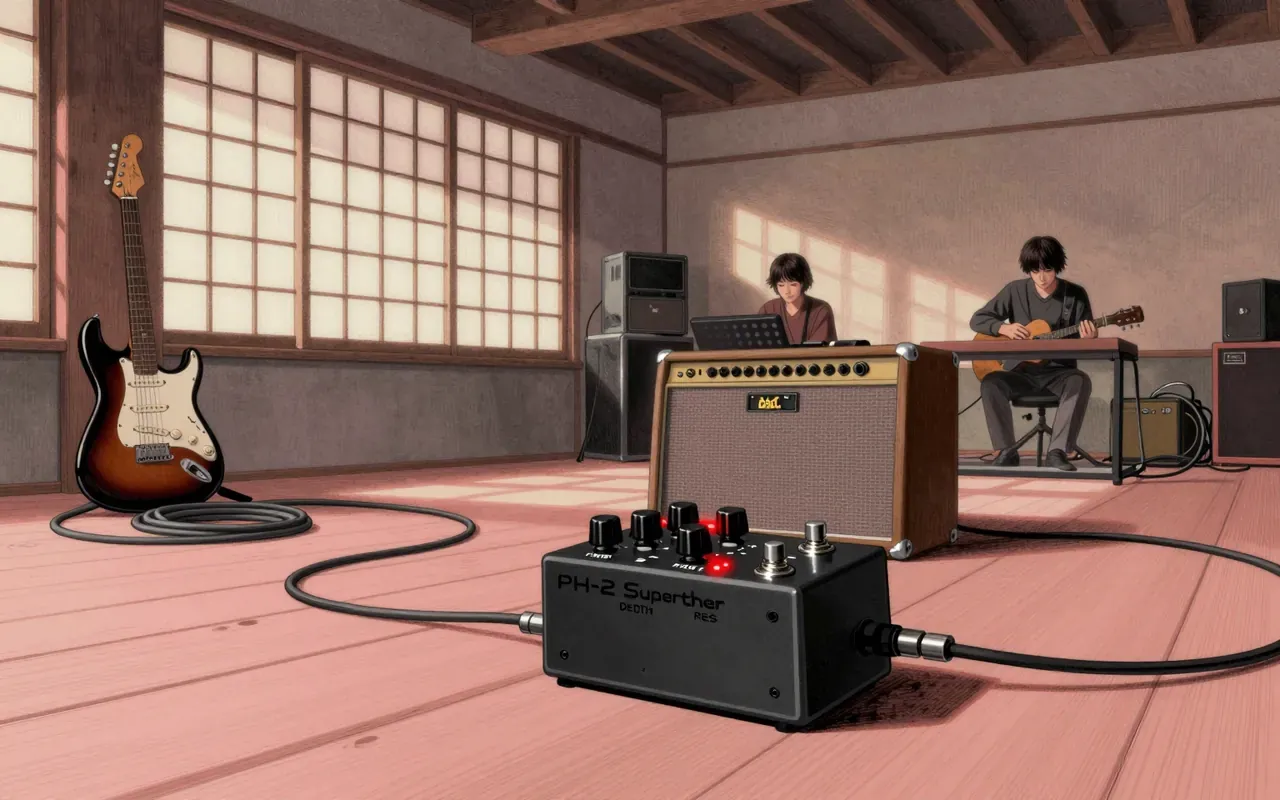
The Boss PH-2 Super Phaser is a discontinued analog guitar stompbox pedal built from 1984 to 2001. It adds a rate knob and two-mode switch to the PH-1 lineage. Mode 1 uses 10-step phasing. Mode 2 uses 12-step phasing. Controls are Rate, Depth, Res, and a 2-way Mode switch. LFO speed ranges from 100 ms to 14 s. Input impedance is 1 Mohm (FET). Residual noise is -80 dBm (IHF-A). Current draw is 20 mA at 9 V DC. Early Incubus used it for its distinctive ‘in-your-face’ phase character—especially in mode 2.

9:58

Studer A800

Studer

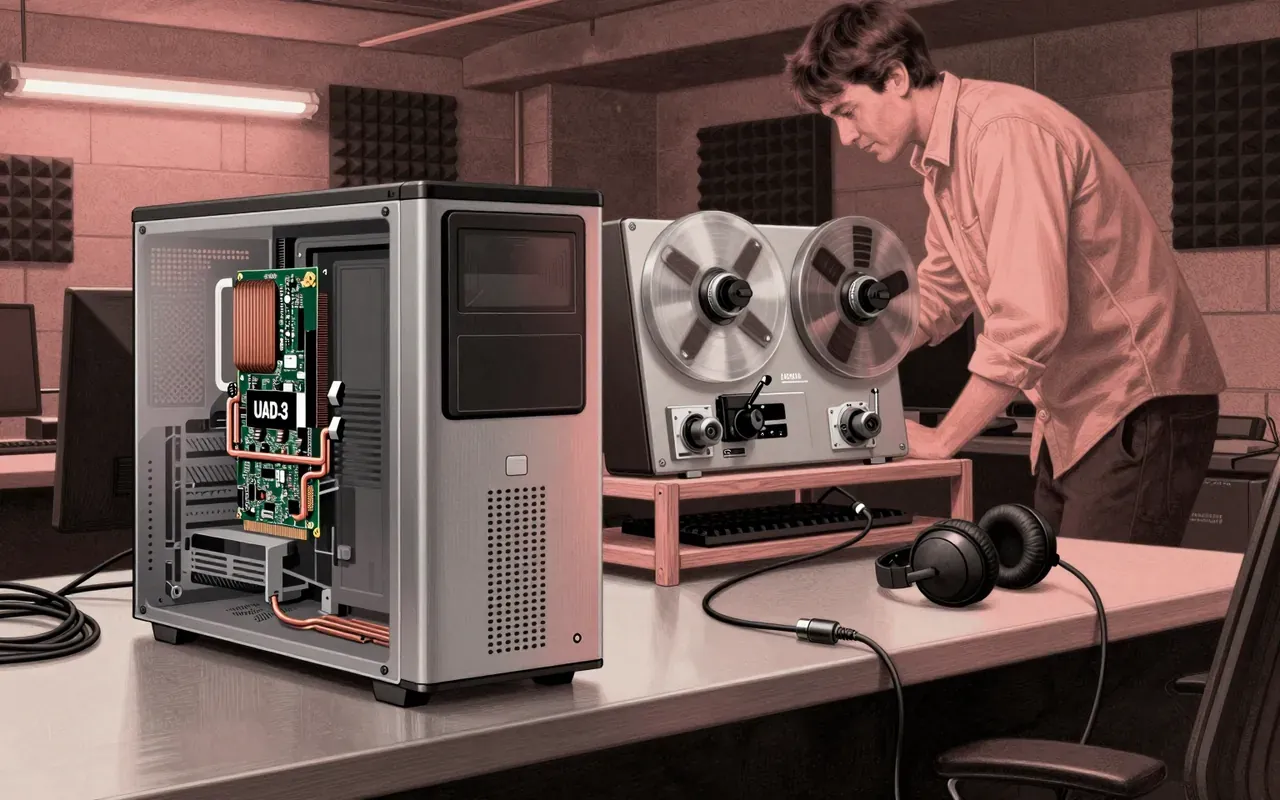
The Studer A800 is a UAD-2 plug-in that adds tape-style warmth and drive to digital mixes. It works best post-summing. It uses gang control for unified management. It does not simulate physical tape mechanics.

9:58

E-mu Emax

E-mu Systems

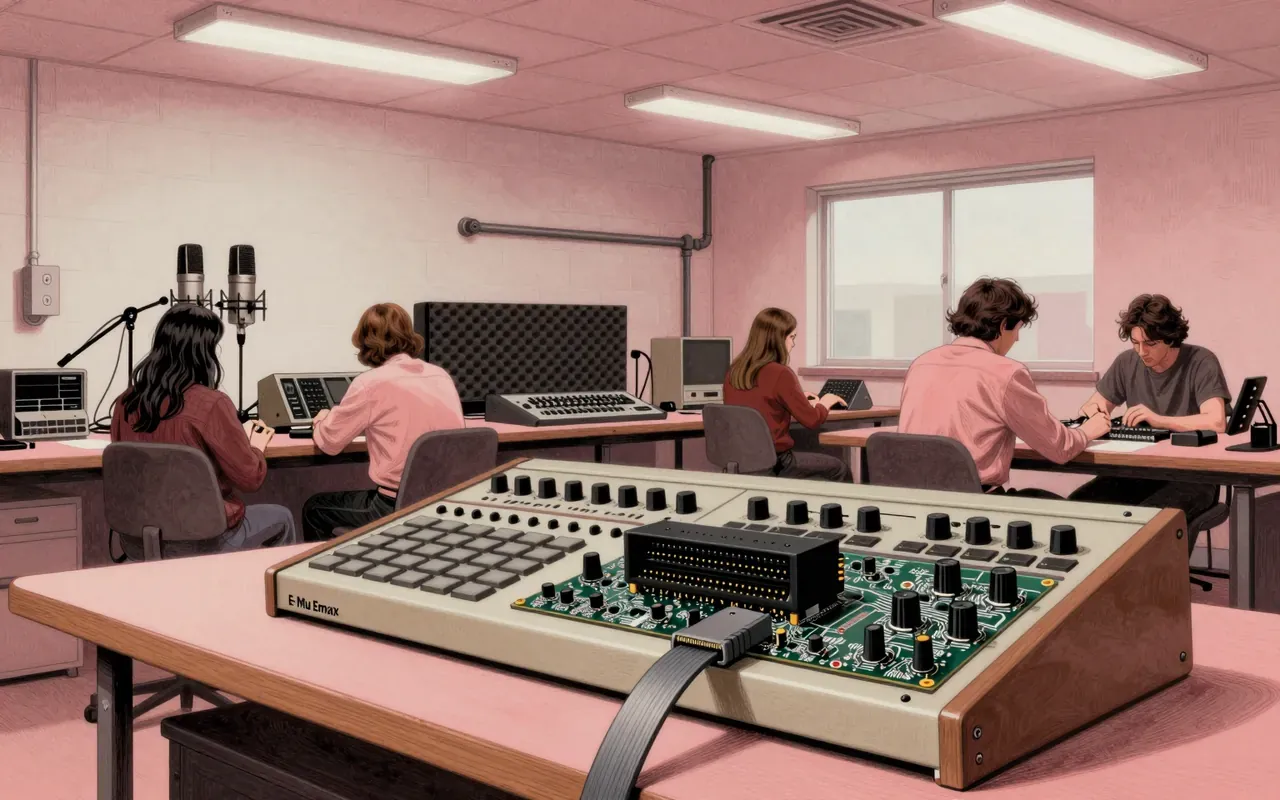
The Emax is a line of samplers introduced by E-mu Systems in 1986 as a low-cost version of the Emulator II. It stored samples on 3½" floppy disks — more reliable than the Emulator II’s 5¼" disks. Models include the HD (with 20 MB hard drive), SE (with additive synthesis), and Plus (with SCSI). All models retain 512 KB of sample memory.

9:57

Doepfer A-110 VCO

Doepfer

The Doepfer A-110 Standard VCO is a generator module for modular synthesizers in the A-100 series. It outputs saw, pulse, triangle, and sine waveforms simultaneously. Octave switching and ±1 semitone fine tuning set pitch range. Manual and CV-controlled pulse width modulation are available. A Sync input allows hard-syncing to another VCO. It lacks FM, LFO-range operation, and tuning beyond ±1 semitone.

9:57

Korg 01/W

Korg

The Korg 01/W is a 1991 workstation that expands on the M1 with more polyphony, more memory, and Waveshaping—but does not deepen synthesis control. It delivers reliability and scale, not flexibility.

9:57

Fender Stratocaster

Fender · 1954

The Stratocaster is a solid-body electric guitar introduced in 1954. Designed between 1952 and 1954 by Leo Fender, Bill Carson, George Fullerton, and Freddie Tavares. Continuously manufactured since 1954. Its distinctive body shape was revolutionary when introduced in the mid-1950s. The heavily contoured back was designed for better comfort while playing. The elongated top horn changes the balance when played standing up with a strap compared to the Fender Telecaster. While the original release of the Stratocaster included a vibrato system, Stratocasters without it ("hardtails") were added to the portfolio in March 1955. The modular nature of the guitar, with its easily removable components, enabled players and luthiers to perform numerous modifications to their own guitars, changing out pickups or necks to fit the needs of the player. All of these design elements were popularized and later became industry standards due to the success of the Stratocaster.

9:56

Boss DD-3 Digital Delay

Boss

The Boss DD-3 is a digital delay pedal for guitar. It uses four knobs to control effect level, feedback time, delay time, and delay mode. It delivers clear, sharp echo without muddiness. It is extremely durable. It is probably the most well-known digital delay pedal.

9:56

Revox A77

Revox

The Revox A77 is an analog multitrack tape recorder. Users deploy it to replay and digitise vintage tape — especially 1980s band mixes. It is robust and simple to operate, more so than the B77 or G36. But it trades mechanical precision and low-noise playback for that durability. It does not record multitrack. It does not edit. It plays — and keeps playing.

9:56

Roland D-20

Roland

The Roland D-20 is a 1988 digital synthesizer using Linear Arithmetic synthesis. It offers 32-voice polyphony, 8-part multitimbrality, a 61-key velocity-sensitive keyboard, an 8-voice sequencer with rhythm track, a built-in arpeggiator, reverb effects, and internal/external memory storage. LAS programming revolves around tones, partials, and timbres—a method that is difficult to learn but capable of unique results when mastered. It was produced from 1988 to 1992.

9:56

Manley Massive Passive

Manley

The Manley Massive Passive is a stereo, all-tube, passive parametric EQ. It occupies four rack spaces. It runs hot. It has four bands per channel plus high-pass and low-pass filters. It does not boost or cut actively — tubes restore level after passive attenuation. It is built for stereo bus and mastering, not surgical channel work.

9:56

Moog Source

Moog · 1981

The Moog Source is a monophonic analog synthesizer made by Moog Music from 1981 to 1985. It was Moog’s first with patch memory and the only Moog with a membrane keyboard and multihued panel graphics. It stores 16 presets onboard and expands memory via audio cassette. Its 24 dB/octave VCF, two analog ADSRs, LFO and sample-and-hold deliver classic Moog tone — but its interface sacrifices playability for recall.

9:56

Gibson ES-335

Gibson · 1958

The ES-335 is a semi-hollow body semi-acoustic guitar introduced in 1958 as a compromise between hollow-body warmth and solid-body feedback resistance, featuring a solid maple center block with hollow upper bouts and f-holes. It achieved commercial success and continuous production due to its tonal flexibility across blues, jazz, and rock.

9:56

Fender Super Reverb

Fender

The Fender Super Reverb is a loud, physical, all-tube guitar amplifier with built-in spring reverb and tremolo — made from 1963 to 1982. Its blackface and silverface variants differ in circuit design, not just looks. It demands space and volume. It rewards touch. It does not apologise.

9:55

Soundcraft Ghost

Soundcraft

The Soundcraft Ghost 32 is a dual-path analog mixer that delivers 64-channel mixing by combining 32 fader-based A channels and 32 knob-based B channels. It prioritises routing flexibility and hands-on control over silent operation or real-time EQ parity.

9:55

Roland R-70

Roland

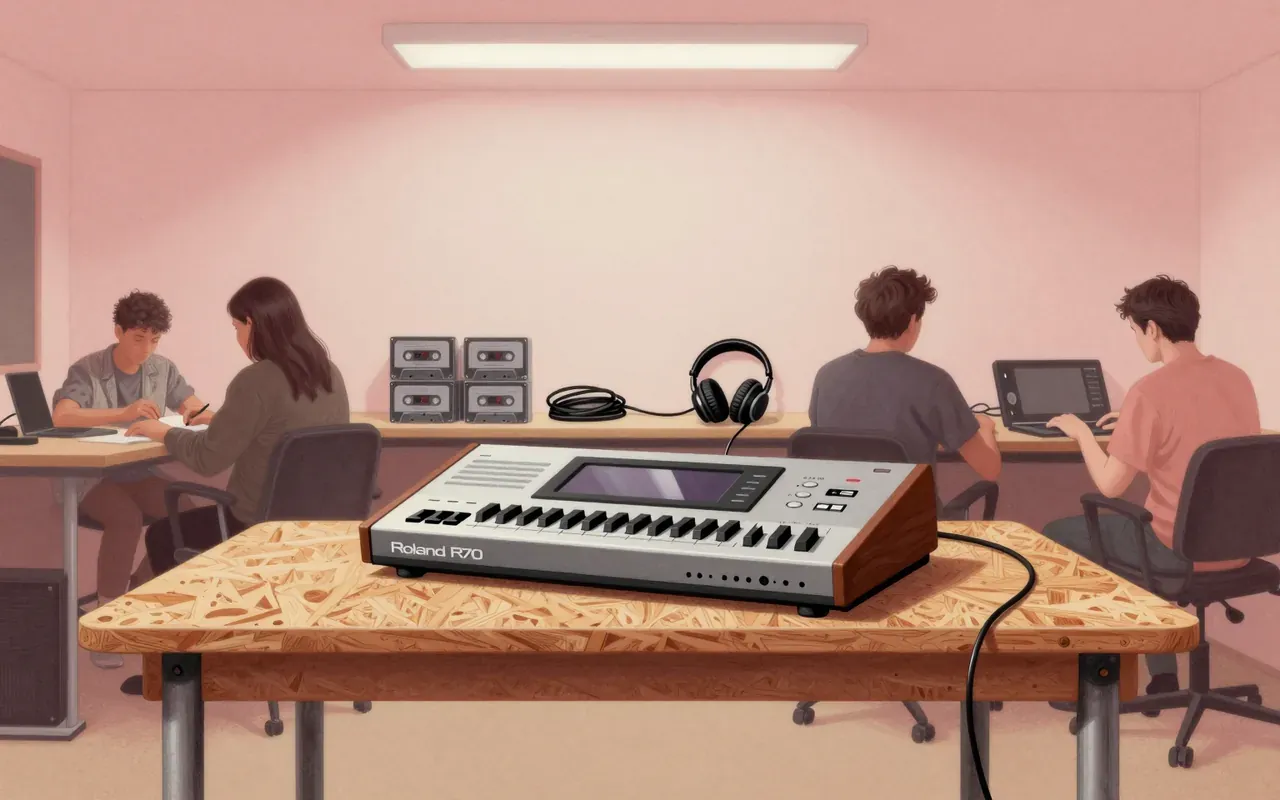
The Roland R-70 is a 1992 full-sized, sample-playback drum machine from Roland’s R series. It offers up to 210 drum sounds across Rock, Jazz, Electronic, and Ethnic kits. It stores 100 programmable patterns and chains them into 20 songs. Its positional pad changes sound by strike location. It includes reverb, flanger, delay, chorus, and humanization. Sound editing is limited to attack, sustain, and pan. Its built-in sequencer is complex—users prefer external sequencing. Kick and cymbal sounds emulate the TR-808. It is a popular, all-purpose drum machine.

9:55

Yamaha RX11

Yamaha

The Yamaha RX11 is a 1984 digital drum machine using 29 fixed 8-bit PCM samples. It was built to accompany the DX7. Each sound has independent volume, pan, and a dedicated audio output. Its interface is laborious. Its sound is synthetic and dated — yet valued in electro and downtempo for its unvarnished 1980s character.

9:55

Roland Corporation

Roland · 1972

Roland Corporation is a Japanese instrument manufacturer founded in 1972. It pioneered compact synthesizers, programmable drum machines, guitar synths, and early microprocessor sequencers — shaping electronic music through tactile, genre-defining hardware.

9:55

Roland JX-8P

Roland

The Roland JX-8P is a 1985 hybrid analog synthesizer with six-note polyphony, designed to bridge analog warmth and FM-style timbres using new modulation and a DX7-inspired interface. It features two DCOs per voice, software ADSR envelopes, dual filters, chorus, sync modes, multiple play modes, and a polished MIDI implementation — programmable via edit slider or optional PG-800, with limitations on real-time control.

9:55

Gibson Les Paul Custom

Gibson · 1954

The Gibson Les Paul Custom is a luxury electric guitar introduced in 1953 at Les Paul’s request for a black, tuxedo-like instrument. It featured the ABR-1 bridge from 1954, adopted the PAF pickup in mid-1957, and switched to Grover Rotomatics by 1958. It remained a double-cutaway model until 1963, when it was renamed the SG Custom after Les Paul’s endorsement ended.

9:54

Boss PN-2 Tremolo/Pan

Boss

The Boss PN-2 Tremolo/Pan is an analog stomp box released in May 1990 and discontinued in March 1995. It delivers tremolo and stereo panning via rate, depth, and a 4-way mode switch. It needs two amps for panning and runs on 9V DC. It was replaced by the mono TR-2.

9:54

Technics SP-10

Technics

The Squier SP-10 is a 10W solid-state guitar amp for beginners. It delivers clean and gain channels through a single volume knob, bass and treble tone controls, and a gain switch. It has no midrange control, no effects loop, and no channel-specific volume. Input and headphone jacks are separate. Its design prioritises simplicity and portability over tonal range or headroom.

9:54

Ensoniq ASR-10

Ensoniq · 1982

The Ensoniq ASR-10 is a 1992 sampling keyboard designed for live performance and self-contained music production. It integrates sampling, synthesis, sequencing, and effects in one unit. It loads samples while playing. It layers up to eight samples per instrument. It modulates them with envelopes, filters, LFOs, and real-time controls. It sequences with 16 tracks at 96 PPQN. It applies up to 62 effects — including vocoder and distortion — and resamples with them. It records to SCSI hard drives or proprietary 3.5-inch floppies. Its SCSI implementation rejects many common drives unless specially flashed. It ships in keyboard, weighted (ASR-88), and rackmount (ASR-10R) versions. It is the third-generation EPS-series sampler. It runs at 16-bit, 29.7619 kHz or 44.1 kHz. It ships with 2MB RAM, expandable to 16MB.
9:54

Yamaha DX21

Yamaha

The Yamaha DX21 is a 1985 bi-timbral FM synthesizer with four sine-wave operators, 128 ROM presets, 61 non-velocity keys, and eight-note polyphony — split into four notes per zone when divided.

9:53

Sony MDR-V6

Sony

The Sony MDR-V6 is a folding, closed-back, circumaural headphone introduced in 1985 and discontinued in 2020. It was designed for professional monitoring in live and studio settings. Its closed, sealed-ear construction provides isolation and portability. Consumer Reports measured it as the most accurate headphone they had tested in 1989. Dave Rat confirmed its near-neutral response—though slightly rolled off at both extremes. It was part of Sony’s Studio Monitor line, produced by Sony/Taiyo Corporation in Ōita Prefecture, Japan. Its durability and consistency made it a staple for sound engineers and DJs for thirty-five years.

9:53

EMS VCS 3

EMS · 1969

The EMS VCS 3 is a portable analogue synthesizer introduced in 1969 by Electronic Music Studios. Designed largely by David Cockerell and styled by Tristram Cary, it uses a pin-based patchboard matrix instead of cables. It lacks a built-in keyboard, making it better suited for sound effects generation and external signal processing than melodic playing. Its tuning instability stems from exponential voltage-to-frequency conversion. It was one of the first portable commercially available synthesizers, housed entirely in a small wooden case.

9:52

Rickenbacker 360/12

Rickenbacker

The Rickenbacker 360/12 is a narrowly optimised instrument: its reversed string courses, angled headstock, semi-hollow body and thru-neck combine to produce a bright, cutting, fast-decaying jangle. It excels in one role—rhythmic texture in mid-60s pop—and falls short everywhere else: tuning stability, ergonomic playability, tonal range. It was developed in 1963, prototyped with Dick Burke’s headstock, entered production in 1964, and became essential to the Beatles’ A Hard Day's Night sound. It is not a general-purpose guitar. It is a specialist tool.

9:51

Mellotron Mk II

Mellotron

The Mk II was the update to the first commercial Mellotron, released in 1964 with the full set of sounds selectable by banks and stations. About 160 were made. It has two manuals, an organ-style cabinet and two internal 12-inch speakers with an amp, and it was meant for the home rather than the road.

9:51

API API Vision

API

The API Vision Console Emulation Bundle is a UAD plug-in channel strip made by Universal Audio. It requires UAD hardware to run. It offers no standalone operation, no technical specs in the source material, and no evidence of real-world usage examples. Its value is strictly conditional on existing UAD ownership and desire for API’s sonic signature in digital form.

9:51

Yamaha YC-45D

Yamaha

The Yamaha YC-45D is a 1976–1980 hybrid organ-synthesizer. It combines drawbar organ, transistor organ, piano, harpsichord, distortion and a 3-octave ribbon synth. Its lateral per-note vibrato/bend is unmatched for its time. Its preset system is rudimentary. Its ribbon lacks visual pitch reference. Its emulations are shallow. It belongs in a room where articulation matters more than fidelity.

9:51

PCM adaptor

Sony

The PCM adaptor is a transitional artifact: a hardware hack that made digital audio portable and recordable using 1970s video infrastructure. It solved one problem — getting 16-bit audio onto physical media for CD mastering — and introduced many others: tape instability, video sync dependency, and zero interoperability with later digital standards.

9:51

Eventide Space

Eventide

The Eventide Space is a reverb-and-delay pedal offering 12 algorithmic spatial effects—including Hall, Plate, Blackhole®, and Shimmer—controlled via 10 knobs, MIDI, expression pedal, or HotSwitch. It features 100 presets (some artist-designed), true analog bypass, tap tempo/MIDI clock sync, and mono/stereo I/O in a rugged metal pedal format. Software tools FactorLib and H9 Control manage presets; the SpaceTime algorithm combines modulation, two delays, and reverb.

9:50

Binson Echorec 2

Binson

The Binson Echorec 2 is a delay/echo unit. No technical specifications exist. Its category is confirmed. Nothing else is verifiable.

9:50

Akai S1100

Akai

The Akai S1100 is a sampler. Its name appears in alternate forms: 's1100' and 's 1100'. No technical specifications are available. Nothing else is confirmed.

9:49

Korg MS-10

Korg · 1978

The Korg MS-10 is a monophonic, 32-key analogue synthesizer released in 1978. It has one VCO (triangle, sawtooth, pulse, white noise), one 12dB/octave low-pass VCF, one LFO with pulse and sloped outputs, and one envelope generator with Hold, Attack, Decay, Sustain, and Release. Its normalized patch points allow flexible modulation without cables — but it offers no second envelope, no polyphony, no effects, and no key transpose.

9:49

ARP String Ensemble

Solina

The ARP String Ensemble is a fixed-architecture string machine. Twelve tone generators feed 49 keys via divide-down. Its triple BBD chorus — driven by two LFOs — defines the sound. No envelopes. No filters. No expression. Just one lush, unchanging texture.

9:49

Ampex ATR-100

Ampex

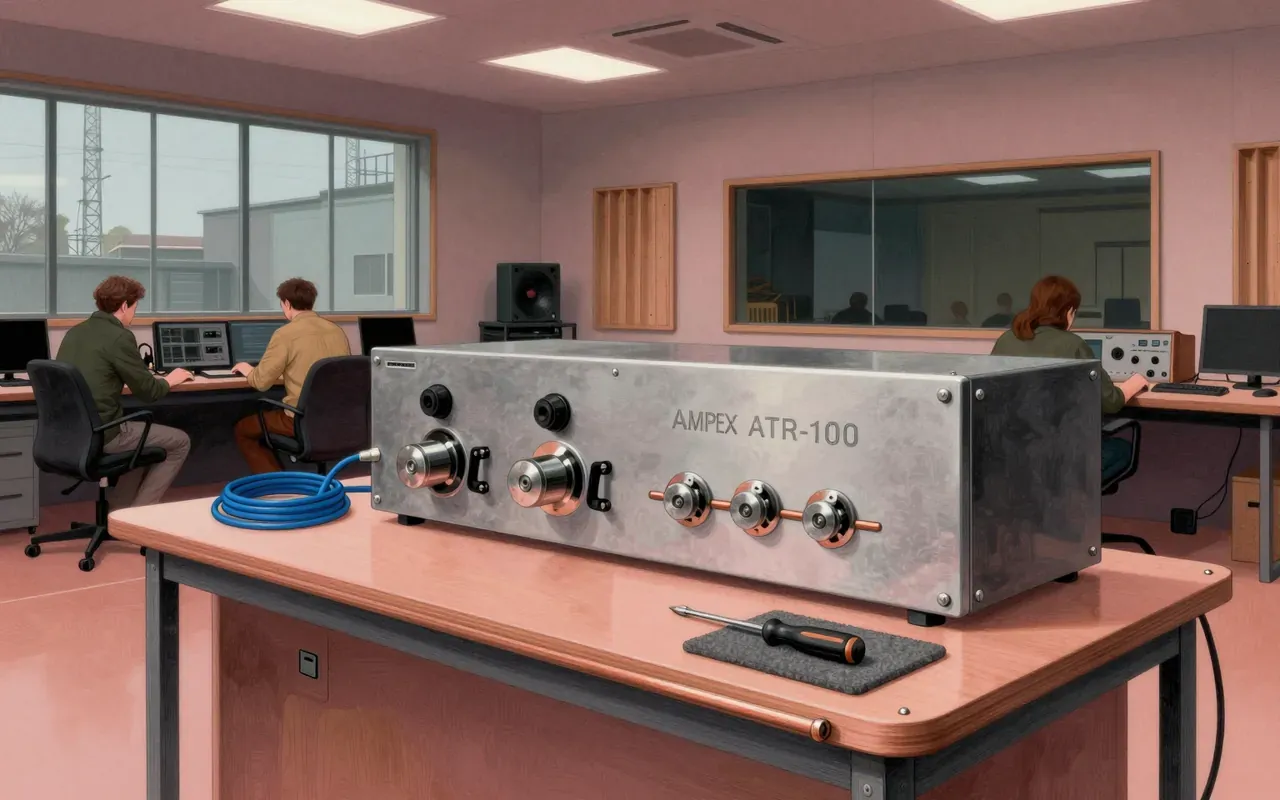
The Ampex ATR-100 is a mastering-grade analogue tape recorder introduced in Spring 1976 at the AES Conference in Los Angeles. Designed exclusively for stereo or quadraphonic mixdown and mastering, it features a servo-controlled direct-drive-capstan transport and interchangeable headblocks for quarter-inch or half-inch tape. Its wow and flutter performance set a new standard for analogue accuracy. It does not support multitrack recording. No verified claims exist about recordings made on it, its users, or its sonic signature beyond accuracy.

9:49

Roland TR-808

Roland

The TR-808 is a programmable analog drum machine introduced in 1980. It generated all sounds via analog synthesis—not sampling—and allowed full percussion track programming including breaks and rolls. It supported up to 32 patterns, chaining up to 768 measures, and beat accents. Roland discontinued it in 1983 after approximately 12,000 units due to semiconductor shortages. It was a commercial failure because the market preferred realistic drum sounds.

9:48

Digidesign 888/24 I/O

Digidesign

The Digidesign 888/24 is a Pro Tools–only analog-to-digital converter with eight XLR I/O channels and four AES-EBU digital paths. It delivers clean conversion, solid build quality, and low used-market cost—but only functions inside a compatible TDM system. No standalone mode. No MIDI. No monitor control. No software editor. It is a tool, not a platform.

9:48

Korg PS-3200

Korg

The Korg PS-3200 is the final model in Korg's PS series. It integrates two PS-3100 units into a single chassis. It provides 16 memory locations that can be individually addressed and recalled. It was regarded as remarkable in its era due to having two oscillators per key and 48-note polyphony. Each voltage-controlled oscillator module includes a dedicated voltage-controlled filter and low-frequency oscillator. Its patching and signal routing capabilities were comparatively restricted versus other modular systems. Its envelope generator design was constrained. It was considered sonically rich for its era, and its 16-patch memory was highly valued.

9:48

Korg DDD-5

Korg

The Korg DDD-5 is documented only by two PDF files: a 3.3 MB owner’s manual and a 466.4 KB pattern chart, both published on 22 November 2017 and requiring Adobe Reader. Neither contains technical specifications, sonic description, interface details, or operational guidance. No use case, user, or creative output is stated. It is a product defined entirely by its licensing constraints and file formats — not by what it does.

9:48

Six-Trak

Sequential Circuits · 1984

The Six-Trak is a six-voice analogue synthesizer released by Sequential Circuits in January 1984. It was built as an inexpensive, portable 'scratch-pad' for trying out arrangements.

9:48

Make Noise René

Make Noise

René is a 34hp Eurorack module that functions as a three-channel, three-dimensional Cartesian sequencer, enabling real-time, performative programming and delivering maximal musical variation from minimal analog input; it stores up to 64 complete STATEs and features simultaneous Snake and Cartesian patterns, visual feedback via illuminated knobs and touch buttons, and Select Bus integration with TEMPI.

9:48

Gibson EB-2

Gibson

The Gibson EB-2 is a purpose-built, no-compromise semi-hollow bass: warm, resonant, limited. Its design gives you one voice — rich and rounded — and refuses all others.

9:46

Yamaha SG2000

Yamaha

The Yamaha SG2000 is an SG-shaped solid-body electric guitar produced from 1976 to 1988. It features two splittable humbuckers, a three-position pickup selector, push/pull volume controls for coil-splitting, and 22 frets. It is no longer sold and was succeeded by a 2007 reissue.

9:46

Eventide Eclipse

Eventide

A professional-grade digital effects processor with dual independent effects blocks, nearly 100 algorithms—including 11 reverbs—and 24-bit/96kHz conversion. Supports true stereo reverb I/O and extensive looping (up to 20 seconds per block). Firmware updates require Compact Flash and strict version dependencies; bootloader corruption requires factory reprogramming.

9:46

Pultec EQP-1

Pultec

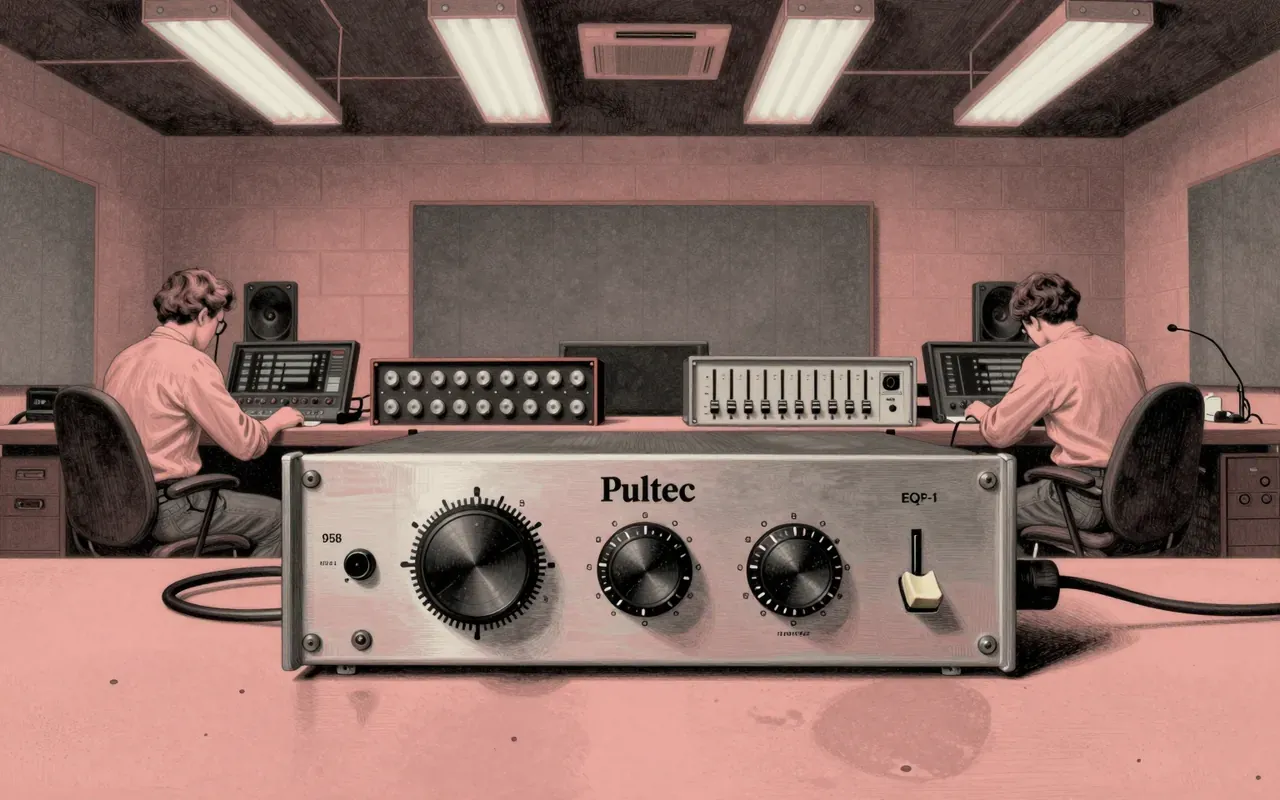
The Pultec EQP-1 is a passive, tube-amplified equalizer introduced in 1956 in a 3U 19-inch rack chassis, designed specifically for professional recording studios to overcome noise issues in existing film-industry equalizers. It features a low-frequency shelving filter with three bands (30, 60, 100 Hz) and a parametric high-frequency section with boost frequencies at 3, 5, 8, 10, and 12 kHz plus adjustable bandwidth. Its design enabled simultaneous boost and attenuation of adjacent low frequencies — a technique later adopted despite being discouraged in the original manual.

9:45

Revox B77

Revox

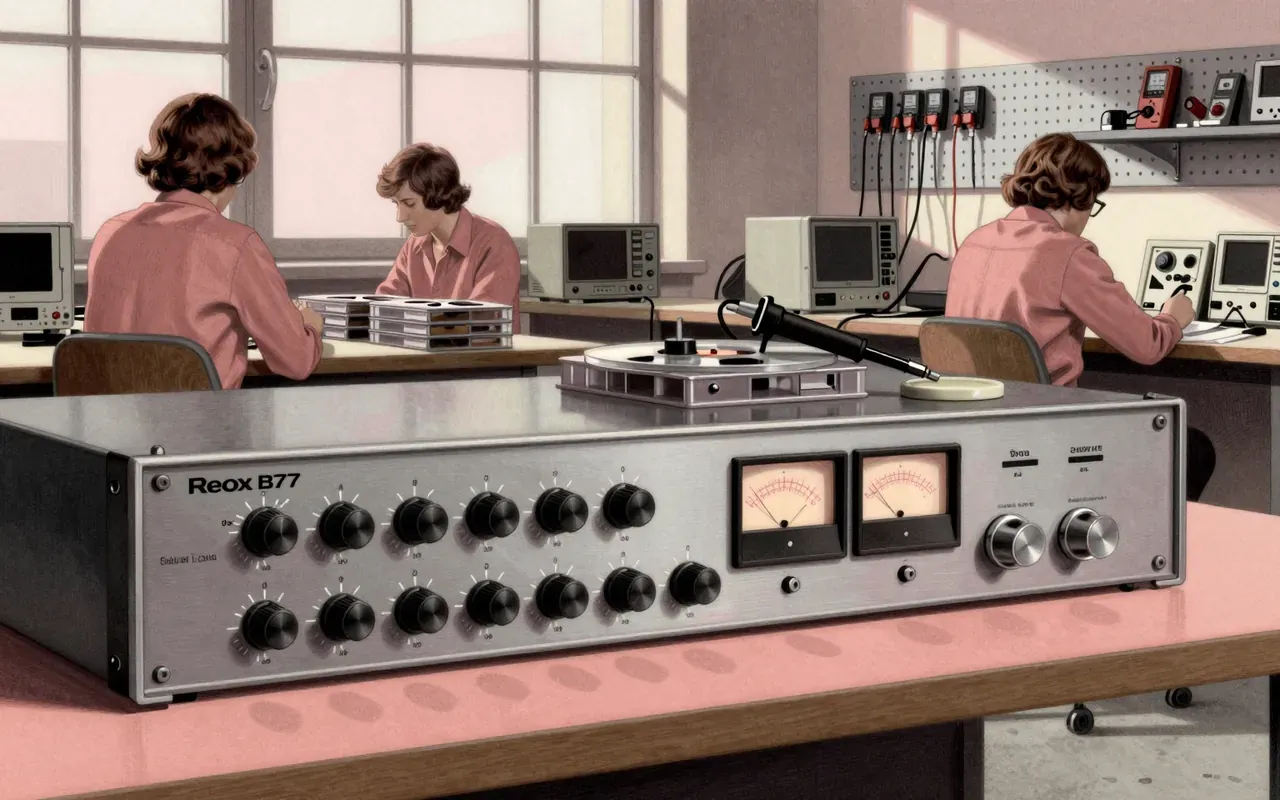
The Revox B77 is an analog multitrack tape recorder built for studio and project recording. It supports 3 3/4, 7 1/2, and 15 ips tape speeds—but the 15 ips setting is obsolete for digital use. Units from 1980 remain fully functional. It is mechanically robust and quieter than UHER models. Its meter is breakable and irreplaceable. It offers no digital functionality. It is worth your time only if you need durable, low-noise analog multitrack operation—and can maintain it yourself.

9:45

Marshall JMP 2203

Marshall

The Softube Marshall JMP 2203 is a software amp simulator in the Amp Room series. Softube made it. It carries the Marshall JMP 2203 name. It belongs to the Software Amp Simulators category.

9:45

Novation Super Bass Station

Novation

The Novation Super Bass Station is a 1997 monophonic desktop synthesizer built to emulate Roland and Moog bass synths. It adds separate ADSRs for filter and amplitude, key follow, an SH-type sub oscillator, noise generator, ring mod, true mixer, distortion, stereo chorus, panning, two LFOs, arpeggiator with clock out, slide function, and 200-patch memory. It delivers focused, hands-on bass synthesis—but only one note at a time.

9:45

Roland XV-5080

Roland

The Roland XV-5080 is a 2000 rack-mount sound module built for studio composers needing stereo sample playback, deep modulation via Matrix Control, and expandability through SRX and SR-JV80 boards. It reads Akai S1000 and Roland S-700 CD-ROMs via SCSI, supports up to 128MB of sample memory, and includes COSM effects and digital outputs — features the XV-3080 lacks. It offers no keyboard, no sequencer, no USB, and demands physical navigation. It belongs in a fixed studio with legacy hardware — not on a laptop stand.

9:45

Bombardier M5000

TC Electronic

The Bombardier M5000 is a light rail vehicle. TC Electronic is an audio equipment company. They have no relationship. The M5000 uses pre-recorded WAV files for warnings — but offers no user-accessible audio controls, no synthesis, no sampling, no modulation, no inputs or outputs. It is not an instrument. It is not software. It is not part of TC Electronic’s product line. It belongs in transport policy, not in an audio brief.

9:45

Roland SH-1000

Roland

The Roland SH-1000 is a compact 1973 synthesizer — the first made in Japan and the first by Roland. It resembles a home organ, with 10 preset voices and a manually editable section. It has no user program memory. Its effects include white noise, portamento, octave transposition, two LFOs and a random note generator. It simulates multiple oscillators using 8 sub-osc keys; a ninth key triggers white or pink noise.

9:45

Yamaha AN1x

Yamaha

The Yamaha AN1x is a 1997 virtual analog synthesizer using DSP-based modelling of analog subtractive synthesis components. It features duo-timbral architecture with two programmable Scenes per voice, parameter interpolation via morphing, and a maximum polyphony of ten notes—dependent on playing mode. Its synthesis engine includes dual oscillators, multimode resonant filtering, extensive modulation routing, and real-time control via assignable knobs and ribbon controller.

9:45

Boss HM-2

Boss · 1983

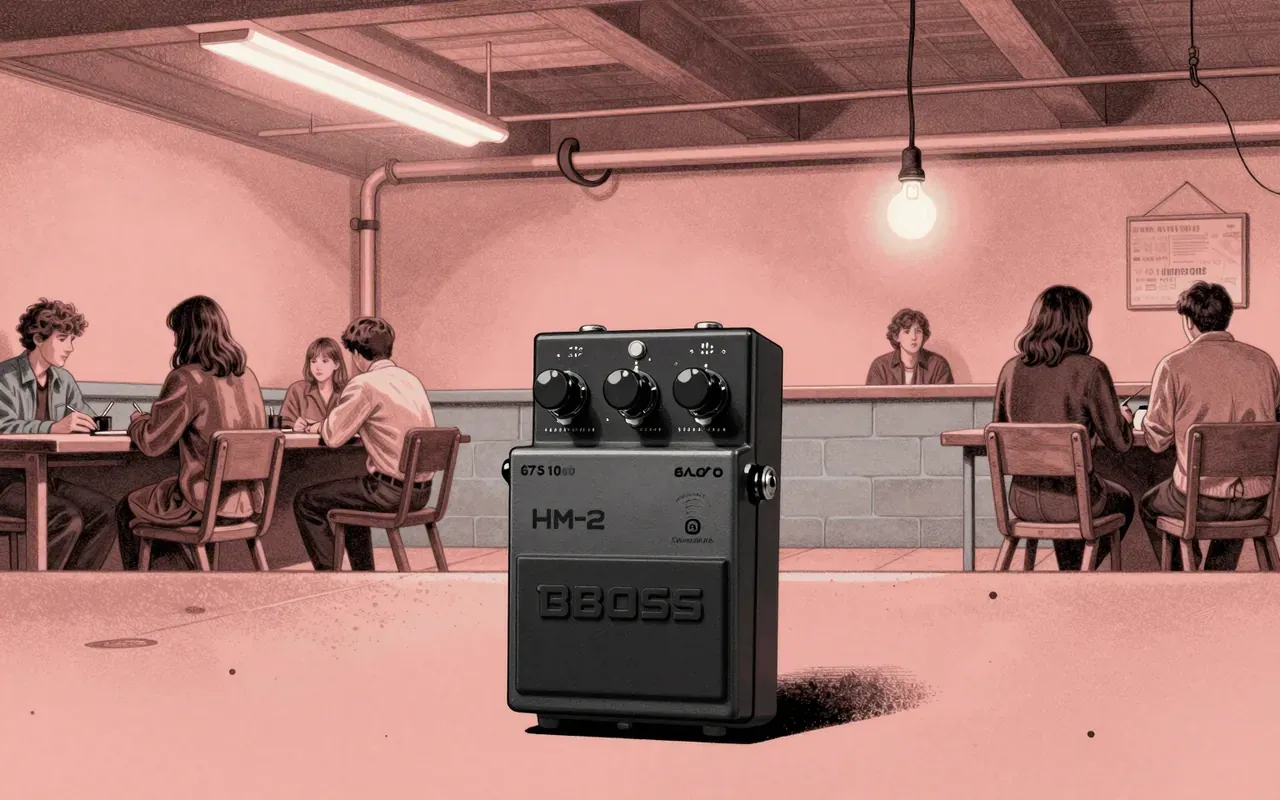
The Boss HM-2 is a distortion pedal introduced in October 1983. It was designed to emulate the mid-range response of a Marshall stack and is based on the Boss DS-1. Its defining feature is the radically versatile Low and High ‘Color Mix’ EQ controls, each offering 20 dB of boost or cut.

9:45

Korg Triton

Korg

The Korg Triton is a 1999 music workstation synthesizer with digital sampling and sequencing. It introduced 62-note polyphony, dual polyphonic arpeggiators, RPPR phrase recording, onboard sampling with expandable RAM, five insert effects per Program, dual filters per oscillator (24dB/octave low-pass or parallel 12dB/octave HP/LP), faster touchscreen response, category search UI, and expanded memory and outputs. It was available in 61-, 76-, and 88-key Classic versions and as a rackmount Triton-Rack with optional ADAT/Word Clock via EXB-DI.

9:45

Roland JD-800

Roland

The Roland JD-800 is a hands-on, sample-based digital synthesizer manufactured between 1991 and 1996. It features many knobs and sliders for patch editing and performance control. Roland's intention was to return to the roots of synthesis. It employs sample-based oscillators and a fully digital signal path. It has 108 built-in sampled waveforms, expandable via PCM cards. A patch consists of up to four tones. In Multi mode it is possible to play five different patches over MIDI, plus a 'special' patch — which assigns different waveforms to the 61 keys for drums and percussion.

9:44

Eventide TimeFactor

Eventide

The Eventide TimeFactor is a 2011 stompbox-format digital delay/echo/phrase sampler for guitar. It offers ten distinct delay types, two independent 3-second delays, stereo I/O with level switches, true analog bypass, rugged cast metal construction, MIDI and expression pedal control, USB firmware updates, and 100 factory presets. Its 12-second looper is integrated into the same unit.

9:44

Allen & Heath Xone:92

Allen & Heath

The Allen & Heath Xone:92 (Old Design) is a discontinued 4+ channel DJ mixer. It features dual voltage-controlled filters and low-frequency oscillators. You assign either filter to any channel using switches — including to the cross fader. A tap button sets LFO speed to match tempo or lock in a custom rate. It includes a semi-parametric equalizer. Rackmount is optional. It was replaced by the Xone:92 MK2. It is no longer sold.

9:44

Gibson Moderne

Gibson

The Gibson Moderne is a non-instrument: a shape conceived in 1957, patented in 1958, rejected at NAMM the same year, and absent from musical use for 25 years. It has no verified sound, no operational history, no confirmed prototype, and no functional distinction from later reissues. Its only property is ambiguity.

9:44

Fender Princeton Reverb

Fender

The Fender Princeton Reverb is a 12-watt tube combo that integrates reverb and vibrato into a single, responsive, non-master-volume design. Introduced in 1964, revised through 1977, discontinued in 1981, and reissued in 2008, it delivers a specific kind of saturated, modulated tone at low-to-moderate volumes—and nothing else.

9:43

Sennheiser Vocoder 2000

Sennheiser

The Sennheiser Vocoder 2000 is a fully analog, rack-mount vocoder released around 2002. It uses discrete-component circuitry. It includes an internal oscillator with pitch modulation, an internal noise source, and a noise gate. It requires no external sound source. Both white-face and black-face versions share identical analog circuitry.

9:43

Epiphone Crestwood

Epiphone

The Epiphone Crestwood is a solid-body electric guitar introduced in 1958. It has no Gibson equivalent. It evolved through named variants—Crestwood Custom, Crestwood DeLuxe—before ending production in 1970. Its construction is mahogany. Its pickups are New Yorker. Its headstock changed from three-on-a-side to six-on-a-side. Its pickguard changed design and lost the Epiphone logo. Its fretboard markers changed from dots to ovals. Its plating changed from gold to nickel. Its upper horn lengthened slightly by 1963. The Crestwood DeLuxe added a third pickup and an ebony fretboard with block inlays.

9:43

Beyerdynamic M 160

Beyerdynamic · 1957

The Beyerdynamic M 160 is a hypercardioid ribbon microphone introduced in 1957. It uses dual 15-mm aluminum ribbons suspended between alnico magnets (later neodymium), rotated 90 degrees to achieve end-address operation and a highly directional pickup pattern. It softens harsh characteristics of strident sound sources. It has been used in broadcasting, live concerts, and studio recordings — notably by Eddie Kramer on Jimi Hendrix and Andy Johns on John Bonham’s drums for 'When the Levee Breaks'. It remains in production over six decades later.

9:43

Beyerdynamic M 160

Beyerdynamic · 1957

The Beyerdynamic M 160 is a hypercardioid ribbon microphone introduced in 1957. It uses dual 15-mm aluminum ribbons suspended between alnico magnets, rotated 90° to achieve end-address directionality. It softens strident sound sources without dulling transients. It was used by Eddie Kramer on Jimi Hendrix’s vocals and amplifier and by Andy Johns on John Bonham’s drums for 'When the Levee Breaks.' It remains in production after over six decades.

9:42

4003

Rickenbacker · 1980

The Rickenbacker 4003 debuted in 1980 as a near-twin of the 4001 with an updated truss rod system made for roundwound strings. It has neck-through construction, has stayed in continuous production, and has spawned five-string, eight-string, fretless, limited-edition and signature versions.

9:41

Yamaha REV1

Yamaha

The Yamaha REV1 is a two-part digital reverb: a rack unit and a separate remote. It runs at 16-bit/44.1 kHz. It has one XLR input, two XLR outputs, external clock sync, and RS232 remote connectivity. Its sound is clear, clean, soft, and distinct from other Yamaha gear. Only the Lexicon 224 XL surpassed it in finesse among contemporaneous units.
9:41

Z.Vex Fuzz Factory

Z.Vex

The Z.Vex Fuzz Factory is a 1995 fuzz pedal built around unstable germanium transistors whose biasing is manipulated via five interactive controls; it originated from Zachary Vex’s accidental discovery of extreme sonic behavior when boosting a surplus-transistor circuit, leading him to retain adjustable pots for expressive texture control rather than fixing component values.